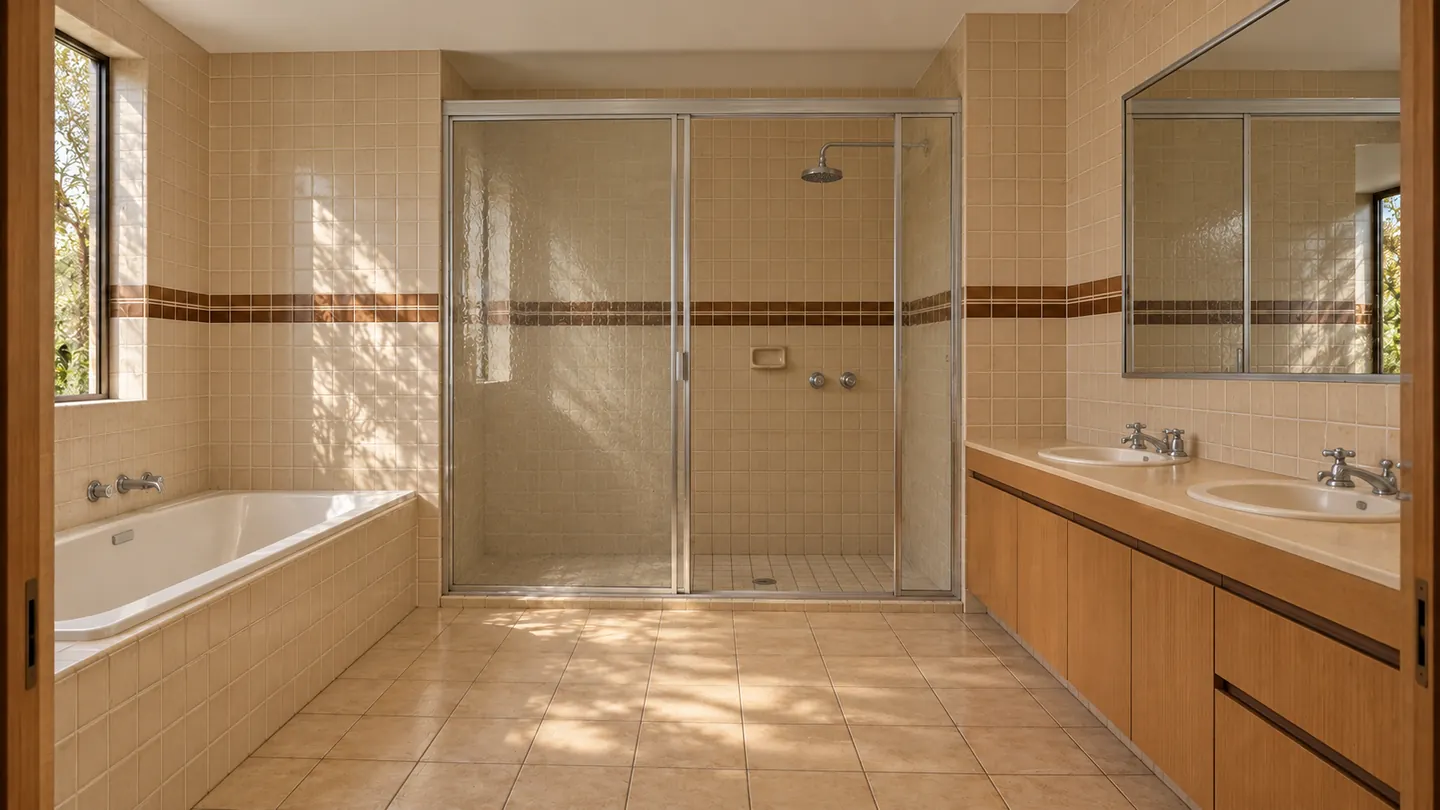
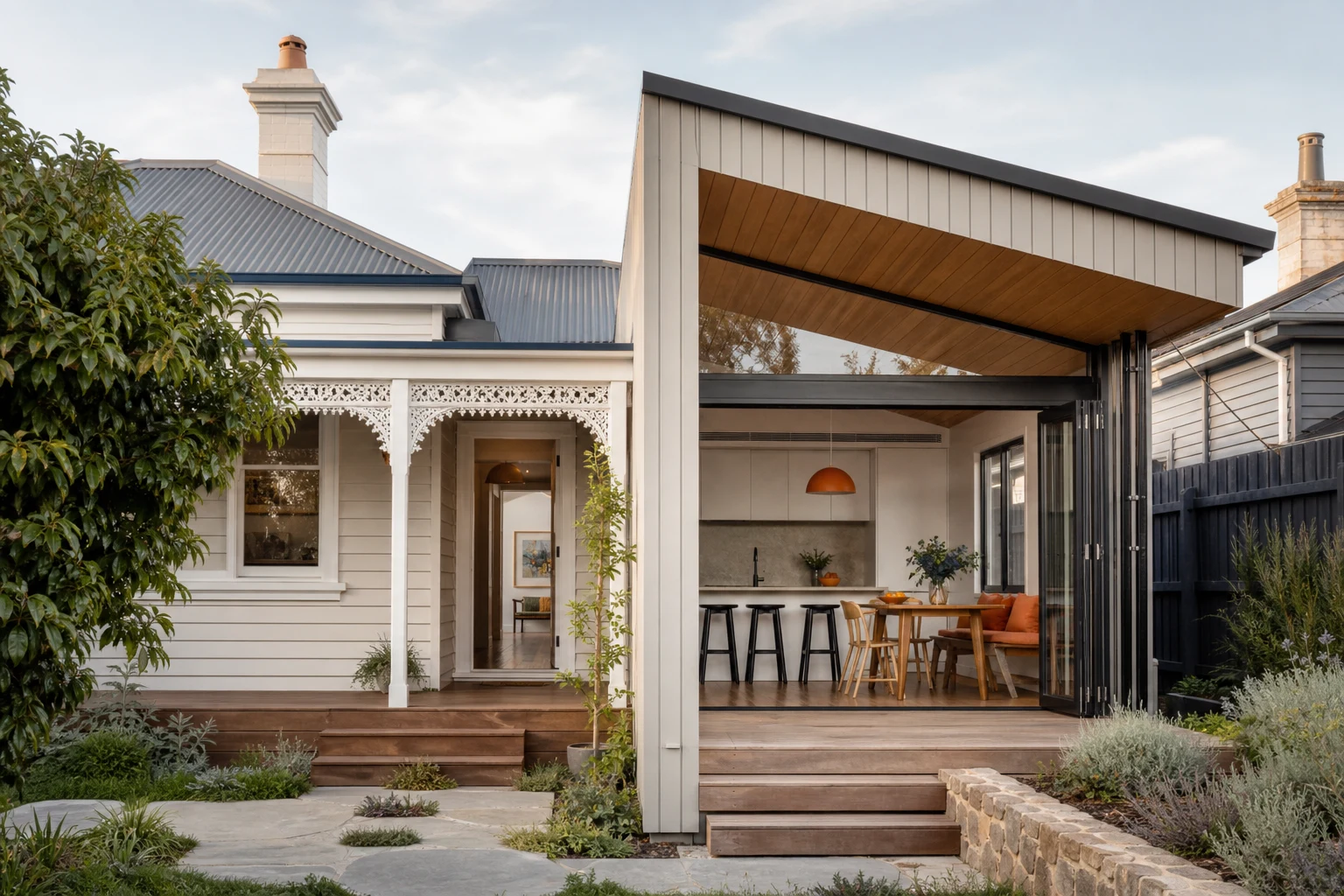
Williamstown is one of Victoria's oldest settlements, and its streets show it. The suburb holds a remarkable concentration of Victorian-era housing: bluestone and timber workers' cottages from the maritime and railway boom, double-fronted Victorian villas along the wider streets, and grand sea-captain era homes near the Strand and Nelson Place. Renovating here means working inside some of the most extensive heritage coverage in Melbourne's west, administered by Hobsons Bay City Council.
It also means building beside the water. Salt air, coastal winds off Port Phillip and the maintenance history of 140-year-old buildings all shape material choices and budgets in ways that inland renovators never encounter. This guide covers what Williamstown's heritage controls actually require, how the housing stock renovates, and how to build for durability a street back from the sea.
In this guide
- Williamstown's Housing Stock: A Maritime Heritage Suburb
- Heritage Controls in Hobsons Bay: What to Expect
- Building Near the Water: Materials That Last
- Whole-Home Budgets for Heritage Williamstown
- The Renovation Pattern That Works: Restore Front, Extend Rear
- What 140-Year-Old Buildings Hide
- Choosing a Team for Heritage Coastal Work
Williamstown's Housing Stock: A Maritime Heritage Suburb
The renovation candidates in Williamstown are distinctive even by Melbourne standards.
- Workers' cottages (1850s-1890s): Timber and occasionally bluestone, on narrow blocks through the older grid. Single-fronted or small double-fronted, often 200-400 square metre blocks. Renovations focus on rear extensions and complete services renewal because original fabric is genuinely old.
- Victorian villas and terraces: Along Ferguson Street, Osborne Street and the wider residential streets. Bigger footprints, iron lacework, and stronger cases for whole-home restoration.
- Sea-captain and merchant homes: The prestige stock near the Strand, Nelson Place and Hanmer Street, some among the oldest substantial houses in Victoria. These are significant buildings where renovation quality and heritage sensitivity both need to be at their highest.
- Edwardian and interwar infill: Scattered through newer sections toward Williamstown North, generally with lighter heritage constraints.
The family profile mixes long-term locals with professionals drawn by the village feel, the beach and the ferry-and-train connection to the city. Buyers pay a clear premium for renovated heritage homes done well, and the suburb's limited stock keeps that premium durable.
Heritage Controls in Hobsons Bay: What to Expect
Williamstown's heritage overlay coverage is broad and taken seriously. The practical framework:
- Most of old Williamstown sits in a heritage overlay: Assume your property is covered until Vicplan says otherwise, particularly south of the railway line.
- Internal renovations are generally exempt: Kitchens, bathrooms and internal reconfiguration proceed without heritage permits in most cases.
- External changes need permits: Extensions, new openings, re-roofing in different materials, front fence changes and demolition of any part of a contributory building all require planning approval.
- Facade and streetscape retention is the core expectation: Hobsons Bay consistently supports rear extensions that preserve the original front and roof form as viewed from the street, including contemporary rear additions that are clearly distinguishable from the heritage fabric.
- Individually significant buildings carry tighter controls, occasionally including specific fabric protections. The sea-captain era homes fall here, and early heritage advice is essential.
Allow four to eight months from design start to permit for projects with external works, and treat pre-application discussion with council's heritage advisor as a shortcut rather than a formality. Well-prepared applications with heritage impact statements move much faster than optimistic ones.
Building Near the Water: Materials That Last
Within a few streets of the bay, salt-laden air is a permanent design input. Durable Williamstown renovations specify accordingly.
- Fixings and structural steel: Galvanised or stainless fixings for all external work; marine-grade stainless within direct spray zones near the foreshore. Standard zinc-plated hardware corrodes visibly within a few years here.
- Roofing and gutters: Quality coated steel roofing systems perform well; mixed-metal contact and cheap gutters fail early in coastal air. Original slate on significant homes should be repaired by specialists rather than replaced.
- External timber: The suburb's weatherboard stock demands disciplined paint systems: full preparation, quality primers and repainting cycles of seven to ten years. Pre-primed and back-primed replacement boards are worth the premium.
- Windows: Restored original timber sashes with new seals often outperform cheap aluminium replacements aesthetically and thermally, and heritage controls usually require timber on street-facing elevations anyway.
- Ventilation and damp: Old solid masonry and low subfloors near sea level need working subfloor ventilation, functioning damp courses and honest assessment of rising damp before decorative finishes go anywhere near the walls.
Coastal specification adds modest percentage cost during construction and repays it many times over across the maintenance life of the home.
Whole-Home Budgets for Heritage Williamstown
| Scope | Typical Spend | What It Covers | Main Risk |
|---|---|---|---|
| Cottage interior renovation, same envelope | $200k-$350k | Full services renewal, kitchen, bathroom, restumping, insulation, restoration of period detail | Condition of 140-year-old fabric behind linings |
| Cottage with rear extension | $400k-$650k | Contemporary rear addition, reoriented living zones, full renovation of original rooms, heritage approvals | Planning timeline and coastal specification costs |
| Significant home full restoration and renovation | $650k-$1.2m+ | Specialist restoration trades, slate and masonry work, complete internal transformation, landscape | Specialist trade availability and fabric surprises |
Heritage work near the water carries two structural premiums: specialist trades (slate roofers, traditional plasterers, sash window restorers) and coastal-grade materials. Both are worth paying for once and badly worth avoiding paying for twice.
The Renovation Pattern That Works: Restore Front, Extend Rear
Decades of successful Williamstown projects follow the same architecture: the original rooms are restored as bedrooms, studies and formal spaces, while a rear addition carries the kitchen, living and connection to the yard. It works because it aligns with what both council and the market want.
- Original rooms: Restore fireplaces, ceiling roses, deep skirtings and sash windows. These details are why the home commands its price.
- The junction: The transition between old and new fabric deserves design attention; a glazed link or clear datum change reads far better than a blurred imitation.
- The rear addition: Free to be contemporary, light-filled and higher-volume, subject to massing that stays subordinate to the original roofline from the street.
- Small-block discipline: On 250-350 square metre cottage blocks, every metre of extension trades against yard. Courtyard-focused designs with generous glazing routinely outperform maximum-footprint boxes for daily livability and resale.
Second-storey additions are possible but assessed carefully; setting the upper level well back behind the original roof form is usually the difference between approval and refusal.
What 140-Year-Old Buildings Hide
Williamstown's age means the pre-purchase and pre-contract inspection list is longer than in younger suburbs.
- Footings and stumps: Early cottages sit on shallow bluestone footings or original red-gum stumps. Restumping and underpinning allowances belong in the base budget for unrenovated stock.
- Framing: Undersized or borer-affected hardwood framing appears in early timber cottages; sistering and selective replacement is routine for builders who know the stock.
- Rising damp in masonry: Bluestone and early brick walls near sea level frequently need damp treatment before internal linings are renewed.
- Lead paint and old services: Assume lead paint on original fabric and manage removal properly; assume original-era wiring and plumbing need complete replacement.
- Previous renovations: Many cottages carry 1970s-90s work of variable quality. Undoing a bad earlier renovation is often more expensive than working on untouched fabric.
A 15% contingency is the honest number for unrenovated heritage stock here, and the builders who insist on it are the ones who have done this before.
Choosing a Team for Heritage Coastal Work
The builder question in Williamstown has three parts: heritage experience with real completed projects, coastal specification knowledge, and access to restoration trades. Ask directly who does their sash windows, their traditional plaster and their slate work, because generalist trades produce visible compromises on significant fabric.
Timeline expectations should be realistic: six to nine months on site for a cottage renovation with extension, plus the approval period in front of it. Williamstown rewards patience with some of the most characterful renovated homes in Melbourne, in a heritage streetscape that protects the value of every dollar spent doing it properly.
Take these ideas with you.
- Most of old Williamstown sits under heritage overlays, so assume permits for any external change and plan the timeline accordingly
- The proven pattern restores the original front rooms and adds a contemporary rear extension subordinate to the heritage roofline
- Salt air demands coastal-grade fixings, roofing, paint systems and ventilation within a few streets of the bay
- Unrenovated 140-year-old stock justifies a genuine 15% contingency for stumps, framing, damp and old services
- Specialist restoration trades cost more per hour and less per decade than generalist compromises on significant fabric
A few more answers
Questions about your next step.
How much should I budget for a kitchen renovation in Melbourne?
Budget depends on layout changes, cabinetry level, benchtop choice, appliance scope and trade complexity. Fixed-layout refreshes sit much lower than structural redesigns with new services.
What kitchen upgrades usually add the most practical value?
Better drawer storage, smarter appliance placement, durable benchtops, layered task lighting and a well-sized rangehood tend to outperform cosmetic-only upgrades.
How long does a kitchen renovation usually take?
Most kitchens run over several weeks. Cabinetry manufacturing, stone templating and trade sequencing usually matter more than the demolition day.
Put your ideas into a plan
Check feasibility before you lock a quote
Council overlays, access and existing services change the job. Bring the property constraints in before finish selections harden.
Planning a heritage renovation in Williamstown or the wider Hobsons Bay area? We combine heritage sensitivity with coastal-grade construction. Explore our full home renovation service or call 1300 173 622.