Noise complaints are the fastest way for a renovation to turn neighbours into enemies and attract council attention you don't need. Yet most Melbourne homeowners start demolition without knowing which rules actually apply: the state-wide EPA noise regulations, their council's local laws, or the conditions attached to their building permit.
The short answer is that all three can apply at once, and they don't always say the same thing. This guide explains how residential renovation noise is regulated in Victoria, the hours that typically apply across Melbourne councils, and the practical habits that keep a project moving without a single complaint being lodged.
In this guide
- The Three Layers of Noise Regulation in Victoria
- The EPA Baseline: When Noisy Work Is Prohibited
- Typical Construction Hours Across Melbourne Councils
- Which Renovation Activities Cause the Most Complaints
- What Happens When Someone Complains
- Keeping Neighbours Onside: The Playbook That Works
- Questions to Settle Before Work Starts
The Three Layers of Noise Regulation in Victoria
Renovation noise in Melbourne is governed by overlapping layers, and understanding which one bites in your situation prevents most problems.
- EPA residential noise rules: Victoria's Environment Protection Regulations set prohibited times for noisy equipment used at residential premises, including power tools, compressors and demolition equipment. These apply state-wide to owner-builders and weekend DIY as much as to contractors working on a house.
- Council local laws: Each Melbourne council also has a community amenity local law, and many set specific construction hours or require permits for building work on or near public land, asset protection and out-of-hours activity.
- Permit conditions: Planning permits and some building permits carry their own conditions on construction hours, particularly in heritage precincts, activity centres and higher-density areas.
When the layers disagree, the practical rule is simple: the strictest applicable requirement wins. A builder who works to the tightest layer never has to argue about which one applied.
The EPA Baseline: When Noisy Work Is Prohibited
For residential premises, Victoria's environment protection framework prohibits the use of noisy construction equipment during certain hours. For power tools and similar equipment, the commonly applied pattern is:
- Monday to Friday: Prohibited before 7am and after 8pm.
- Weekends and public holidays: Prohibited before 9am and after 8pm.
Two points matter here. First, these are prohibited times, not an entitlement to make unlimited noise in between. Noise that is unreasonable can still be dealt with by council or police at any hour, especially where it is persistent, avoidable or targeted at unsociable times.
Second, the rules attach to the equipment being audible in a neighbour's habitable rooms, which means a corner block with distant neighbours has more practical latitude than a subdivided lot with a shared wall. On tight inner-suburban sites, treat the regulation as a floor and courtesy as the real standard.
Typical Construction Hours Across Melbourne Councils
Most Melbourne councils publish preferred or mandated construction hours through local laws or planning permit conditions. The precise clauses vary and are updated periodically, so always confirm with your council before locking a program, but the patterns below are typical of what we encounter across the metropolitan area.
| Council Area Type | Weekdays (typical) | Saturday (typical) | Sunday / Public Holidays |
|---|---|---|---|
| Inner city (e.g. Melbourne, Yarra, Port Phillip) | Commonly 7am-6pm or 7pm | Commonly 9am-5pm or 6pm | Often restricted or not permitted for noisy work |
| Established inner-east and south-east (e.g. Stonnington, Boroondara, Glen Eira) | Commonly 7am-7pm | Commonly 9am-6pm | Frequently limited to quiet work only |
| Middle and outer suburbs (e.g. Monash, Whittlesea, Casey) | Commonly 7am-8pm in line with EPA times | Commonly 9am-8pm | EPA prohibited times usually the operative limit |
| Heritage precincts and permit-conditioned sites | As per permit, often tighter | As per permit | Often excluded entirely |
Treat this as orientation, not gospel. A five-minute call to your council's local laws team, quoting your address and scope, settles the question definitively.
Which Renovation Activities Cause the Most Complaints
Not all site noise is equal. Complaints cluster around a predictable set of activities, and a smart program sequences them into the most sociable hours.
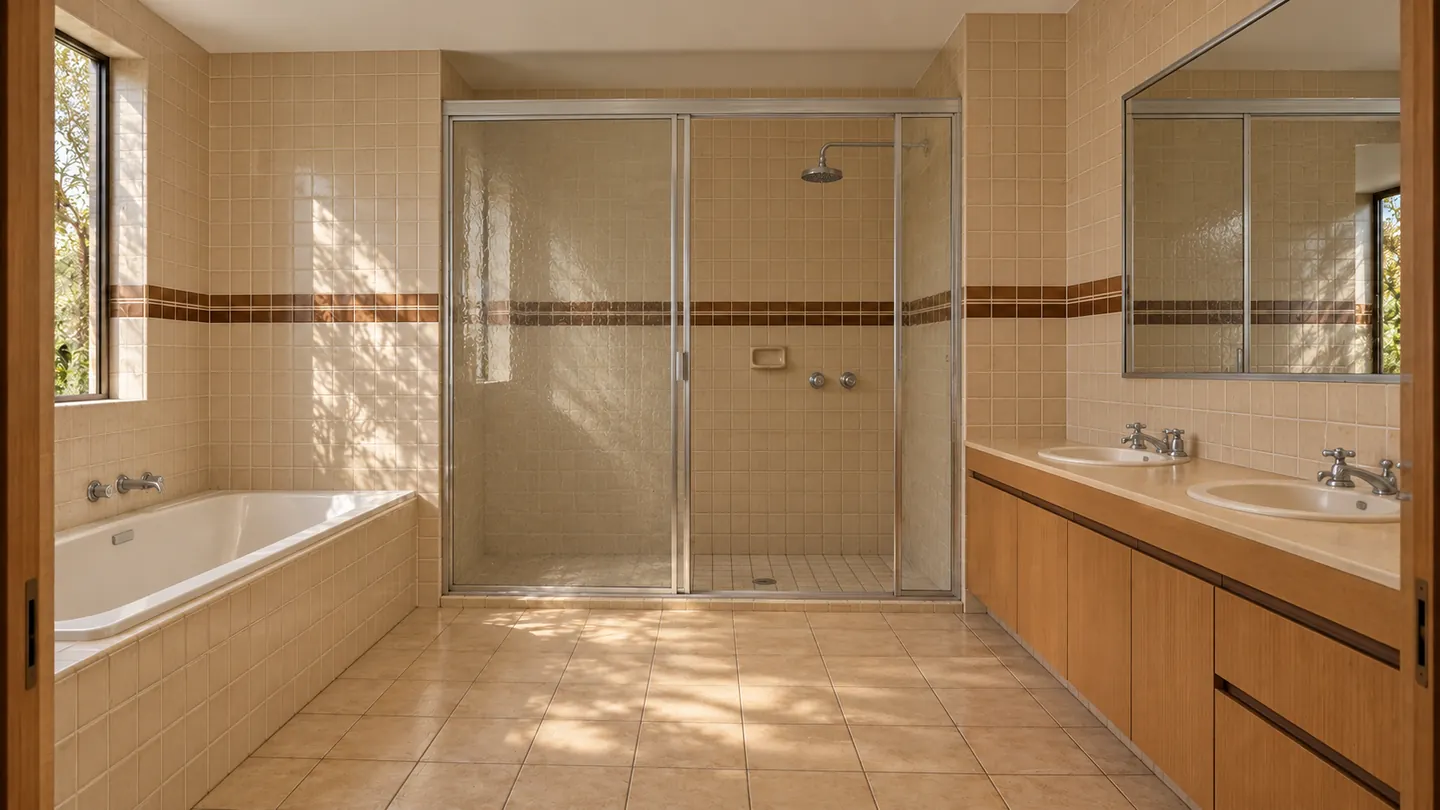
- Demolition and jackhammering: The single biggest complaint generator, especially tile and slab removal in bathrooms and kitchens. Concrete cutting is close behind.
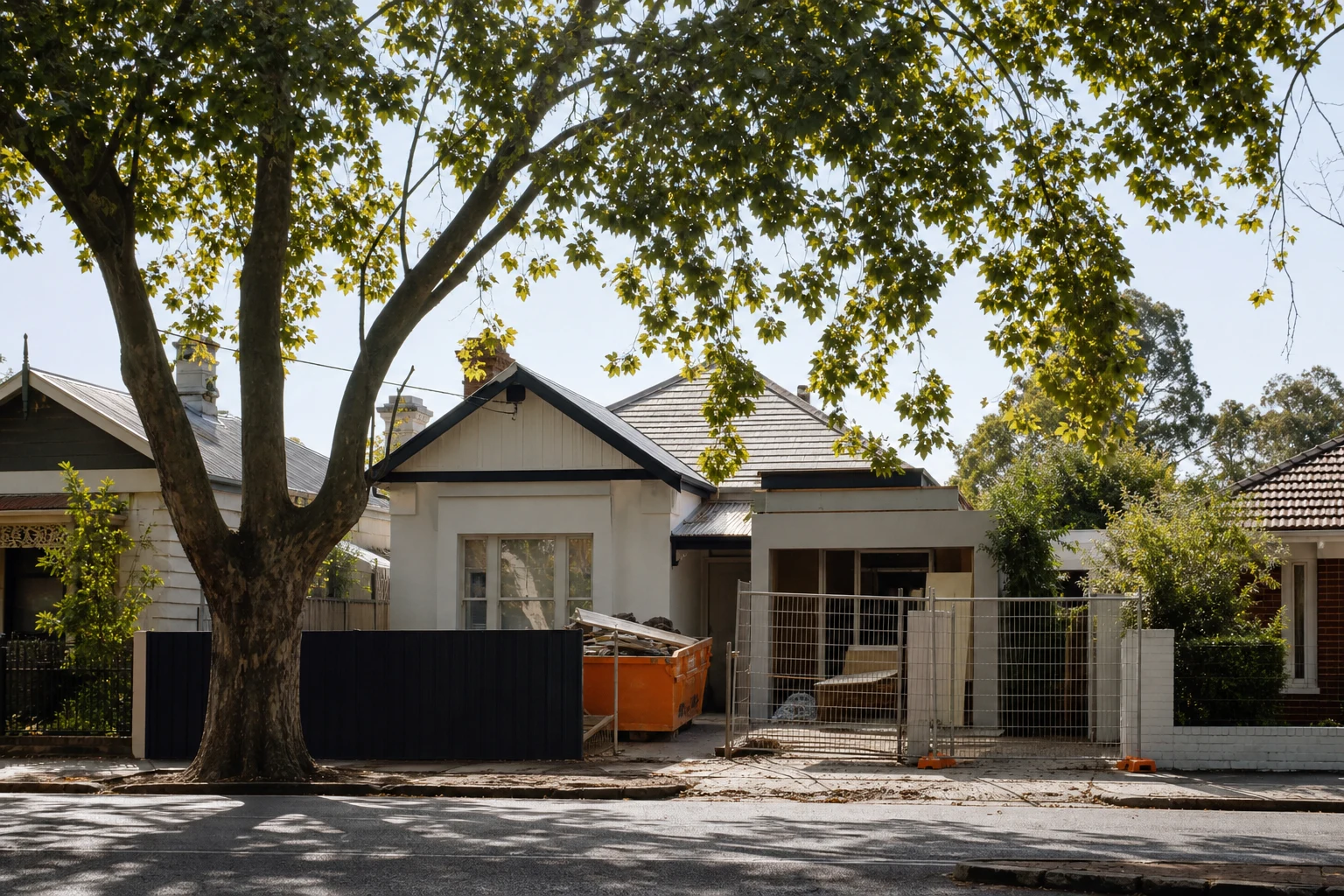
- Early deliveries and skip bin drops: A 6:30am tilt-tray on a quiet street draws complaints even when the trades themselves start legally at 7am.
- External power tools: Drop saws, planers and compressors in a front yard carry much further than the same tools inside the building.
- Radio and voices: Rarely a breach, frequently a flashpoint. Music at the boundary annoys neighbours more than most machinery.
- Weekend catch-up work: Legal within permitted hours, but Saturday afternoon grinding is where neighbour goodwill goes to die.
Our practice on tight sites is simple: the loudest work happens mid-morning to mid-afternoon on weekdays, deliveries are booked after 7:30am, and cutting stations are set up inside or at the rear wherever possible.
What Happens When Someone Complains
Understanding the enforcement path takes the fear out of it. A neighbour bothered by renovation noise will usually contact the council first. From there the sequence typically runs:
- Informal contact: Council officers commonly phone or visit and ask the builder to adjust hours or methods. Most matters end here.
- Formal directions and notices: Persistent breaches of EPA prohibited times or local laws can attract improvement notices, infringement fines against the person making the noise, and directions to stop work outside permitted hours.
- Permit enforcement: Where noise conditions sit on a planning permit, breaches become a planning enforcement matter, which carries more weight and more paperwork.
- Out-of-hours police attendance: For noise at prohibited times, police can direct that the noise stop, and non-compliance escalates quickly.
The financial reality is that even one stop-work direction costs more than a week of considerate scheduling. Compliance is cheaper than the alternative in every scenario we have seen.
Keeping Neighbours Onside: The Playbook That Works
Legal compliance is the floor. On real Melbourne streets, the difference between a complaint-free project and a hostile one is almost always communication.
- Letterbox the street before demolition: A short note with the project duration, the noisiest weeks, working hours and a phone number. Neighbours who can plan around noise tolerate it far better.
- Warn before the worst days: A knock on the door the day before slab cutting buys enormous goodwill.
- Protect the street: Keep footpaths clear, manage dust, and don't let trades park across driveways. Many complaints logged as noise are really about amenity.
- Give neighbours a direct contact: If their first option is calling the builder, their second option is never calling the council.
- Respect the quiet hours voluntarily: Starting internal quiet work at 7am and holding the demolition saw until 9am on the first morning sets the tone for the whole project.
We treat neighbour management as part of the build program, not a courtesy. It keeps projects moving, and it protects your relationships long after the trades have left.
Questions to Settle Before Work Starts
Before demolition day, you or your builder should be able to answer all of the following in writing:
- What are the permitted construction hours for this address under the local law, and do any planning permit conditions tighten them?
- Are there body corporate or owners corporation rules that further restrict hours, if the property is a unit or townhouse?
- When are the noisiest activities scheduled, and have adjoining neighbours been told?
- Where will cutting, mixing and compressor stations be located to minimise boundary noise?
- Who is the single point of contact if a neighbour or council officer raises a concern?
A builder who answers these fluently has done this before. A builder who shrugs is planning to make their noise problem your noise problem.
Take these ideas with you.
- EPA rules, council local laws and permit conditions can all regulate renovation noise, and the strictest layer wins
- Power tool noise at residential premises is typically prohibited before 7am weekdays and 9am weekends, and after 8pm
- Council construction hours vary across Melbourne, so confirm your address with the local laws team before programming
- Demolition, concrete cutting and early deliveries generate most complaints and should be scheduled into sociable hours
- Letterboxing neighbours and giving them a direct contact prevents more complaints than any regulation does
A few more answers
Questions about your next step.
How much should I budget for a kitchen renovation in Melbourne?
Budget depends on layout changes, cabinetry level, benchtop choice, appliance scope and trade complexity. Fixed-layout refreshes sit much lower than structural redesigns with new services.
What kitchen upgrades usually add the most practical value?
Better drawer storage, smarter appliance placement, durable benchtops, layered task lighting and a well-sized rangehood tend to outperform cosmetic-only upgrades.
How long does a kitchen renovation usually take?
Most kitchens run over several weeks. Cabinetry manufacturing, stone templating and trade sequencing usually matter more than the demolition day.
Put your ideas into a plan
Check feasibility before you lock a quote
Council overlays, access and existing services change the job. Bring the property constraints in before finish selections harden.
We manage noise, neighbours and council requirements as part of every build program. If you want a renovation run by a team that keeps the street onside, explore our full-home renovation service or call 1300 173 622.