Waterproofing is the least visible part of a bathroom renovation and the most expensive to get wrong. Failed membranes are consistently among the most common building defects reported in Victoria, and by the time a failure shows itself, as swollen skirting in the next room, a musty smell or a stain on the ceiling below, the repair means demolishing finished tiling. The standard that governs this work in homes is AS 3740, Waterproofing of domestic wet areas, which is referenced by the National Construction Code and enforced in Victoria through the building permit and inspection system overseen by the Victorian Building Authority (VBA).
Homeowners do not need to read the standard cover to cover. They need to understand what it requires in practical terms, what a compliant job looks like at each stage, which documents to collect and which questions expose a builder who treats waterproofing as an afterthought. That is what this guide delivers.
In this guide
What AS 3740 Actually Covers
AS 3740 defines how domestic wet areas, bathrooms, ensuites, laundries and toilets, must be protected against water escaping into the building structure. It works by classifying surfaces into zones and assigning each zone a treatment level: waterproof (a continuous membrane barrier) or water resistant (materials that tolerate moisture, such as compliant wall linings and tile systems).
- Shower floors: Waterproof, always, including the vertical turn-up at walls.
- Shower walls: Waterproofed to a minimum height, commonly 1800mm above the floor within the shower zone.
- Bathroom floors outside the shower: Requirements depend on the floor construction. Timber and sheet-lined floors typically require full-floor waterproofing, while concrete slabs may require water resistance with waterproof junctions; many quality builders waterproof the entire floor regardless.
- Wall and floor junctions, penetrations and hobs: Waterproofed, because junctions and pipe penetrations are where failures begin.
The standard also governs falls to floor wastes, bond breakers at corners, and how membranes integrate with baths, niches and shower screens. In short, it treats the wet area as an engineered system rather than a painted product.
The Zones and Heights in Plain Language
| Area | Typical Requirement | Common Height / Extent | Why It Matters |
|---|---|---|---|
| Shower floor and turn-up | Waterproof membrane | Full floor of shower, turned up walls | Highest water load in the house |
| Shower walls | Waterproof membrane | Commonly to 1800mm minimum | Direct spray attacks wall junctions daily |
| Bathroom floor (timber or sheet substrate) | Waterproof membrane | Entire floor | Timber structures are unforgiving of moisture |
| Walls adjoining baths and basins | Waterproof or water resistant by exposure | Localised zones around fixtures, commonly to 150mm above the fixture | Splash zones fail slowly and invisibly |
| Penetrations and junctions | Waterproofed and sealed | All pipes, wastes, niches and corners | Nearly all leaks start at a junction, not mid-wall |
Exact requirements vary with construction type and the edition of the standard in force for your permit, which is one reason a registered building practitioner, not a homeowner reading a summary, must own the compliance detail on your project. Use this table to follow the conversation, not to replace it.
Who Is Allowed to Do the Work in Victoria
Victoria regulates waterproofing through the building system rather than a standalone waterproofing licence. In practice, compliant renovation work looks like this.
- Registered building practitioner: Where the renovation exceeds the domestic building work thresholds, the project sits under a registered builder who carries responsibility for the waterproofing outcome, whoever applies the membrane.
- Domestic building insurance: Required for domestic building work over $16,000 in Victoria, protecting the owner if the builder dies, disappears or becomes insolvent. Waterproofing defects are a core category this insurance exists for.
- Building permits and inspections: Whether your specific bathroom renovation needs a building permit depends on scope, structural change and your council; your builder or building surveyor confirms this. Where permits apply, the surveyor may require evidence of wet-area compliance.
- Trade competence: Quality builders use dedicated waterproofing applicators who supply product-system compliance, apply the specified number of coats and issue documentation for the job.
The homeowner red flag is a renovator who cannot say who is applying the membrane, what product system is being used, or what documentation will be provided. Those answers should be immediate and specific.
What a Compliant Job Looks Like Stage by Stage
You do not need technical training to sight-check the sequence. A properly run wet area follows a recognisable rhythm.
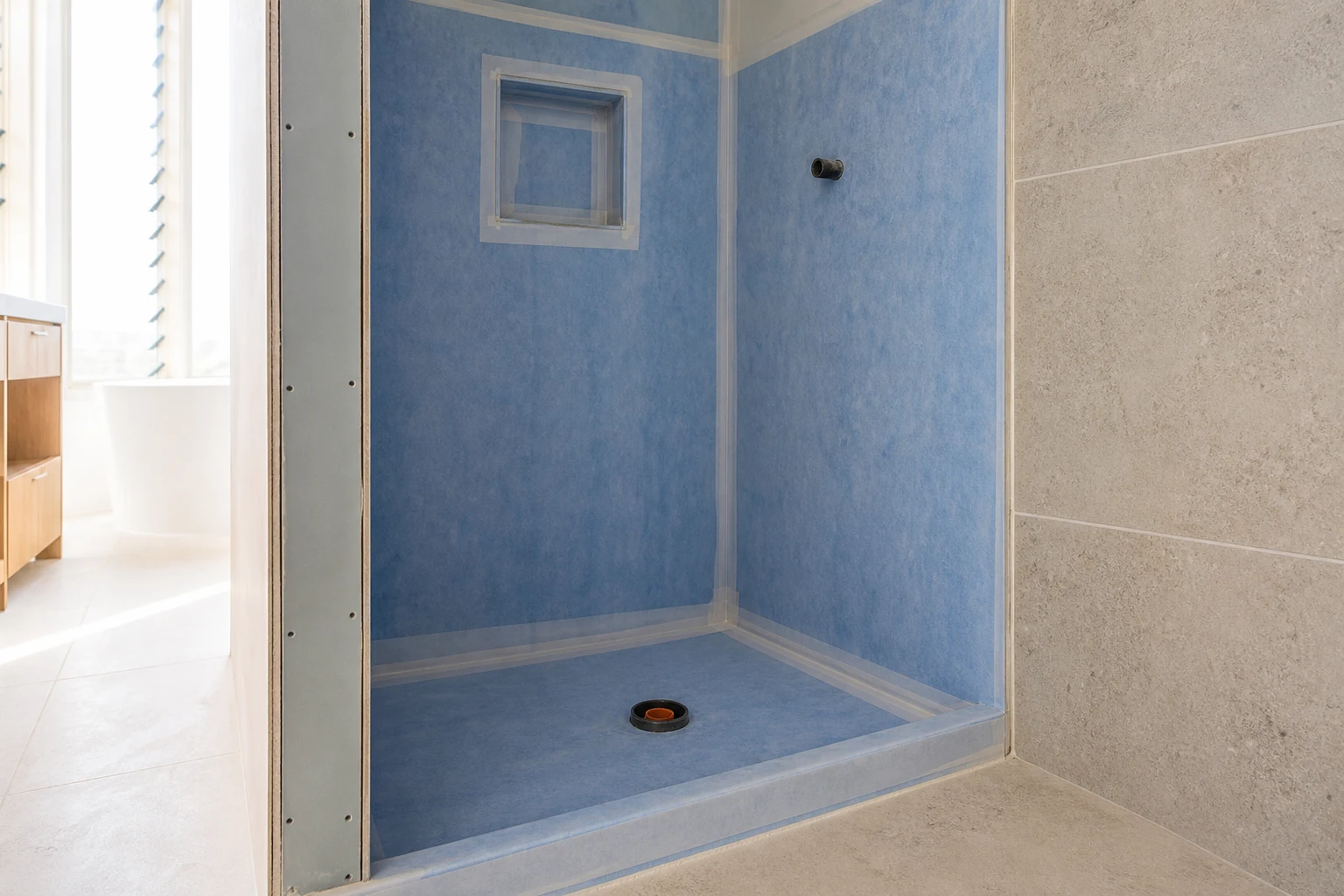
- Substrate preparation: Sound, clean, primed surfaces; screeds with falls to the waste already formed where the system requires membrane over screed.
- Bond breakers and detailing: Flexible sealant or tape at every internal corner, junction and penetration before the membrane goes on. Corners move; membranes must be allowed to move with them.
- Membrane application: Multiple coats, each in the coverage the manufacturer specifies, often in contrasting colours so missed spots show. Membranes need cure time between coats and before tiling; a wet area membraned and tiled the same day is a warning sign.
- Flood testing where specified: Some builders flood test shower floors before tiling. It is not universally required, but it is a strong quality signal.
- Photographic record: Photographs of the completed membrane, especially niches, hobs and junctions, before tiling begins.
Ask for that photo set as a standard handover item. Reputable builders already capture it for their own records and share it willingly.
The Documents to Collect and Keep
Waterproofing compliance lives in paperwork as much as in membrane. Your handover pack should include the following, filed with your building permit documents if one applies.
- Waterproofing certificate or statement of compliance identifying the property, the areas treated, the product system used and the applicator or builder responsible.
- Product system details: The membrane brand and system name, because future trades need to know what they are working over.
- Photographs of the membrane before tiling.
- Domestic building insurance certificate for qualifying projects, and the major domestic building contract itself for work over $10,000.
- Certificates for associated trades: Plumbing compliance certificates for waste and drainage work, and electrical safety certificates where circuits were altered.
These documents matter at three moments: if a defect ever appears, when you sell the home and buyers or their inspectors ask what was done, and when a future renovation needs to understand the existing system. Missing paperwork converts a ten-minute answer into an expensive investigation.
Common Failures and How the Standard Prevents Them
Most wet-area failures trace back to a handful of shortcuts, each of which the standard exists to prevent.
- No bond breakers at corners: Building movement cracks the membrane at the junction. This is the classic slow leak into the adjoining wall.
- Single thin coat: Coverage below the specified film thickness pinholes and fails early.
- Tiling too soon: Membranes tiled before cure can be damaged or never achieve their designed properties.
- Unsealed penetrations: A waste collar or tap penetration left to silicone alone rather than detailed into the membrane.
- Falls that trap water: Floors that drain toward corners rather than the waste keep the membrane permanently loaded.
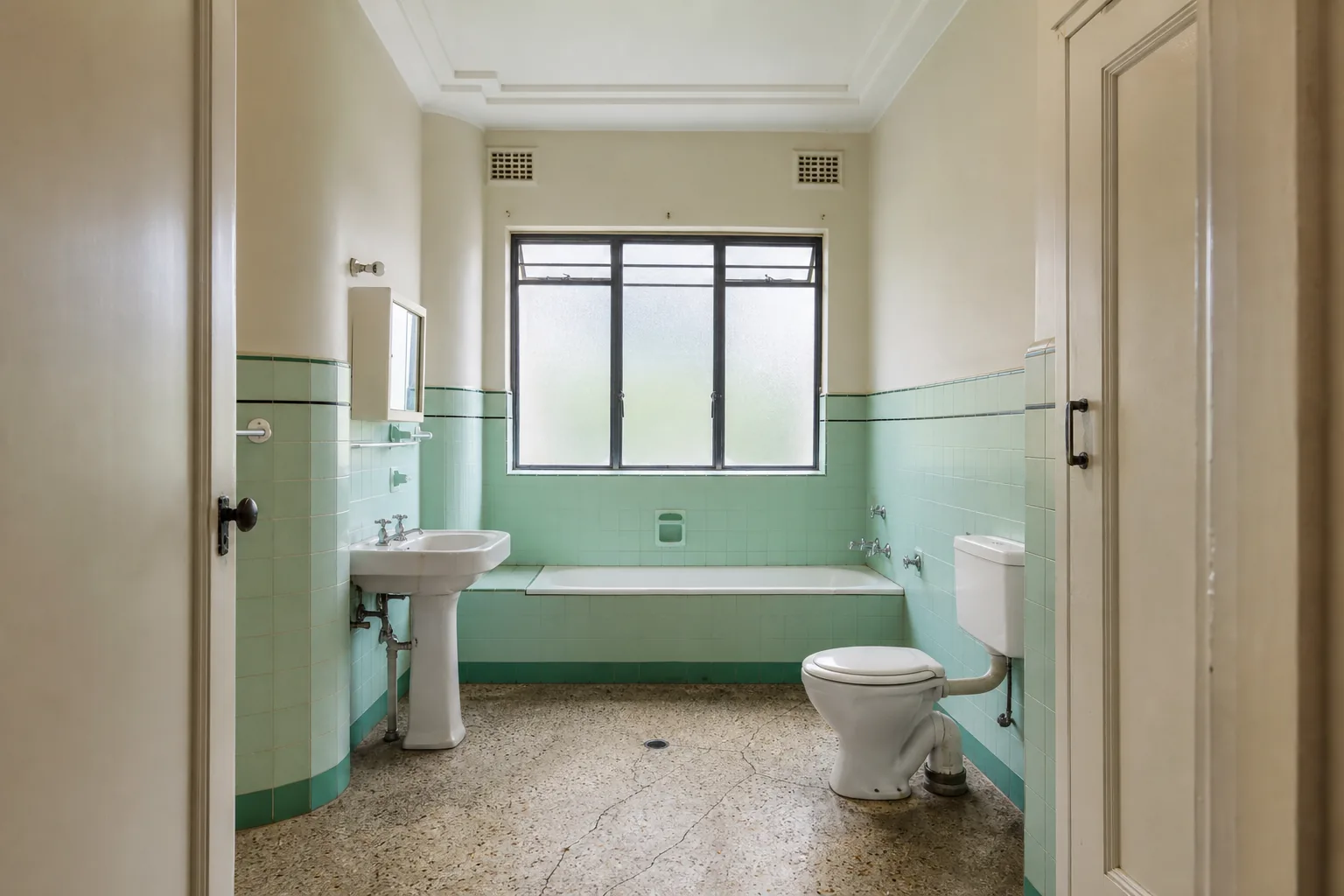
Older Melbourne housing adds its own wrinkle: many pre-1990s bathrooms were built with little or no membrane by modern definitions, so a strip-out often reveals staining and framing damage that must be repaired before the new system goes down. Budget for that possibility on any bathroom over thirty years old, because building over compromised framing wastes the entire renovation.
Questions That Reveal a Quality Builder
Five questions, asked before contract signing, will tell you more than any brochure.
- Which waterproofing system do you use, and who applies it?
- How many coats, and how long do you allow for cure before tiling?
- Will I receive a waterproofing certificate and pre-tiling photographs at handover?
- How do you detail niches, hobs and floor wastes?
- Does my project require a building permit, and who is managing that with the surveyor?
Confident, specific answers signal a builder who treats the wet area as the engineered system AS 3740 describes. Vague answers, or any suggestion that waterproofing is a place to save money, are your cue to keep looking. The membrane is a few days of a renovation and a small share of its cost, but it is the layer every other dollar in the room depends on.
Take these ideas with you.
- AS 3740 treats the wet area as a system of zones, with shower floors and walls requiring full membrane protection
- In Victoria, compliance runs through registered builders, building permits where applicable and domestic building insurance over $16,000
- Bond breakers at corners, multiple cured coats and sealed penetrations are where compliant jobs are won or lost
- Collect the waterproofing certificate, product details and pre-tiling photographs in your handover pack
- Pre-1990s Melbourne bathrooms often hide framing damage that must be repaired before the new membrane goes down
A few more answers
Questions about your next step.
What matters most in a small bathroom layout?
Clearances, door swing, shower placement and vanity depth matter more than decorative choices. Simplify the layout before adding premium finishes.
Which bathroom materials are easiest to maintain?
Low-porosity surfaces, practical grout, well-detailed shower screens and real ventilation reduce cleaning load and mould risk.
How long does a full bathroom renovation normally take?
Bathrooms are tightly sequenced, but waterproofing cure times, tiling and fixture lead times still make them multi-stage projects.
Put your ideas into a plan
Check feasibility before you lock a quote
Council overlays, access and existing services change the job. Bring the property constraints in before finish selections harden.
Every bathroom we build is waterproofed as a documented system, certificate, photographs and product details included in your handover pack. See how we deliver compliant bathroom renovations or call 1300 173 622.