If your Melbourne home was built or renovated before 1990, you should renovate on the assumption that asbestos-containing materials may be present until testing says otherwise. Asbestos products were used extensively in Australian housing for decades, and Melbourne's post-war suburbs are full of homes where cement sheeting, vinyl flooring and lagging quietly contain it. Left undisturbed and in good condition, these materials are generally considered low risk. Renovation is precisely the activity that disturbs them.
This guide covers where asbestos typically hides, how testing works, when licensed removal is commonly required in Victoria, and how a well-run renovation manages the whole issue without drama. It is general safety and process information, not occupational hygiene or legal advice; for specific situations rely on licensed assessors, removalists and current WorkSafe Victoria guidance.
In this guide
Which Homes and Eras Are Most Affected
Age is the strongest single predictor. As a general orientation for Melbourne housing stock:
- Pre-mid-1980s homes: Asbestos-containing materials are commonly present, sometimes in many locations. Weatherboard-era homes with cement sheet wet areas are classic examples.
- Mid-1980s to 1990: Use declined through this period, but materials still appear, particularly in wet areas, eaves and outbuildings.
- Post-1990: Increasingly unlikely, with a full national ban on asbestos taking effect at the end of 2003. Homes built after that date should not contain it in original materials.
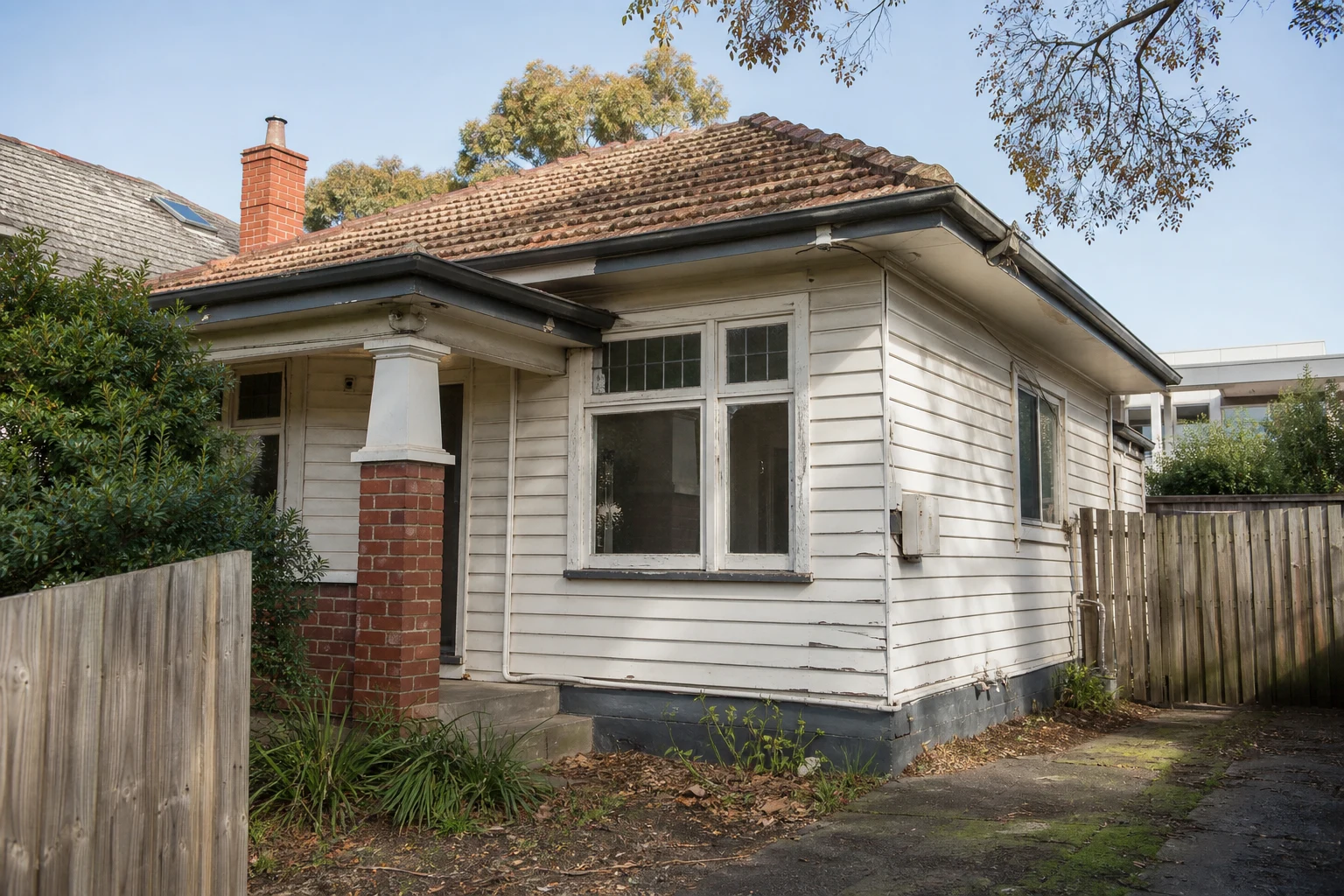
The complication in Melbourne is renovation layering. A 1920s Californian bungalow may have had a 1970s bathroom renovation done in asbestos cement sheet, and a 1995 kitchen renovation done clean. The build date tells you where to start; the renovation history tells you where to look. If previous owners left no records, assume nothing and test instead.
Where It Typically Hides
Asbestos was valued for fire resistance, durability and low cost, so it went where those properties mattered.
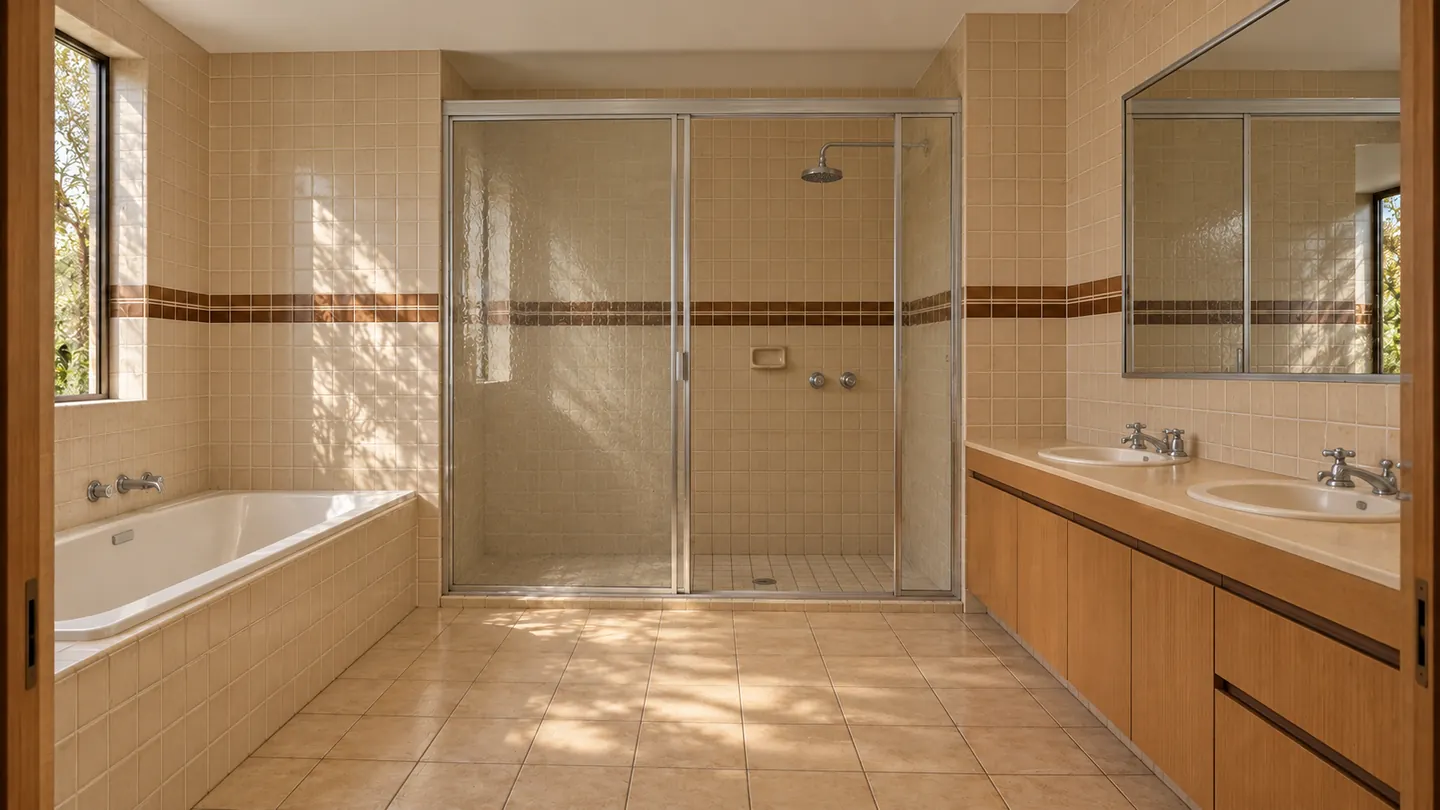
- Wet areas: Cement sheet walls and flooring under tiles in bathrooms, laundries and kitchens are among the most common finds in renovation work.
- Eaves, gables and cladding: Flat cement sheeting outside, especially on post-war homes and additions.
- Vinyl flooring: Older sheet vinyl and vinyl tiles, and particularly the backing and adhesives beneath them.
- Heating and services: Old flue pipes, lagging on heater ducts and pipework, and backing boards behind switchboards and stoves.
- Outbuildings and fences: Garages, sleep-outs and corrugated cement fencing of a certain vintage.
Note how strongly this list overlaps with renovation targets. Kitchens, bathrooms and laundries, the rooms Melbourne homeowners renovate most, are exactly where the material is most likely to sit. That is why asbestos assessment belongs in the planning phase, not the demolition phase.
Testing: Cheap Certainty Before Demolition
You cannot reliably identify asbestos by eye. Materials are confirmed by laboratory analysis of samples, and the process is inexpensive relative to everything it protects.
- Pre-renovation inspection: A licensed asbestos assessor or occupational hygienist can inspect the areas your renovation will disturb and sample suspect materials. For a typical single-room renovation this is a modest cost, commonly in the hundreds rather than thousands.
- Targeted sampling: Sampling should follow the demolition plan: the wall linings coming down, the floor coverings coming up, the eaves being cut for the extension.
- Written report: The result is a document stating what was found and where, which then drives the removal scope and lets builders price the work accurately instead of excluding it.
The alternative, discovering suspect sheeting mid-demolition, stops the site, requires assessment under pressure and delays every following trade. Testing early converts a potential crisis into a scheduled line item. On pre-1990 homes we treat it as a standard planning step, and homeowners should be wary of any process that treats it as optional.
Removal Rules in Victoria: The Typical Framework
Removal is regulated, and the framework in Victoria typically distinguishes by material type and quantity.
- Friable asbestos: Material that crumbles or can be reduced to powder by hand, such as old lagging. Removal typically requires a Class A licensed removalist, full stop.
- Non-friable (bonded) asbestos: Cement sheet and similar products. Removal of more than 10 square metres typically requires a licensed removalist (Class A or B).
- Small bonded quantities: Under the typical 10 square metre threshold, removal without a licence may be permitted, but strict safety and disposal rules still apply, and most renovation quantities exceed the threshold anyway.
- Disposal: Asbestos waste must go to sites licensed to accept it, double-wrapped and labelled. It can never go in bins, skips or ordinary landfill.
Licensed removal includes controlled work methods, protective equipment, decontamination and disposal documentation. On a well-run project you should receive evidence of lawful disposal for your records. Requirements can change, so current WorkSafe Victoria guidance is the reference point for any specific job.
What It Means for Your Budget and Program
Handled early, asbestos is a manageable cost. As broad orientation for typical renovation scenarios:
- Testing and assessment: Commonly hundreds of dollars for a targeted single-room inspection with several samples.
- Bathroom or laundry sheet removal: Often in the low thousands for a licensed crew to strip and lawfully dispose of wall and floor sheeting in one wet area.
- Larger scopes: Eaves, cladding or multiple rooms scale the cost with area and access, and friable finds cost more due to Class A controls.
- Program impact: Booked in advance, removal typically slots in as a one-to-three day stage between strip-out and the rebuild trades. Discovered mid-build, it can stall a site for a week or more while assessment, quotes and bookings catch up.
Because most builders exclude asbestos removal from fixed pricing until testing is done, the presence of an exclusion is normal. What separates good process from poor process is whether the builder proposes testing up front and can produce licensed removalists quickly, or simply leaves the exclusion sitting there as a silent risk.
What Homeowners Should Never Do
The health risk from asbestos comes from airborne fibres, and disturbance is what releases them. A few absolute rules protect your household.
- Do not cut, drill, sand, waterblast or break suspect sheeting, ever. Power tools are the fastest way to turn a stable material into airborne fibres.
- Do not strip old vinyl or demolish wet area walls yourself in a pre-1990 home before testing.
- Do not put suspect material in household bins or renovation skips; unlawful disposal carries serious penalties and contaminates everything around it.
- Do not rely on visual identification by anyone, including trades. Confidence is not analysis.
- Do not panic about intact, painted, undisturbed sheeting either. In stable condition it is generally considered low risk; the plan just needs to account for it before that condition changes.
The homeowner who tapes off a suspect wall and picks up the phone always ends up better off than the one who spent Saturday with a crowbar. If in doubt, stop and get it assessed.
How a Well-Run Renovation Sequences It
On our projects in pre-1990 homes, the asbestos workflow is boringly predictable, which is the whole point.
- Identify the disturbance zones from the demolition plan during design.
- Commission testing of those zones before contract pricing is finalised.
- Price removal as a defined line item with a licensed removalist, or hold a stated provisional sum if testing is pending.
- Schedule removal between strip-out and rebuild, with clearance confirmed before following trades enter.
- File the assessment report and disposal documentation with the project records at handover.
That is the entire drama, contained in five bullet points and a folder. Asbestos in a Melbourne renovation is not a reason to avoid older homes; it is a known, regulated, priceable condition of working on them. The only genuinely dangerous version of it is the one nobody tested for. This article is general information; rely on licensed professionals and current WorkSafe Victoria guidance for your specific property.
Take these ideas with you.
- Assume pre-1990 Melbourne homes may contain asbestos until laboratory testing says otherwise, especially in wet areas
- Test the exact zones your renovation will disturb during planning, not after demolition starts
- In Victoria, friable removal typically requires a Class A licence and bonded removal over 10 square metres a licensed removalist
- Budget testing in the hundreds and single-room removal commonly in the low thousands, scheduled between strip-out and rebuild
- Never cut, drill, waterblast or bin suspect material; stable undisturbed sheeting is generally low risk until disturbed
A few more answers
Questions about your next step.
How much should I budget for a kitchen renovation in Melbourne?
Budget depends on layout changes, cabinetry level, benchtop choice, appliance scope and trade complexity. Fixed-layout refreshes sit much lower than structural redesigns with new services.
What kitchen upgrades usually add the most practical value?
Better drawer storage, smarter appliance placement, durable benchtops, layered task lighting and a well-sized rangehood tend to outperform cosmetic-only upgrades.
How long does a kitchen renovation usually take?
Most kitchens run over several weeks. Cabinetry manufacturing, stone templating and trade sequencing usually matter more than the demolition day.
Put your ideas into a plan
Check feasibility before you lock a quote
Council overlays, access and existing services change the job. Bring the property constraints in before finish selections harden.
We plan asbestos testing and licensed removal into pre-1990 projects from the first site visit, so it never becomes a mid-build crisis. See how we renovate older Melbourne homes or book a site assessment.