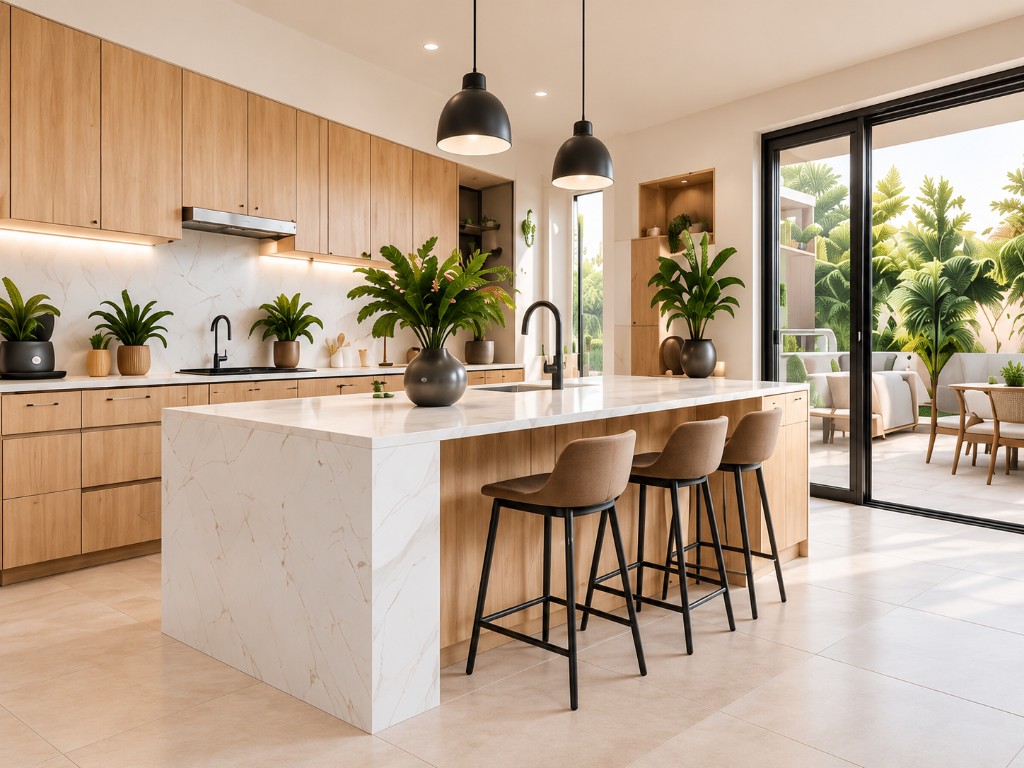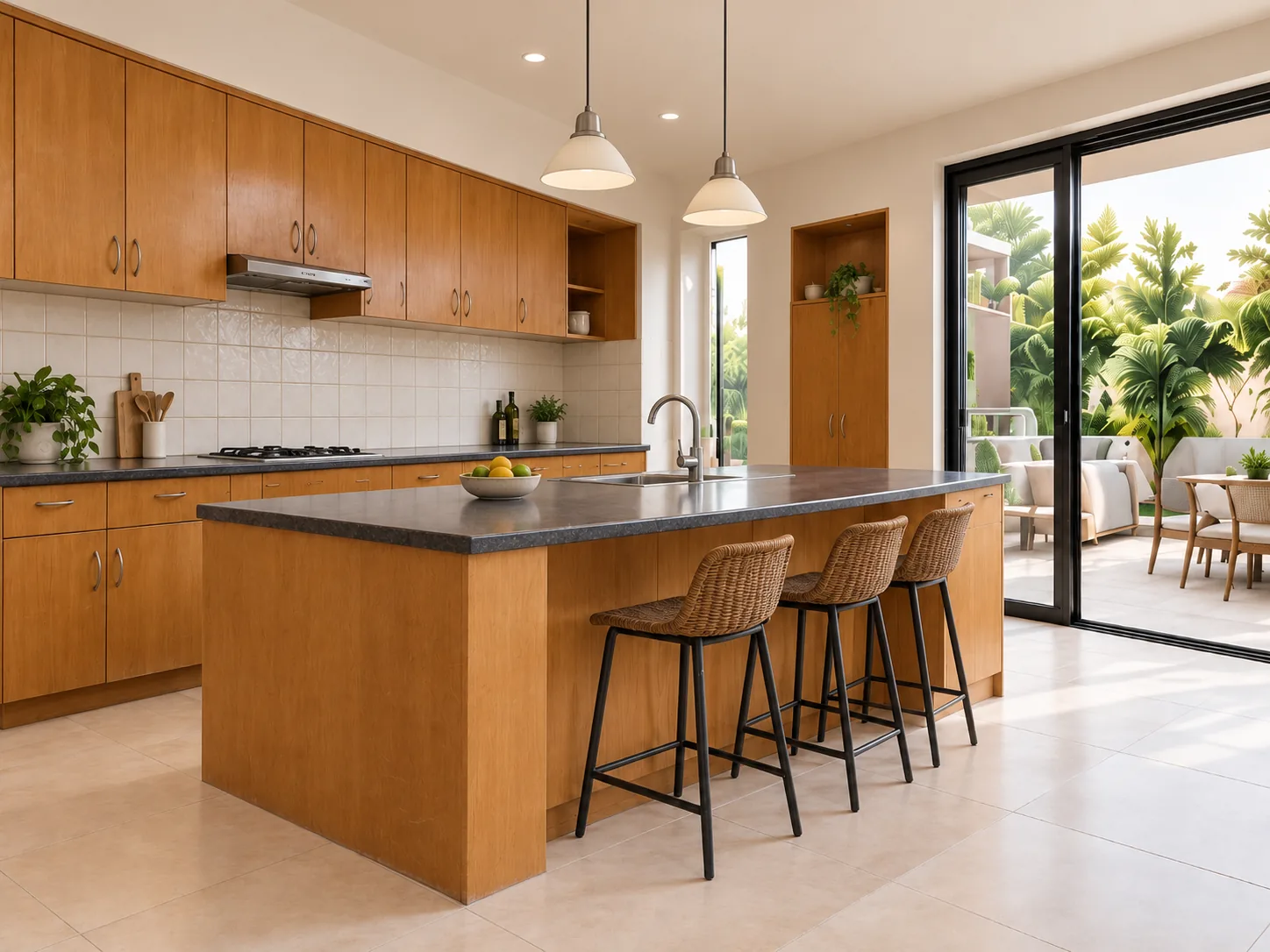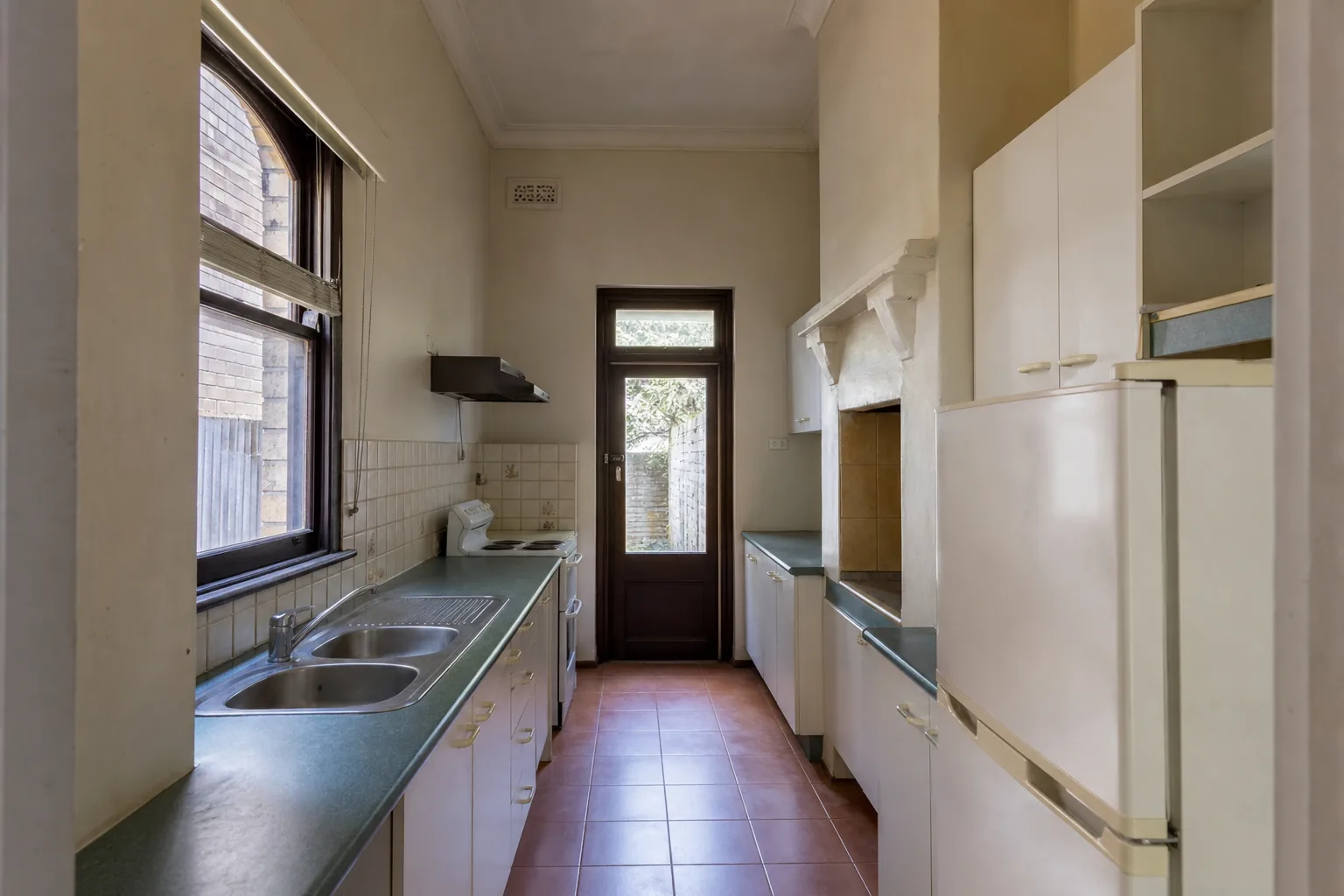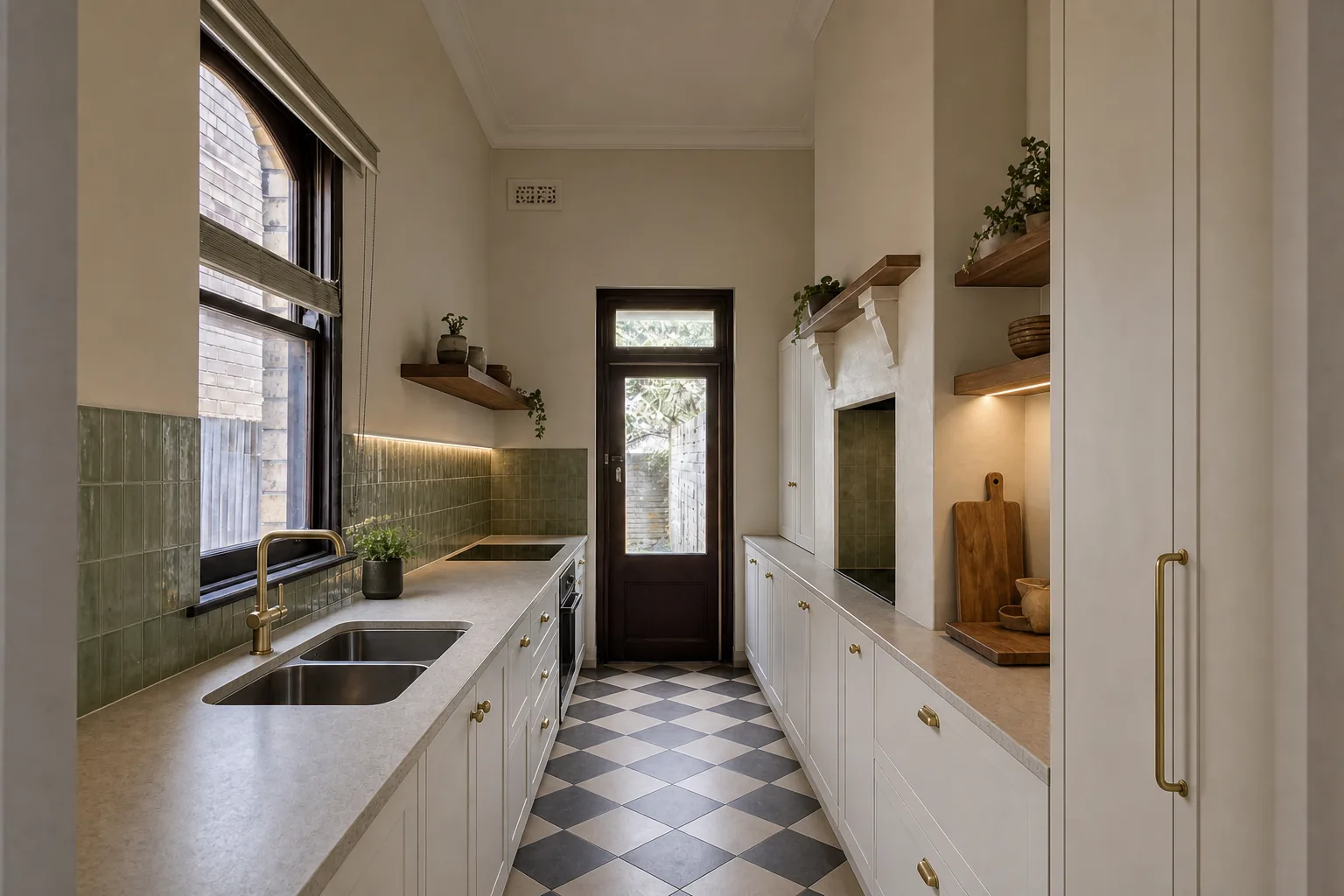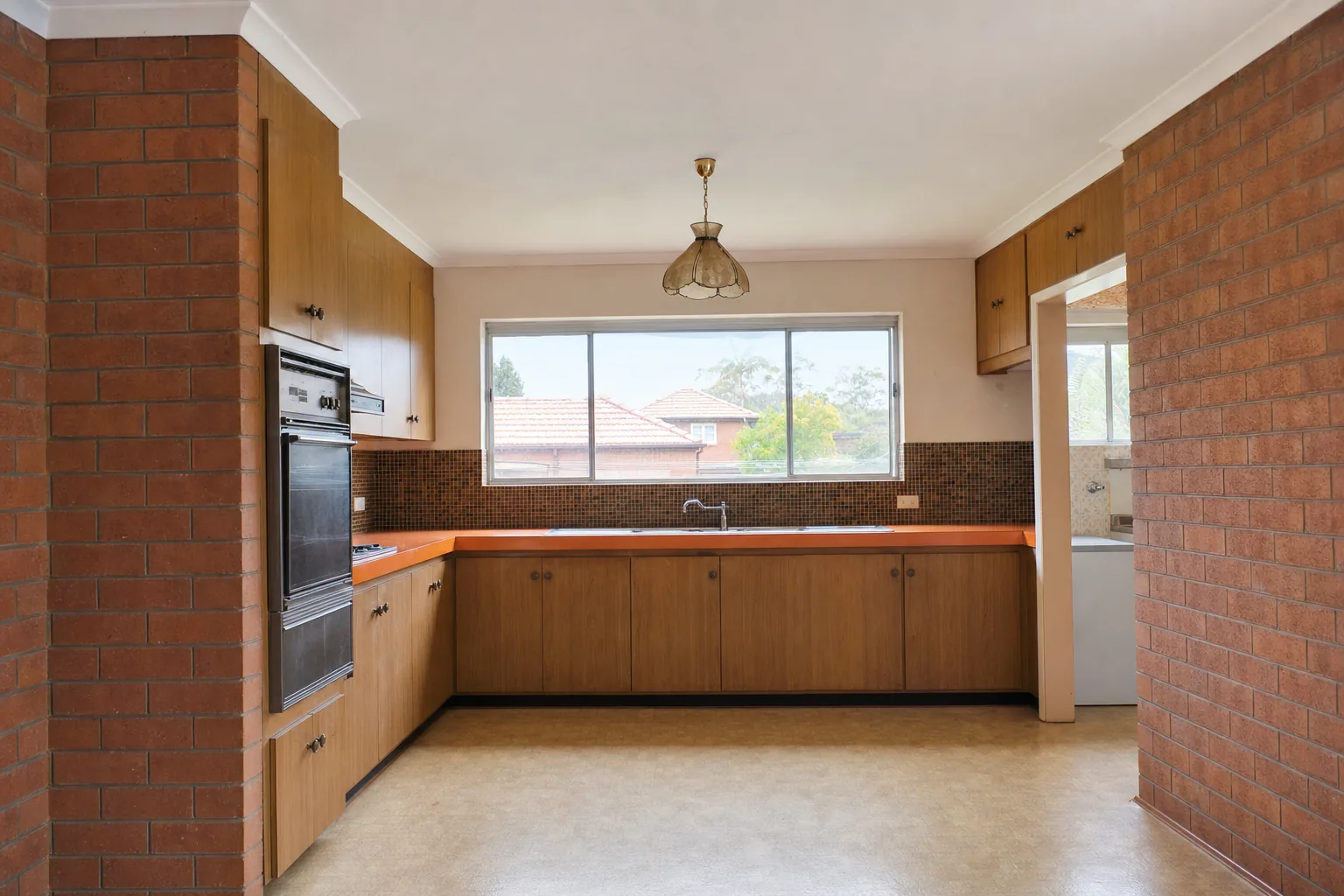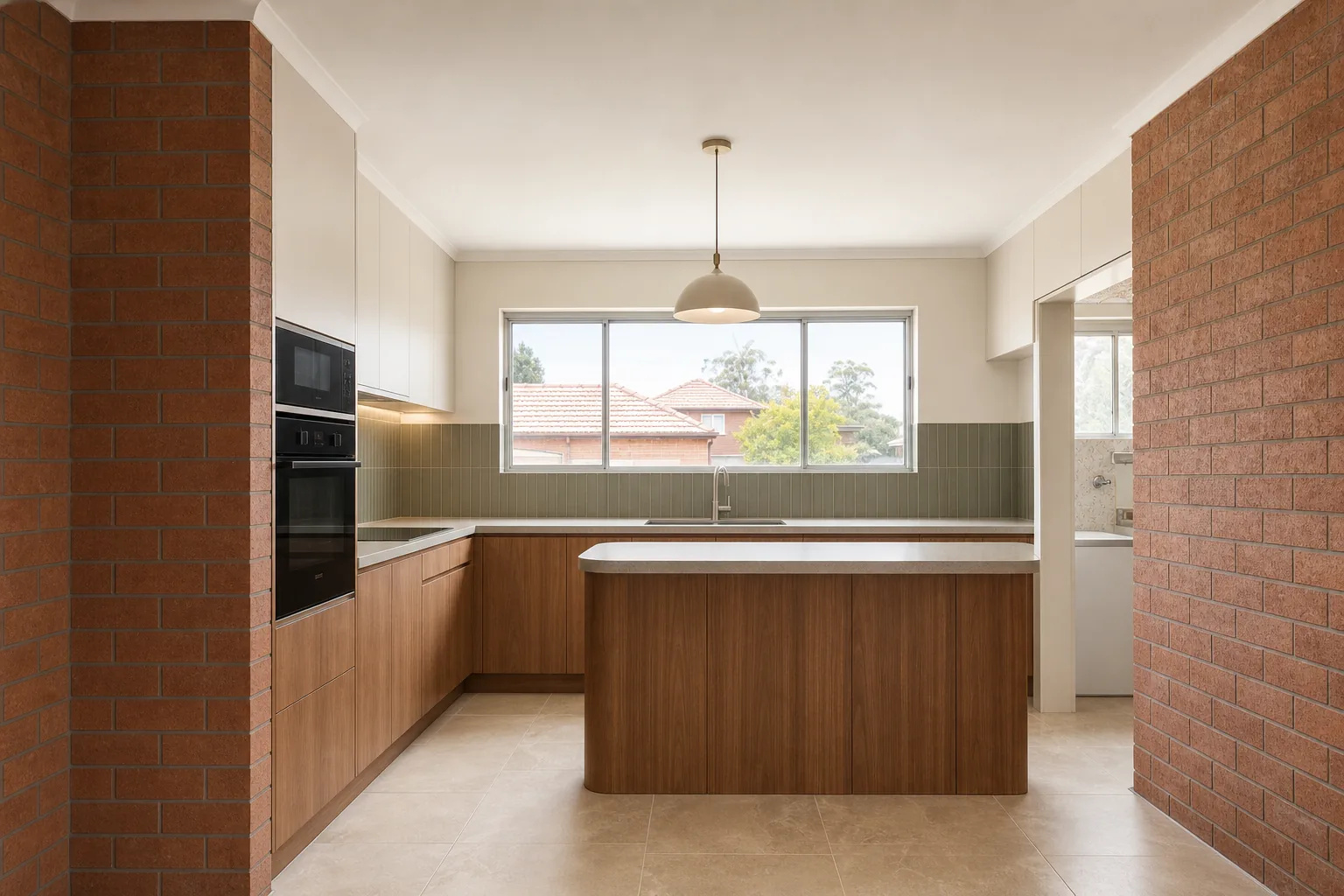
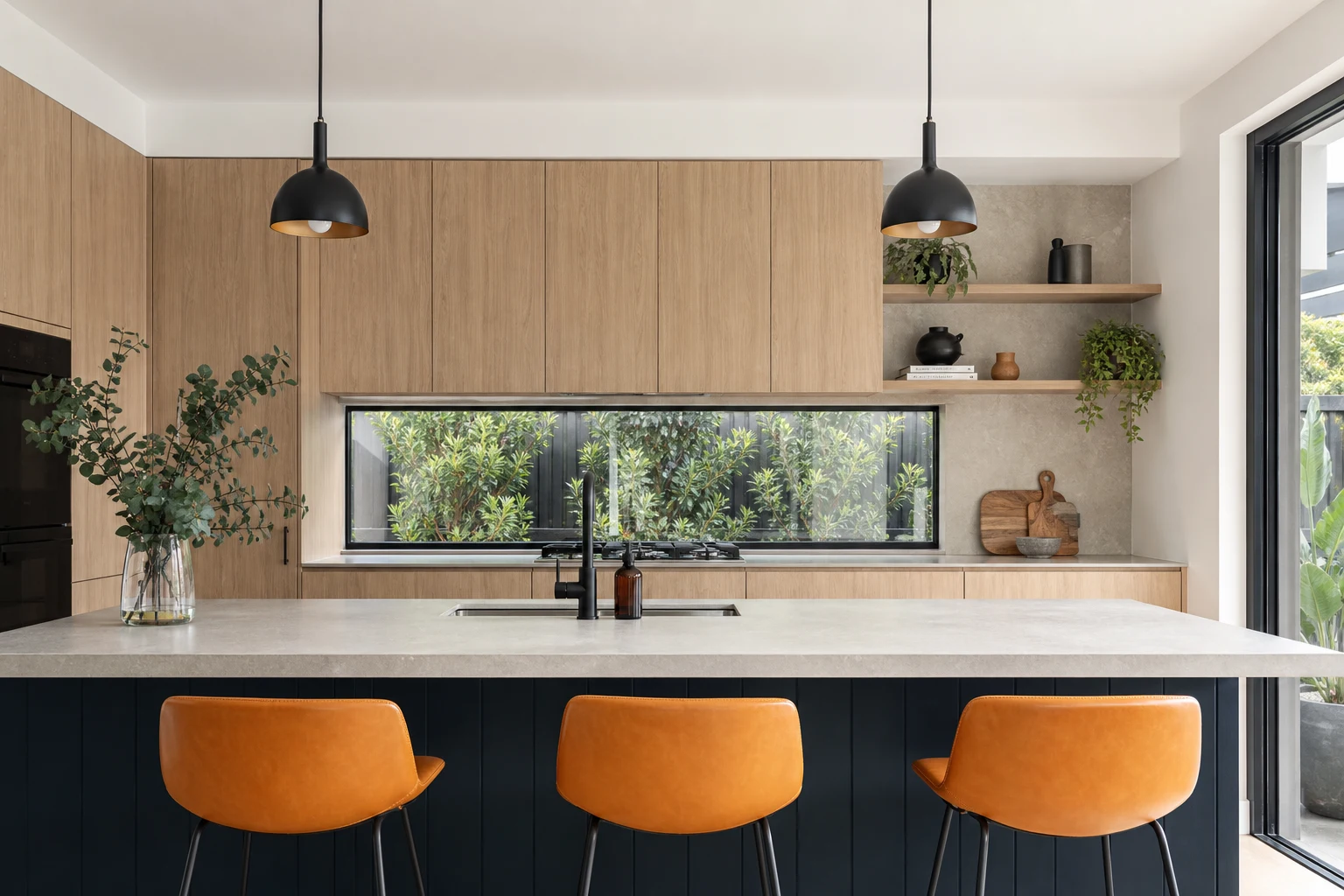
Warm timber tones have dominated Melbourne kitchen design for several years now, softening the white-on-white schemes of the previous decade. But the word timber on a joinery quote can mean four very different things: solid timber, real timber veneer, timber-grain laminate or a thermolaminated foil. They look related in a showroom and behave completely differently over ten years of family use.
This guide compares the realistic options the way we specify them on projects: what each material actually is, what it costs relative to the others, how it wears, and where each one makes sense in a kitchen. The goal is not to crown a winner but to stop homeowners paying veneer prices for laminate expectations, or vice versa.
In this guide
What Each Finish Actually Is
Getting the definitions straight prevents most quoting confusion.
- Solid timber: Doors and panels made from actual boards, usually as framed shaker-style doors because wide solid slabs move too much. Premium cost, genuine character, repairable.
- Timber veneer: A thin slice of real timber pressed onto a stable substrate, then lacquered. Real grain, real variation, far more dimensionally stable than solid boards.
- Timber-grain laminate: A printed high-pressure laminate on board. Modern versions emboss the texture to follow the printed grain, and good ones are convincingly realistic.
- Thermolaminated / vacuum-formed doors: A foil wrapped over a routed MDF door, allowing profiled shaker-style doors in a timber look without solid construction.
Each has a legitimate place. Problems arise only when the sample chosen in the showroom and the material named in the contract are not the same thing.
Cost, Durability and Repairability Compared
| Finish | Relative Cost | Durability | Repairability |
|---|---|---|---|
| Solid timber | Highest, often 2-3x laminate | Excellent structure; finish needs care near water | Fully sandable and refinishable, the only truly repairable option |
| Timber veneer | High, typically 1.5-2.5x laminate | Good with quality lacquer; edges and corners are the weak points | Minor touch-ups possible; deep damage means door replacement |
| Timber-grain laminate | Baseline | Very good scratch, impact and moisture resistance | Not repairable, but individual doors are cheap to replace |
| Thermolaminated doors | Low to mid | Good, but foils can lift with sustained heat exposure | Not repairable; replacement per door, colour matching usually fine |
The heat note on thermolaminated doors matters in kitchens: panels beside wall ovens and above under-bench ovens should be specified carefully, and reputable joiners use heat deflection strips in those positions.
How Each Finish Ages in a Real Kitchen
Showroom samples are new. Kitchens are not, for long. Ten-year behaviour is where these materials separate.
- Solid timber develops patina rather than damage. Dents and scratches read as character, and a full sand-and-refinish can reset the kitchen a decade in. Colour will shift with UV exposure, noticeably in north-facing Melbourne rooms.
- Veneer holds its look well if the lacquer is quality, but chipped edges near handles and kick-level corners are its known failure points. Once through the veneer layer, there is no invisible fix.
- Laminate is the workhorse. It resists the daily abuse of a family kitchen better than either real-timber option. Its weakness is aesthetic: repeated pattern across large runs of doors, and edge tape lines on cheaper editions.
- Thermolaminated foils perform well in dry, moderate positions and are the most affordable path to a profiled door. Quality varies widely between manufacturers, which is where a joiner with long supplier relationships earns their fee.
Grain Matching: The Detail That Separates Good From Great
Nothing exposes a budget shortcut faster than mismatched grain across a bank of drawers. Whichever material you choose, grain strategy should be specified in writing.
- Continuous grain: Drawer fronts cut from one sequence so the grain flows down the stack. Standard practice in quality veneer work, achievable in laminate with careful board planning.
- Grain direction: Horizontal grain elongates a galley run; vertical grain suits tall pantry banks. Mixed direction should be a decision, not an accident.
- Repeat management in laminate: Printed patterns repeat. Good joiners stagger cuts so identical knots do not appear twice at eye level side by side.
- Sample at scale: A 100mm chip cannot show repeat or flow. Ask to see a full door sample, or a photographed completed project in the same board.
These items cost little more than planning effort, and they are the difference between a kitchen that photographs like a magazine and one that looks like flat-pack in the wrong light.
Where We Actually Specify Each Finish
On Melbourne projects, the materials tend to sort themselves by location and budget logic rather than ideology.
- Feature zones: Veneer or solid timber on the island front, open shelving and display cabinetry, where hands and eyes land daily.
- Workhorse zones: Quality timber-grain laminate on perimeter runs, pantry internals and anything a school bag can hit.
- Mixed-material schemes: The most common current approach pairs timber-look lower cabinetry with painted or matt-finish uppers, so the timber budget concentrates where it shows.
- Wet and heat edges: Whatever the material, detailing matters more than brand: sealed edges near sinks, deflection strips at ovens and dishwashers, and adequate clearance at kettles and toasters that live under overheads.
A useful budget rule: spending up on the three square metres you touch and see constantly, and saving on the ten square metres you do not, beats a uniform mid-grade everywhere.
Questions to Put on Every Joinery Quote
Quotes for timber-look kitchens are only comparable when the material system is pinned down. Before comparing numbers, get written answers to these.
- Is the finish solid timber, veneer, laminate or thermolaminated foil, and which brand and product line?
- What is the edge treatment, and will edges be colour and grain matched to faces?
- Is grain continuity across drawer stacks and door pairs included?
- What heat protection is detailed at ovens and dishwashers?
- What does the warranty cover, and for how long, on the finish itself as distinct from the cabinet carcass?
Two quotes that differ by thousands often turn out to be quoting different materials under the same word. Once the answers above are aligned, the real comparison begins.
Take these ideas with you.
- Timber on a quote can mean solid, veneer, laminate or foil, and they cost and wear very differently
- Laminate is the durability workhorse; solid timber is the only genuinely repairable finish
- Grain matching and edge treatment separate quality joinery from budget work in any material
- Concentrate real timber or veneer where hands and eyes land, and use laminate in workhorse zones
- Confirm brand, product line and edge details in writing before comparing joinery quotes
A few more answers
Questions about your next step.
How much should I budget for a kitchen renovation in Melbourne?
Budget depends on layout changes, cabinetry level, benchtop choice, appliance scope and trade complexity. Fixed-layout refreshes sit much lower than structural redesigns with new services.
What kitchen upgrades usually add the most practical value?
Better drawer storage, smarter appliance placement, durable benchtops, layered task lighting and a well-sized rangehood tend to outperform cosmetic-only upgrades.
How long does a kitchen renovation usually take?
Most kitchens run over several weeks. Cabinetry manufacturing, stone templating and trade sequencing usually matter more than the demolition day.
Put your ideas into a plan
Turn this cost guide into a real number
A useful quote names layout, services, finish level and exclusions. We measure in the house, then price the room you actually have.
Our joinery specifications name the exact material, edge and grain strategy so what you approve is what gets built. Learn about our kitchen renovations or call 1300 173 622 to talk finishes.