There is exactly one moment in a home's life when running a cable costs almost nothing: while the walls are already open. Every renovation we deliver in Melbourne reaches that moment, and the difference between homeowners who plan for it and those who don't shows up for the next twenty years, every time someone wants a camera, a charger or a reliable wifi signal in the back room.
This guide separates the smart home infrastructure genuinely worth installing during a renovation from the gadgetry that can be added any time. The theme throughout is simple: prioritise cables, conduits and switchboard capacity, because hardware changes every few years but wiring is forever.
In this guide
- The Golden Rule: Wire for the Future, Buy Devices Later
- Data Cabling: The Highest-Value Metre You Will Ever Run
- Lighting: Where Smart Is Worth It and Where It Is Not
- Security: Cameras, Doorbells and Alarms Done Properly
- Electrical Capacity: EV Charging, Electrification and the Switchboard
- Climate, Blinds and the Comfort Layer
- What to Skip During the Renovation
The Golden Rule: Wire for the Future, Buy Devices Later
Smart home products date quickly. The ecosystem you buy today will be superseded, but a well-planned cable network never stops being useful. During a renovation, the spending priority should run in this order:
- First, cabling and conduit: Network cable, speaker cable, security wiring and empty conduit paths cost little while walls are open and are disruptive to retrofit later.
- Second, switchboard and circuit capacity: Space and capacity for future circuits, from EV charging to electrified heating.
- Third, wired fixed infrastructure: Access points, cameras and zoned climate control that benefit from permanent power and data.
- Last, the gadgets: Speakers, hubs, sensors and bulbs, which are plug-in purchases you can make and replace any time.
Homeowners who invert this order end up with an impressive box of devices connected through a congested wifi network in a house with no spare circuits. Infrastructure first is the whole game.
Data Cabling: The Highest-Value Metre You Will Ever Run
Wifi is convenient but physics is physics: brick walls, foil insulation and distance degrade wireless performance, and Melbourne's double-brick and rendered homes are notorious for dead spots. Hard-wired data solves this permanently.
- Cat6 or better to every TV point, study and work-from-home position: Streaming, video calls and gaming are all better wired.
- Ceiling data points for wireless access points: One or two ceiling-mounted access points, positioned centrally per storey, outperform any router-in-the-corner arrangement.
- A central patch location: A small cupboard or garage wall panel where the NBN service, router and switch live, with cables radiating out.
- Conduit to the street-side entry and to detached structures: Empty conduit to a garage, studio or granny flat costs a trench you were possibly digging anyway and future-proofs everything.
Data cabling in Victoria must be installed by a registered cabler, and during a rewire the incremental cost per point is modest. After handover, the same point costs multiples more and involves cutting finished plaster.
Lighting: Where Smart Is Worth It and Where It Is Not
Lighting is the most visible smart home category and the easiest to overspend on. The renovation-stage decisions that matter:
- Neutral wires at every switch position: Many smart switch systems require a neutral at the switch. Specifying this during the rewire keeps every future option open for a trivial cost.
- Circuit zoning: Separate switching for task, ambient and feature lighting in living areas and kitchens delivers most of the smart lighting experience even with conventional switches.
- Smart switches over smart bulbs for fixed lighting: Switches survive bulb replacements and keep normal wall control working for guests and future owners.
- Dedicated wiring for exterior and security lighting: Sensor-controlled perimeter lighting wants its own circuits and positions planned with the camera layout.
Whole-home wired control systems remain available at the premium end, but for most Melbourne renovations, quality wiring plus retrofit-friendly smart switches delivers the majority of the benefit at a fraction of the cost, without locking the home into one proprietary ecosystem.
Security: Cameras, Doorbells and Alarms Done Properly
Security hardware is where wired infrastructure most obviously beats battery devices. Battery cameras need charging forever; wired ones simply work.
- PoE camera points at entries and driveways: A single network cable delivers power and data to each camera. Running four to six points during a renovation is cheap; retrofitting them under eaves later is not.
- Wired doorbell position: Power and data at the front door supports any current or future video doorbell without battery swaps.
- Alarm and sensor cabling: If you want an alarm, rough-in reed switches and sensor positions during the build. Hybrid wired-wireless panels then give you the best of both.
- Recording location: A shelf and double power point in the patch cupboard for a small recorder keeps footage local and private, with remote viewing when wanted.
One planning note: camera positioning should respect neighbour privacy and overlook your own property, which is both good practice and the neighbourly standard expected on Melbourne's tighter blocks.
Electrical Capacity: EV Charging, Electrification and the Switchboard
The least glamorous smart home upgrade is the one that enables all the others: electrical capacity. Victorian homes are electrifying rapidly, with gas connections increasingly being phased out for new dwellings and many renovators choosing all-electric. Your renovation should assume more electrical demand, not less.
- Switchboard with spare ways: Upgrading to a modern board with generous spare capacity and safety switches on all circuits is baseline good practice during any major renovation.
- EV charging provision: At minimum, run conduit and allow board capacity for a dedicated circuit to the garage or carport. Even if you don't drive an EV today, the next owner will.
- Induction and heat pump circuits: Replacing gas cooking and hot water later requires dedicated circuits. Provisioning them while the electrician is on site is far cheaper than a return visit.
- Solar and battery readiness: Conduit paths from the roof to the board, and board space for future solar or battery connection, cost little during a renovation.
Ask your electrician for a simple load assessment as part of the renovation scope. It turns all of these from guesses into a plan.
Climate, Blinds and the Comfort Layer
Comfort automation is where smart infrastructure quietly earns its keep in Melbourne's four-seasons-in-a-day climate.
- Zoned climate control: If the renovation includes new ducted heating and cooling, specify zoning with smart control. Heating only the rooms in use is the single biggest running-cost win available.
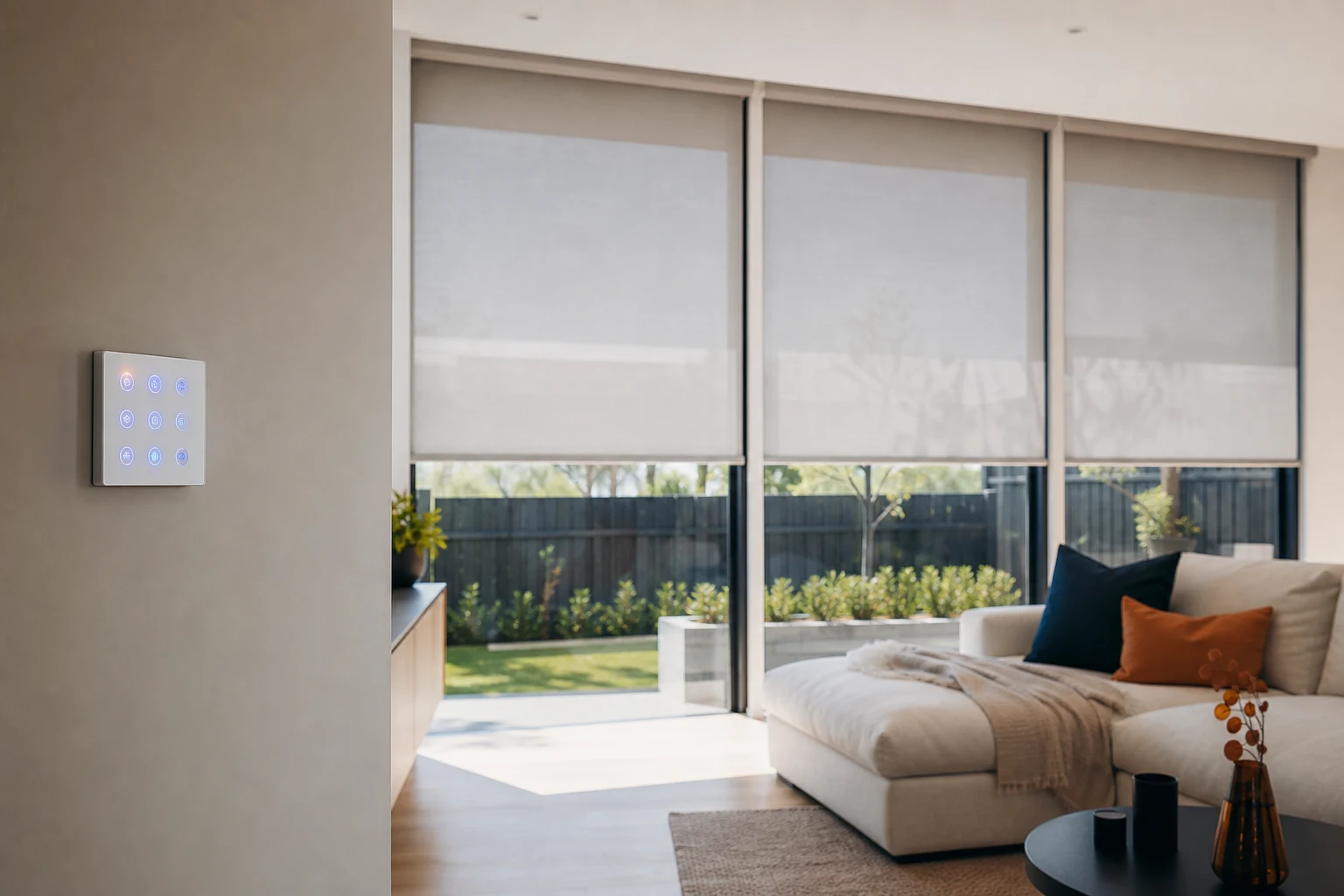
- Wiring for motorised blinds: Power provision at window heads in living areas and bedrooms during the rewire enables hard-wired blinds later, which are quieter and more reliable than battery retrofits.
- Ceiling fan provisioning: Braced points and switching in bedrooms even if fans are a later purchase.
- Sensor-friendly positions: Flush ceiling positions with power for occupancy and climate sensors in key rooms, even if you leave them empty for now.
None of these require committing to an automation platform during the renovation. They simply ensure that whichever platform you eventually choose has power and cabling where it needs it.
What to Skip During the Renovation
Just as important as what to wire is what not to buy during the build, because it can be added any time with zero disruption:
- Smart speakers, displays and hubs: Plug-in devices. Buy them after handover when you know how you live in the space.
- Smart bulbs in every room: Redundant once switch wiring is done properly.
- Proprietary whole-home ecosystems chosen under time pressure: If you want integrated control, choose it deliberately with a specialist, not from a trade's preferred brand during a busy fit-off week.
- Smart appliances bought for the features: Buy appliances for their core performance; connectivity is a bonus, not a reason.
The renovation-stage budget for a typical Melbourne home doing this properly is modest: data points, ceiling access point positions, camera cabling, neutral-at-switch wiring, conduit runs and a capable switchboard. That package costs a small fraction of a joinery upgrade and outlasts every device trend of the next two decades.
Take these ideas with you.
- Prioritise cables, conduit and switchboard capacity during the build, and buy the actual gadgets later
- Hard-wired data points and ceiling access points permanently solve the wifi problems common in brick Melbourne homes
- Neutral wires at switches and zoned lighting circuits keep every future smart lighting option open cheaply
- PoE camera and doorbell cabling is cheap during renovation and painful to retrofit afterwards
- Provision circuits for EV charging, induction and heat pumps now, because Victorian homes are steadily electrifying
A few more answers
Questions about your next step.
How much should I budget for a kitchen renovation in Melbourne?
Budget depends on layout changes, cabinetry level, benchtop choice, appliance scope and trade complexity. Fixed-layout refreshes sit much lower than structural redesigns with new services.
What kitchen upgrades usually add the most practical value?
Better drawer storage, smarter appliance placement, durable benchtops, layered task lighting and a well-sized rangehood tend to outperform cosmetic-only upgrades.
How long does a kitchen renovation usually take?
Most kitchens run over several weeks. Cabinetry manufacturing, stone templating and trade sequencing usually matter more than the demolition day.
Put your ideas into a plan
Turn this cost guide into a real number
A useful quote names layout, services, finish level and exclusions. We measure in the house, then price the room you actually have.
We build smart infrastructure into renovations as part of the electrical scope, not as an afterthought. Plan a renovation that is wired for the next twenty years or call 1300 173 622.