Waste is the least glamorous line in a renovation budget and one of the most consistently underestimated. A single bathroom strip-out generates well over a tonne of tiles, plasterboard, screed and old fixtures. A full-home renovation can produce dozens of cubic metres of mixed material, and every one of them has to be carried, sorted, transported and paid for.
This guide covers how renovation waste actually gets handled in Melbourne: skip bins versus tipper runs, what transfer stations accept, which materials can be recycled rather than landfilled, the special rules around asbestos, and the questions that reveal whether a builder's quote has priced waste honestly.
In this guide
- How Much Waste a Renovation Really Produces
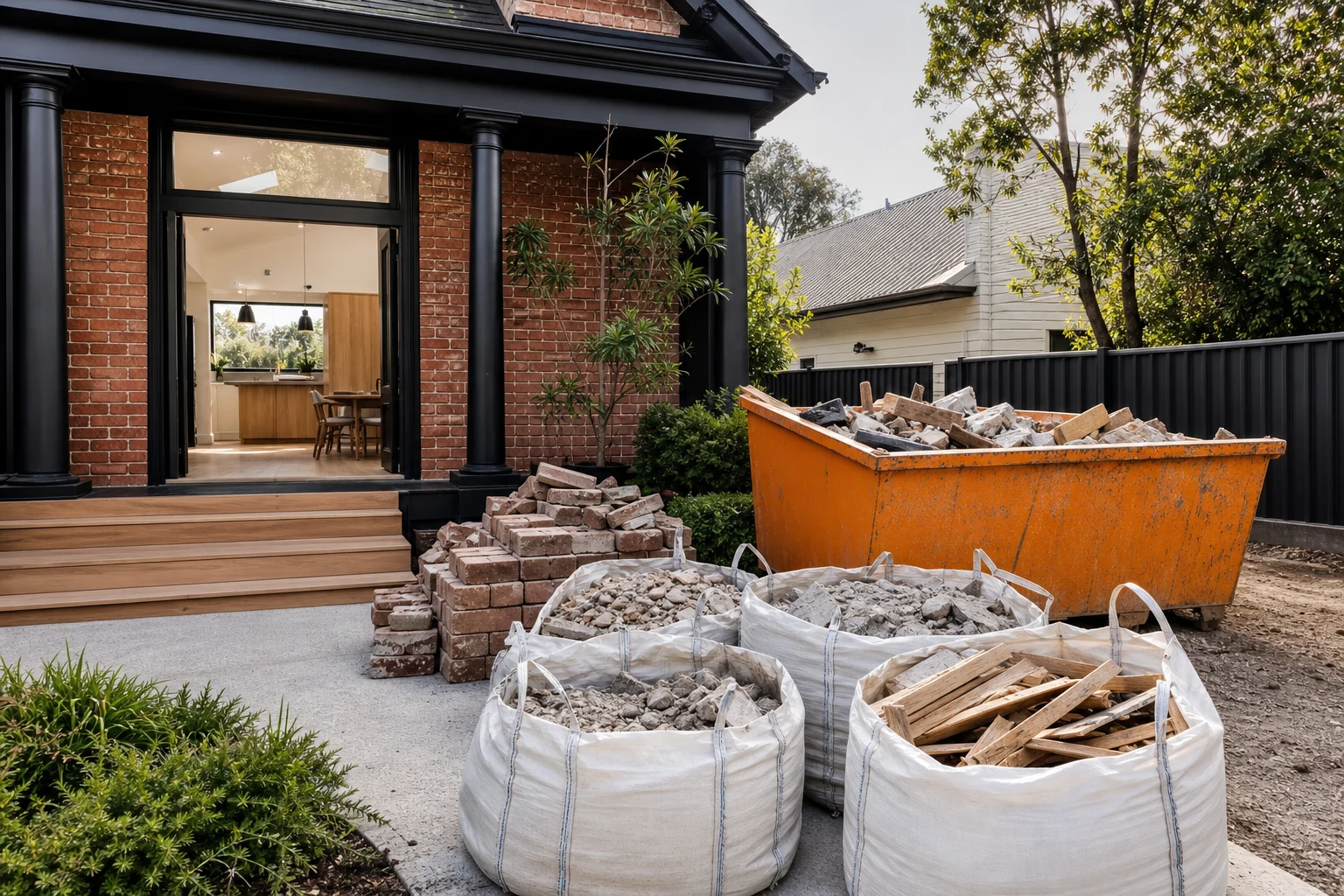
- Skip Bins, Tipper Runs and Skip Bags Compared
- What Can Actually Be Recycled in Melbourne
- Asbestos: The Waste Stream With Its Own Rules
- Council Rules, Bin Permits and Street Logistics
- What Your Builder Should Include and What to Ask
- A Simple Waste Plan for Your Renovation
How Much Waste a Renovation Really Produces
Homeowners consistently underestimate waste volume because demolished materials take up several times their installed volume once broken up. As working figures for Melbourne projects:
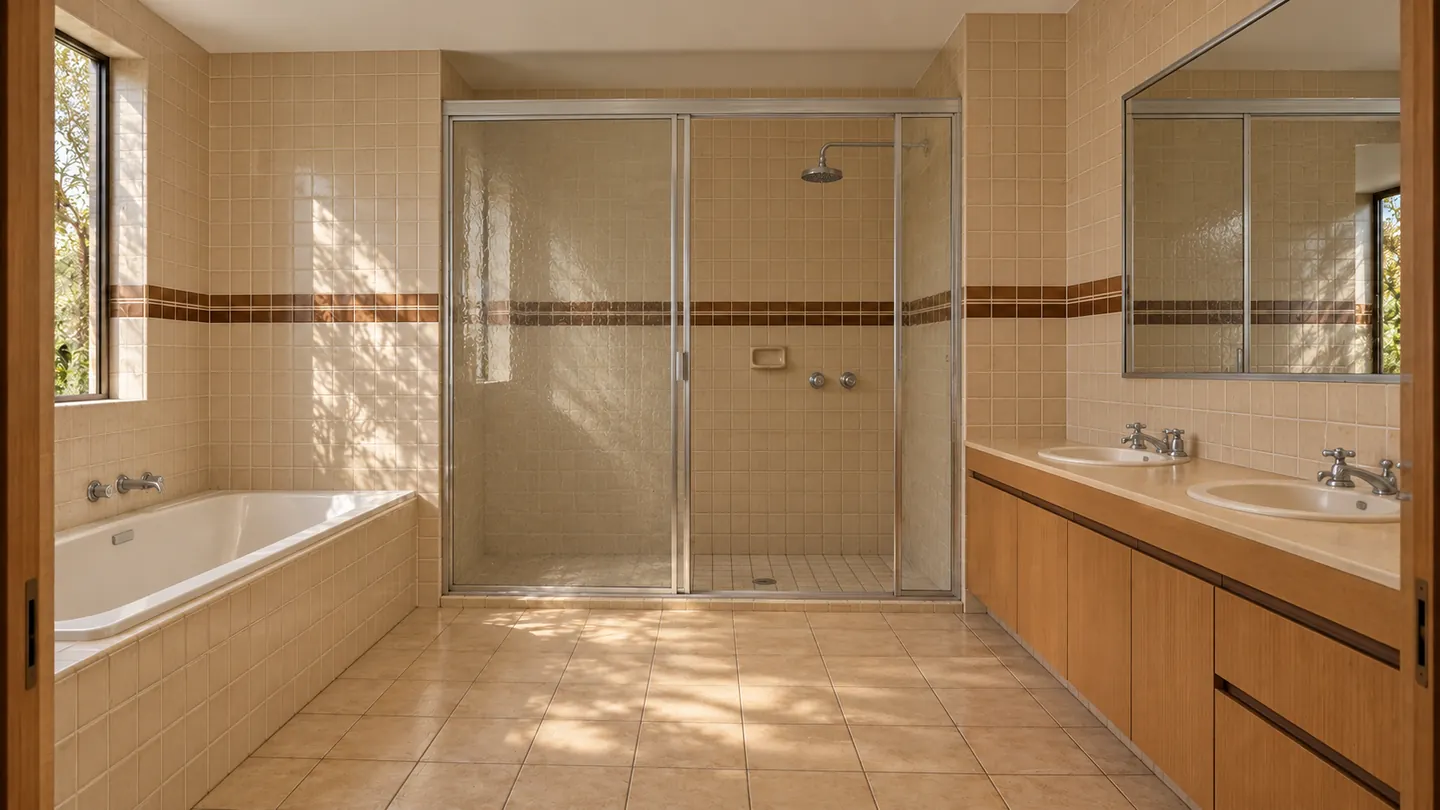
- Bathroom renovation: Commonly 1.5 to 3 cubic metres of dense waste, dominated by tiles, bedding screed and plasterboard. Weight, not volume, is the constraint.
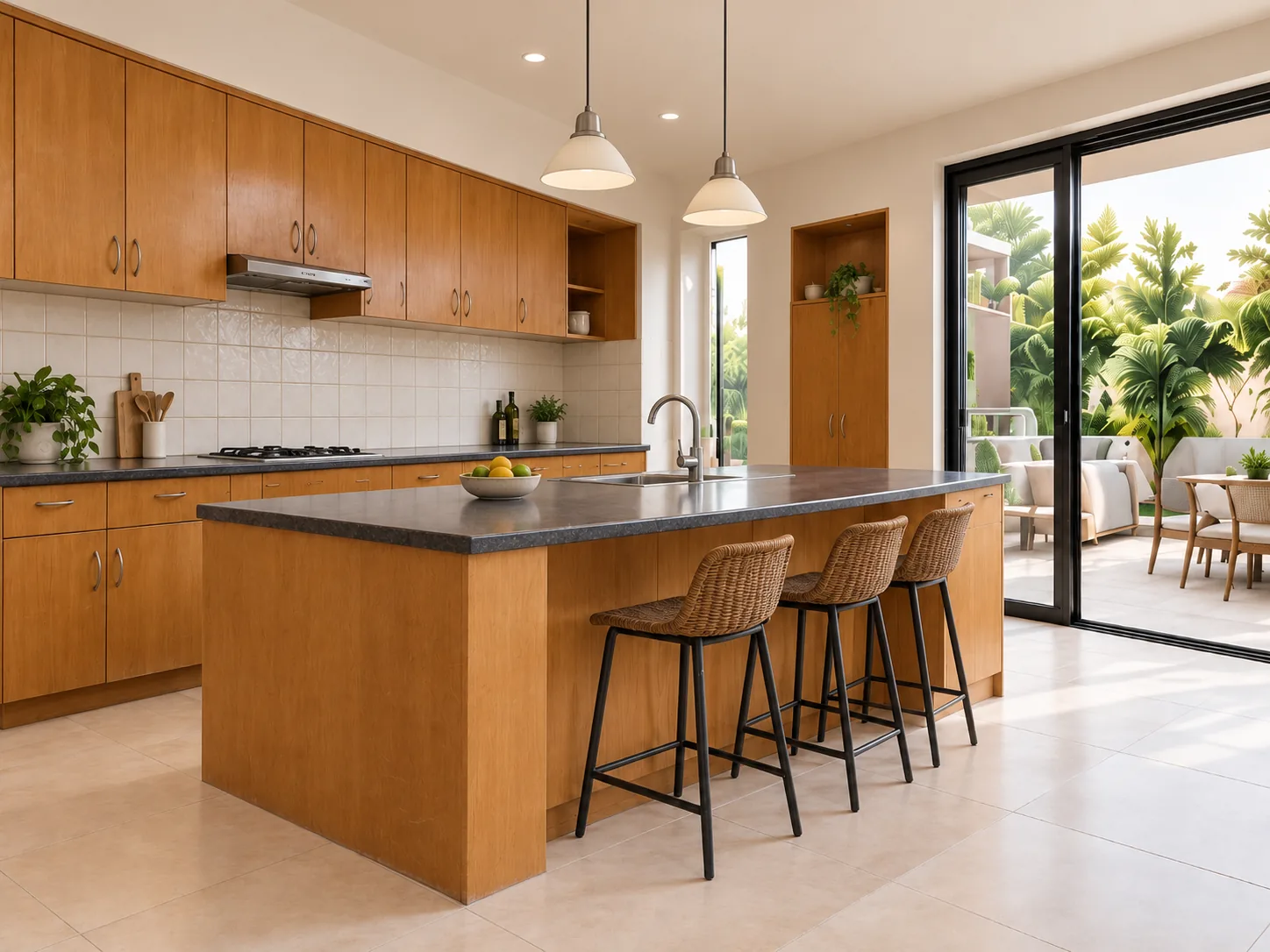
- Kitchen renovation: Typically 3 to 6 cubic metres including cabinetry, benchtops, splashback and often old flooring.
- Full-home internal renovation: Commonly 15 to 40+ cubic metres across multiple stages, from strip-out through to fit-off packaging.
- Extensions: Add excavation spoil, which is priced and transported separately from construction waste.
Packaging is the volume nobody plans for. New joinery, appliances and fixtures arrive wrapped in cardboard, foam and pallets, and on a big project the fit-off stage can fill a bin on its own. A realistic waste allowance covers the whole project, not just demolition week.
Skip Bins, Tipper Runs and Skip Bags Compared
| Method | Typical Cost (Melbourne) | Best For | Watch-Out |
|---|---|---|---|
| Skip bin (4-8m3) | Commonly $350-$800+ per bin depending on size and waste type | Most renovations with driveway or on-street space | Heavy waste surcharges; council permit needed for street placement |
| Tipper or ute runs to transfer station | Gate fees plus labour; efficient for dense loads | Tight-access sites, staged small volumes, sorted loads | Labour time adds up; weighbridge pricing varies by material |
| Skip bags | Bag purchase plus collection fee | Small cosmetic jobs and apartments without bin space | Strict weight limits; unsuitable for tiles and rubble volume |
| Hard waste collection | Free or low cost via council | Old appliances and furniture only | Not for construction waste; misuse can attract fines |
On most projects the answer is a combination: bins during demolition, tipper runs for dense sorted material, and normal waste streams for packaging. What matters is that someone has planned it rather than discovering it.
What Can Actually Be Recycled in Melbourne
A surprising share of renovation waste has a recycling pathway in Melbourne, and sorted loads are commonly cheaper to dispose of than mixed ones because Victoria's landfill levy is built into mixed-waste gate fees.
- Concrete, brick and tile: Widely accepted by recyclers who crush it into road base. Clean loads attract significantly lower rates than mixed waste.
- Metals: Copper pipe, wiring offcuts, steel frames and old appliances have scrap value. Plumbers and electricians commonly recycle their own offcuts.
- Plasterboard: Clean plasterboard can be recycled into new board and soil products through dedicated programs, though contaminated board goes to landfill.
- Timber: Untreated timber can be reused or recycled; treated pine and engineered products generally cannot and must be landfilled.
- Cardboard and soft plastics: Packaging from the fit-off stage is straightforwardly recyclable if kept separate and dry.
Salvage is the other stream worth naming. Period doors, hardware, clawfoot baths, solid timber and intact appliances all have resale or donation value in Melbourne's architectural salvage market. An hour of listing effort before demolition regularly saves both money and landfill.
Asbestos: The Waste Stream With Its Own Rules
Any Melbourne home built or renovated before 1990 should be treated as potentially containing asbestos, most commonly in fibro sheeting, eave linings, vinyl floor backing, bathroom wall sheets and old lagging. Asbestos waste sits under a completely different regime from general renovation waste.
- Removal thresholds: In Victoria, licensed removalists are required for friable asbestos and for larger quantities of bonded sheet. Even where small-scale removal is technically permitted, testing and professional removal is the defensible path.
- Disposal is restricted: Asbestos must be double-wrapped, labelled and taken only to landfills licensed to accept it. It can never go in a general skip bin, and bin companies actively inspect for it.
- Testing is cheap insurance: Sample testing before demolition costs little and prevents the worst-case scenario: a site shut down mid-demolition when suspect sheeting is discovered.
- Documentation matters: Keep the clearance certificate and disposal docket in your renovation file permanently.
The practical rule is absolute: no suspect material gets broken, drilled or binned until it has been tested. Everything about asbestos is cheaper before it becomes an incident.
Council Rules, Bin Permits and Street Logistics
Waste logistics intersect with council regulation in ways that catch renovators out.
- Skip bins on the street need a permit: Placing a bin on the road, nature strip or footpath requires a council permit in effectively every Melbourne municipality, usually arranged by the bin company for a fee. Bins entirely within your property need none.
- Asset protection: Many councils require an asset protection permit before significant works, documenting footpath and kerb condition so damage from trucks and bins can be attributed fairly.
- Load covering: Waste transported to transfer stations must be covered and secured. Fines for uncovered loads are routine.
- Burning is banned: Burning renovation waste is prohibited across metropolitan Melbourne. It goes without saying, but every year someone tries.
None of this is difficult, but all of it takes lead time. A bin permit that takes days to issue can hold up a demolition start if nobody applied.
What Your Builder Should Include and What to Ask
On a professionally run renovation, waste is the builder's problem, priced into the contract. The questions worth asking before signing:
- Is all waste removal included, for the whole project? Some quotes cover demolition waste only, leaving fit-off packaging and excess material ambiguous.
- Who pays for asbestos if it is found? Usually handled as a provisional sum or variation; what matters is that the mechanism is written down before it happens.
- Are bins, permits and heavy-waste surcharges included? Tile and rubble surcharges are exactly the kind of small exclusion that inflates a cheap quote.
- Is anything worth salvaging? Agree before demolition which items are yours to keep or sell.
- How is the site left each day? Daily rubbish management is a site-safety issue as much as a tidiness one, especially with children or pets at home.
A builder who answers these precisely has priced the project honestly. Vague answers about waste are a preview of vague variations later.
A Simple Waste Plan for Your Renovation
You don't need a formal waste management plan for a domestic renovation, but five decisions made before demolition will save money and friction:
- Test any pre-1990 suspect materials for asbestos before anyone swings a hammer.
- List salvageable items and remove them before the strip-out crew arrives.
- Choose the bin strategy against your access: driveway bin, street bin with permit, or tipper runs for tight sites.
- Keep dense recyclables like tile and brick separate from mixed waste where volumes justify it.
- Confirm in writing what the builder's contract includes for waste, surcharges and discovery of hazardous materials.
Waste never decides whether a renovation succeeds, but it reliably reveals how well the project was planned. Tidy sites and tidy budgets tend to belong to the same builders.
Take these ideas with you.
- Renovation waste volumes are routinely underestimated, and packaging from fit-off can fill a bin on its own
- Sorted loads of concrete, tile, metal and clean plasterboard are commonly cheaper to dispose of than mixed waste
- Asbestos has its own removal, transport and disposal rules and must never go in a general skip bin
- Skip bins on streets or nature strips need council permits in effectively every Melbourne municipality
- Confirm in writing that your builder has priced waste for the whole project including surcharges and hazardous discovery
A few more answers
Questions about your next step.
How much should I budget for a kitchen renovation in Melbourne?
Budget depends on layout changes, cabinetry level, benchtop choice, appliance scope and trade complexity. Fixed-layout refreshes sit much lower than structural redesigns with new services.
What kitchen upgrades usually add the most practical value?
Better drawer storage, smarter appliance placement, durable benchtops, layered task lighting and a well-sized rangehood tend to outperform cosmetic-only upgrades.
How long does a kitchen renovation usually take?
Most kitchens run over several weeks. Cabinetry manufacturing, stone templating and trade sequencing usually matter more than the demolition day.
Put your ideas into a plan
Check feasibility before you lock a quote
Council overlays, access and existing services change the job. Bring the property constraints in before finish selections harden.
Our quotes price waste, bins, permits and site management for the entire project, not just demolition week. Get a properly itemised full-home renovation quote or call 1300 173 622.