Trend articles are usually written from mood boards. This one is written from job sites. As a team building kitchens, bathrooms, laundries and whole-home renovations across Melbourne, we see the gap between what gets pinned online and what actually gets contracted, priced and built, and in 2026 that gap is wider than ever.
Below are the trends genuinely showing up in Melbourne renovation contracts this year: the materials being selected after the budget conversation rather than before it, the layouts families are paying for, and the quiet infrastructure shifts, led by electrification, that are reshaping scopes more than any colour palette.
In this guide
- Electrification Is the Biggest Trend Nobody Photographs
- Warm Minimalism Has Beaten Both Extremes
- The Working Pantry Has Become the Kitchen's Engine Room
- Bathrooms: Bigger Showers, Warmer Stone, Smarter Storage
- Laundries and Mudrooms: The Hardest-Working Trend
- Floor Plans: Broken-Plan Living and the Multi-Generational Brief
- How to Use Trends Without Being Used by Them
Electrification Is the Biggest Trend Nobody Photographs
The most consequential shift in Melbourne renovating is invisible in the after photos: homes are going all-electric. Victoria's policy direction has moved decisively away from new gas connections, and renovators are following, partly for running costs and partly because a renovation is the cheapest moment to switch.
- Induction replaces gas cooktops in the clear majority of our kitchen scopes now, with the dedicated circuit run during the rewire.
- Heat pump hot water is the default replacement conversation when the old gas storage unit is near the end of its life mid-renovation, helped along by Victorian energy upgrade incentives.
- Reverse-cycle zoning replaces ducted gas heating in many full-home scopes, doubling as the cooling Melbourne summers increasingly demand.
- Switchboards and circuits are being upsized to carry it all, with EV charging provision now a routine request.
The design consequence is real: no gas cooktop changes rangehood and splashback options, and losing the gas heater wall vent frees up furniture layouts. Electrification is a floor-plan trend disguised as a services decision.
Warm Minimalism Has Beaten Both Extremes
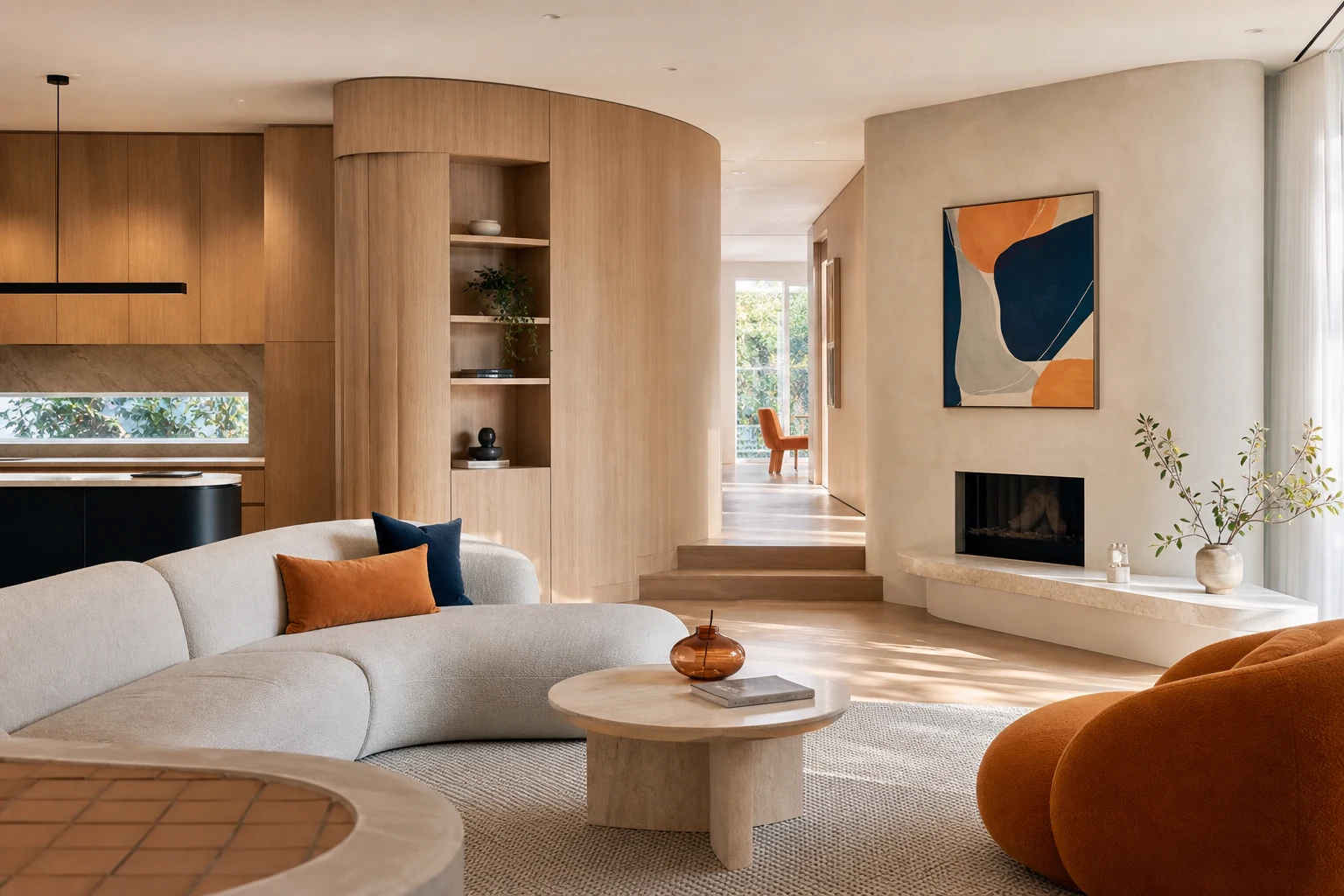
The stark all-white kitchen and the heavy dark-everything look have both faded in Melbourne selections. What is actually being chosen in 2026 sits in between: pared-back forms with warm, tactile materials.
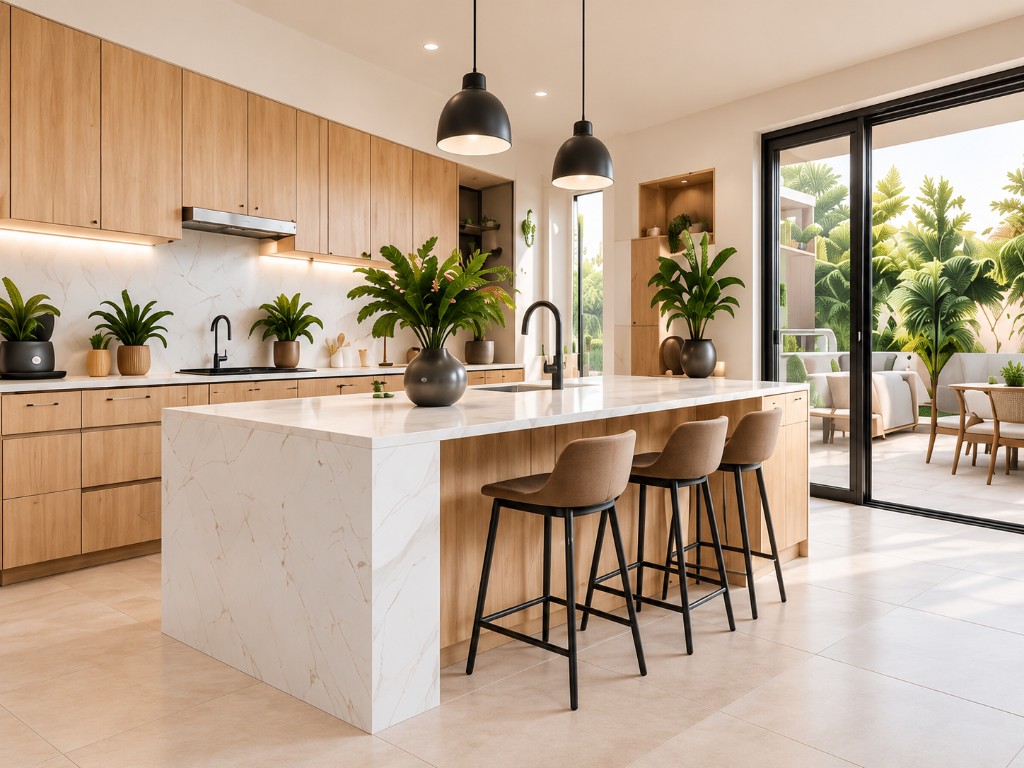
- Timber is everywhere, in moderation: Timber-look cabinetry feature runs, battened island ends and warm oak-toned floors against otherwise simple palettes.
- Whites have warmed up: Crisp cool whites have given way to softer, warmer neutrals on walls and cabinetry, which flatter Melbourne's grey-sky light far better.
- Texture over pattern: Fluted and ribbed profiles on glass, tile and joinery continue, but as accents rather than entire rooms.
- Stone with movement, used selectively: A veined benchtop or a stone-look porcelain feature wall carries the room while flat surfaces stay quiet around it.
- Brushed and aged metals: Brushed nickel, gunmetal and aged brass have pushed chrome to the value end of selections, and matte black has settled into an accent role rather than whole-room domination.
The practical driver is resale confidence. Melbourne renovators in 2026 are choosing rooms that will still read as current in ten years, and warm minimalism is the safest expressive choice available.
The Working Pantry Has Become the Kitchen's Engine Room
The single most requested kitchen layout feature in our 2026 scopes is not an island. It is a working pantry: a butler's pantry, scullery or walk-in that hides the mess and appliances so the main kitchen can stay calm.
- Appliance garages and second zones: Toasters, air fryers and coffee machines live in the pantry on their own circuits, off the main benchtop.
- Second sink and dishwasher-drawer setups appear in larger pantries, turning them into genuine back-of-house zones.
- Open shelving inside, clean doors outside: The pantry absorbs the visual noise so the kitchen face can be handle-less and minimal.
Where floor plans cannot give up the space, the compressed version is booming: full-height pantry cabinetry with internal drawers, bi-fold or pocket doors and an internal bench. Either way, the trend reflects how Melbourne families actually live: the kitchen is the social stage, and the pantry is where the show gets produced.
Bathrooms: Bigger Showers, Warmer Stone, Smarter Storage
Bathroom selections in 2026 have consolidated around a few clear winners.
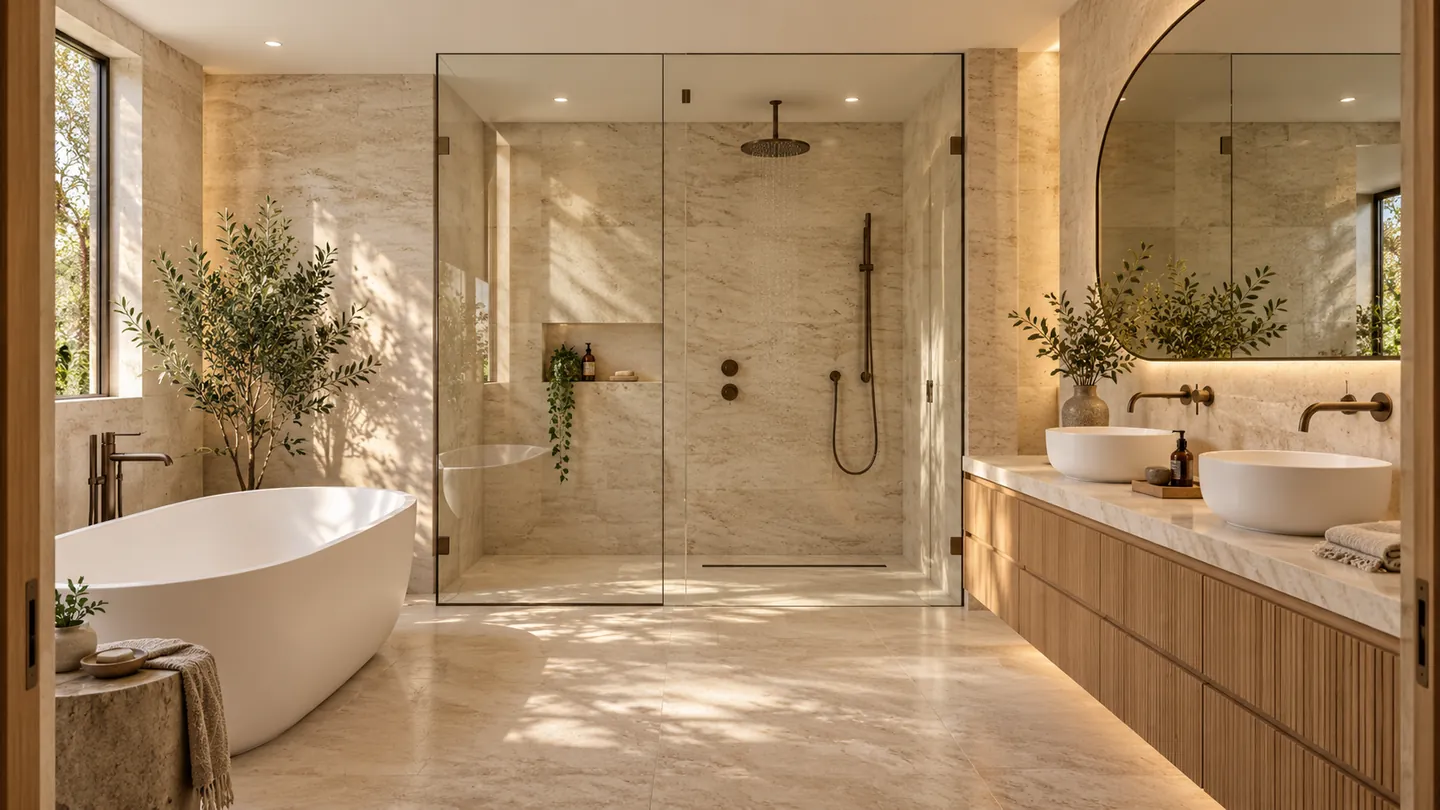
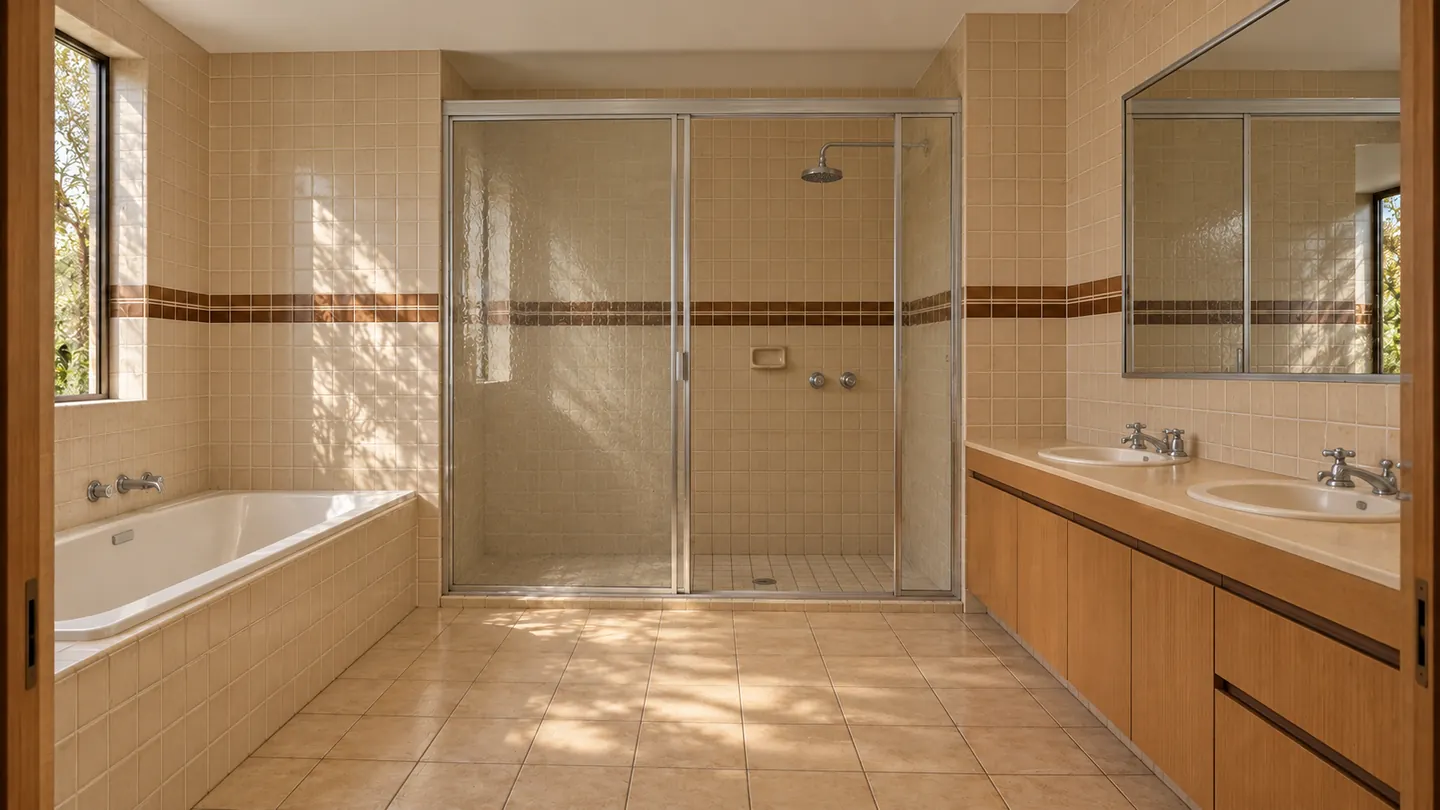
- The bath is losing to the double shower: Outside family bathrooms that genuinely need a tub, homeowners are trading the bath for a larger walk-in shower with double showerheads and a full-width niche.
- Tapware in warm metallics matched across the room, with floor-to-ceiling tiling now the default expectation in renovated bathrooms rather than a premium extra.
- Stone-look porcelain over natural stone: Large-format porcelain delivers the marble look with wet-area durability, and slab-look walls with minimal grout lines are the aspirational finish of the year.
- Wall-hung vanities with stone or solid-surface tops and generous drawer storage, plus mirrored cabinets recessed into stud walls for depth without protrusion.
- Comfort infrastructure: Underfloor heating in renovated bathrooms has moved from luxury to frequently-selected, along with heated towel rails on timers.
The compliance backdrop has not changed: waterproofing, falls and ventilation still decide whether a beautiful bathroom stays beautiful. Trends are what you see; detailing is why it lasts.
Laundries and Mudrooms: The Hardest-Working Trend
The laundry has quietly become one of the most design-invested rooms in Melbourne renovations. In 2026 scopes it is being treated as a system rather than a leftover space.
- Mudroom hybrids: Entry-adjacent laundries with lockers, bench seats, shoe drawers and school-bag zones, particularly in family homes in the middle and outer suburbs.
- Hanging and drying infrastructure: Ceiling-mounted drying racks, dedicated drying cupboards and heat-pump dryer provisioning designed in from the start, a rational response to Melbourne winters.
- Full-height storage walls that swallow brooms, vacuums, ironing gear and bulk shopping, with benchtops kept clear for folding.
- Pet zones: Built-in feeding stations and wash areas appear in a meaningful share of briefs now.
Because laundries are compact, the upgrade cost from basic to exceptional is smaller than in any other room, which is exactly why the trend has momentum: it is the highest daily-use return per dollar in the house.
Floor Plans: Broken-Plan Living and the Multi-Generational Brief
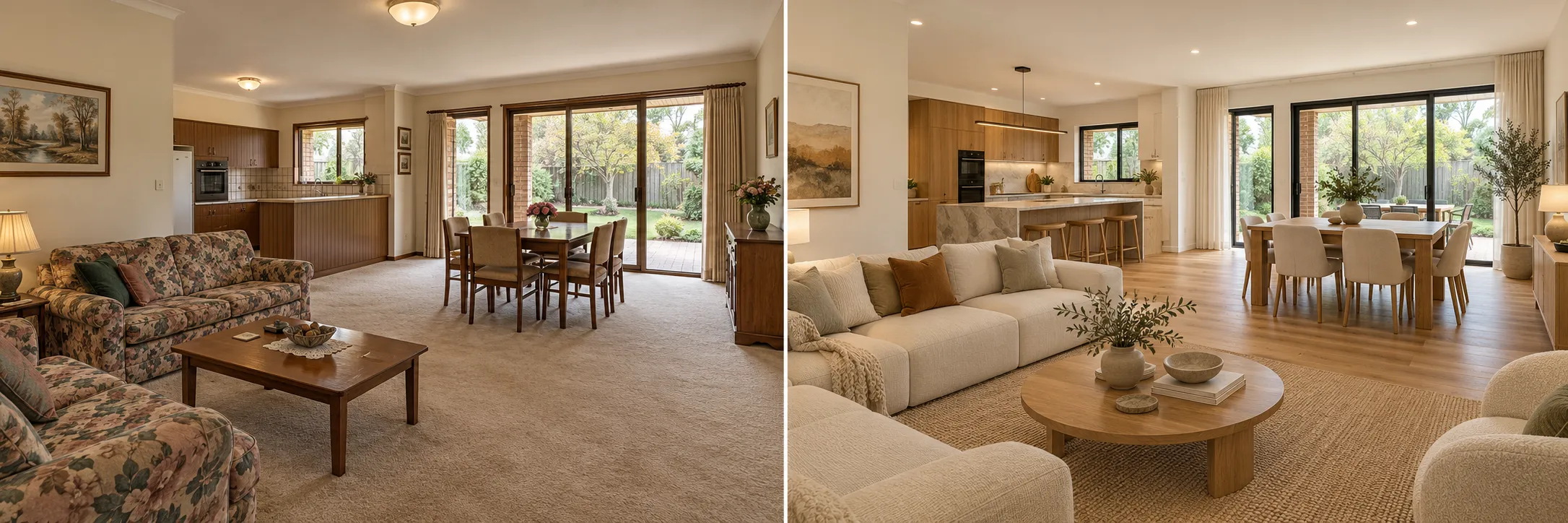
After a decade of knocking out every wall, Melbourne floor plans are being refined rather than simply opened.
- Broken-plan over open-plan: Living zones connected by wide openings, glazed internal doors or level changes, keeping sightlines and light while restoring acoustic separation. Steel-framed glass doors and cavity sliders are the hardware of the moment.
- The home office is now permanent: Hybrid work has survived every prediction of its demise, and a dedicated, acoustically sensible workspace is a standard line in full-home briefs.
- Multi-generational planning: Renovations that create a self-contained zone, a bedroom with ensuite and separate access, or a convertible rumpus, driven by adult children staying longer and ageing parents moving in.
- Second living rooms are back: Families are re-learning that one vast room cannot host homework, television and a video call simultaneously.
The unifying idea is flexibility. The 2026 renovation is planned around how the household will change over ten years, not just how it entertains on Saturday.
How to Use Trends Without Being Used by Them
Our standing advice to Melbourne renovators is to sort every trend into one of three buckets before spending on it:
- Infrastructure trends, adopt aggressively: Electrification, insulation, double glazing, wiring and storage systems. These compound in value and are expensive to retrofit.
- Layout trends, adopt where they match your life: Working pantries, mudrooms, broken-plan living and office nooks earn their space only if your household actually uses them.
- Finish trends, adopt in low-cost layers: Keep the expensive, hard-to-change surfaces timeless, and express the trend in tapware, lighting, paint and hardware that can be updated cheaply.
Renovations built on that hierarchy age gracefully. The homes that feel dated fastest are the ones where a single year's aesthetic was applied to every permanent surface at once, and 2026's warm minimalism will be no exception if it is applied without restraint.
Take these ideas with you.
- Electrification is the most consequential 2026 trend, reshaping kitchens, heating and switchboard scopes across Melbourne
- Warm minimalism with timber, warm neutrals and brushed metals has replaced both stark white and heavy dark palettes
- Working pantries and mudroom-laundries are the layout features families are actually paying for
- Bathrooms are trending to larger showers, floor-to-ceiling porcelain and comfort infrastructure like underfloor heating
- Spend trend money on infrastructure and cheap-to-change layers, and keep permanent surfaces timeless
A few more answers
Questions about your next step.
How much should I budget for a kitchen renovation in Melbourne?
Budget depends on layout changes, cabinetry level, benchtop choice, appliance scope and trade complexity. Fixed-layout refreshes sit much lower than structural redesigns with new services.
What kitchen upgrades usually add the most practical value?
Better drawer storage, smarter appliance placement, durable benchtops, layered task lighting and a well-sized rangehood tend to outperform cosmetic-only upgrades.
How long does a kitchen renovation usually take?
Most kitchens run over several weeks. Cabinetry manufacturing, stone templating and trade sequencing usually matter more than the demolition day.
Put your ideas into a plan
Turn this cost guide into a real number
A useful quote names layout, services, finish level and exclusions. We measure in the house, then price the room you actually have.
We can tell you which 2026 trends will still look right in 2036, because we build and revisit renovations across Melbourne every week. Design a renovation that outlasts the trend cycle or call 1300 173 622.