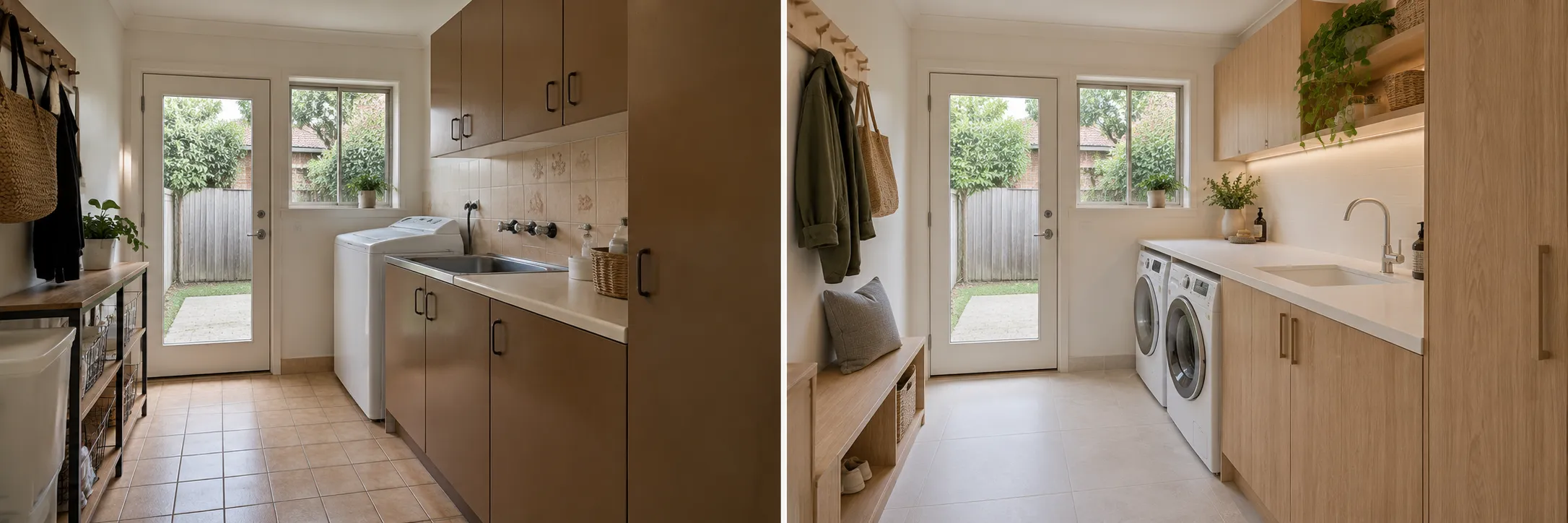

Laundries are rarely large, but they handle an outsized amount of household friction: dirty clothes, wet gear, cleaning products, pet items and family entry clutter. A poor laundry layout makes that friction visible every day.
This guide breaks laundry planning into the decisions that matter most: machine format, sink and bench sequence, storage zoning, drying strategy and whether the room also needs to work as a mudroom.
In this guide
Choose the Right Machine Configuration First
Machine layout sets the tone for the rest of the room because it dictates bench length, circulation and storage opportunity.
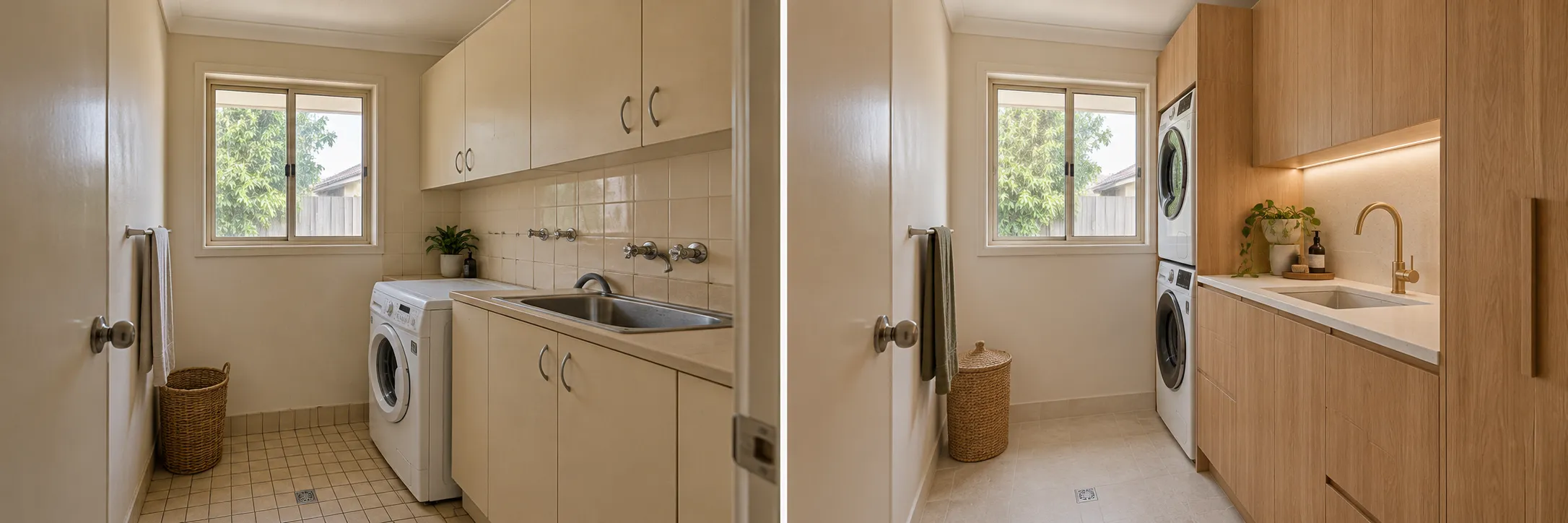
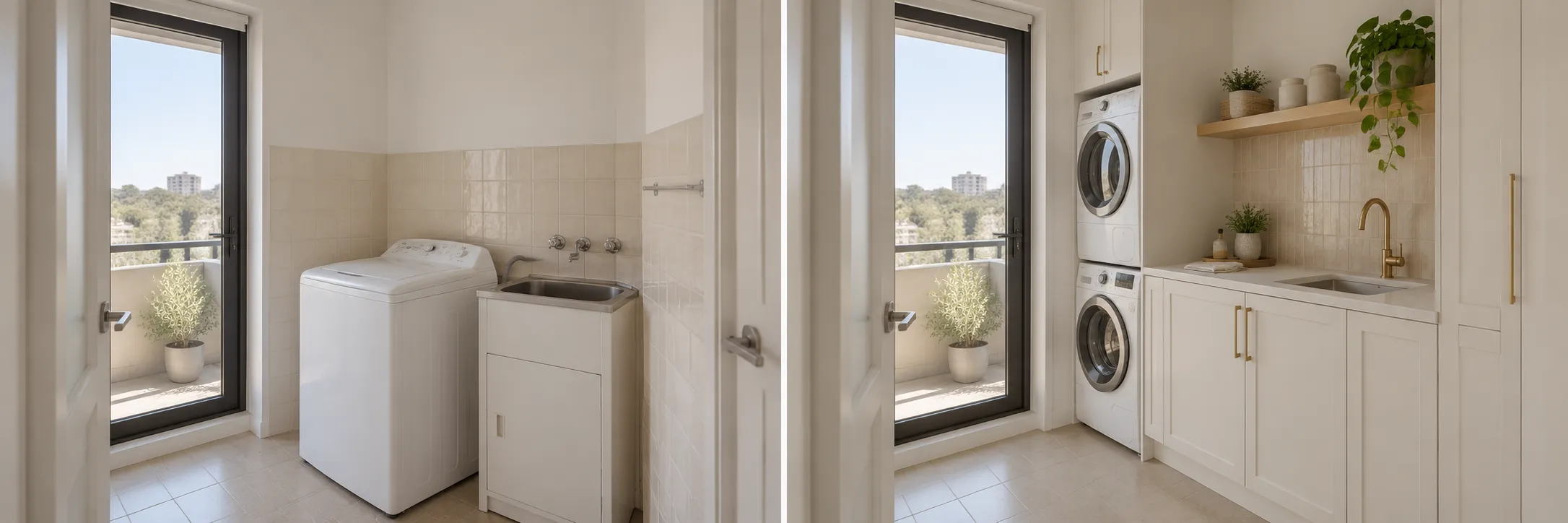
- Stacked: ideal when floor width is limited and you need room for a bench or tall storage.
- Side-by-side: easier access and often better for folding bench integration.
- Under-bench compact setups: useful in smaller homes, but only when ventilation and service access are handled cleanly.
The right answer depends on household mobility, room width and how often the space is used for folding and sorting rather than just washing.
Sink, Bench and Sorting Sequence
A laundry works best when wet tasks, washing tasks and folding tasks happen in a logical sequence.
- Deep troughs still matter for soaking, hand-washing and household cleanup.
- Bench space next to machines is usually more useful than isolated bench at the opposite end.
- Sorting hampers and detergent storage should sit close to the machine zone, not across the room.
When the sink, machines and folding bench are disconnected, the room tends to feel cluttered even if it has reasonable storage volume.
Storage That Supports Real Household Use
Laundry storage needs to separate chemicals, linen, cleaning tools and overflow family items instead of treating them all as the same category.
- Overheads suit detergents and backup stock.
- Tall broom cupboards prevent awkward long-item clutter.
- Pull-out hampers help households that sort by colour, user or school uniform rhythm.
- Open shelves work only when the room is kept styled and disciplined.
If the laundry also serves as a house entry, add bag, shoe and coat logic early rather than trying to squeeze it in later.
Drying Strategy Is Part of the Layout
Drying is often forgotten until the room is already designed, but it affects how usable the laundry feels every week.
- Retractable indoor lines suit compact rooms that need flexible clearance.
- Ceiling-mounted racks work well where height is available.
- External drying is best when climate, access and privacy allow it.
- Dryer placement should be planned for heat, noise and service access, not just wherever it fits.
A laundry without a drying strategy often ends up pushing wet items into living spaces, which means the room is not really working.
Mudroom Integration and Family Traffic
Where the laundry sits near a back entry, garage or side access, it often needs to manage more than washing.
- Hooks, cubbies and shoe storage can stop the room becoming a dumping ground.
- Durable flooring matters more when wet weather gear and pet traffic are involved.
- Pet-wash or utility zones need clear separation from folding and linen storage areas.
The more entry traffic the room handles, the more important zoning becomes. Otherwise a practical laundry turns into a permanent overflow room.
Laundry Layout Comparison Table
| Setup | Best For | Main Strength | Main Compromise |
|---|---|---|---|
| Stacked machines | Narrow laundries and homes needing more bench or tall storage | Saves floor width | Can be less convenient for some users |
| Side-by-side machines | Wider rooms and easier-access layouts | Simple use and easy bench integration | Consumes more horizontal space |
| Laundry plus mudroom | Busy family homes with garage or rear-entry traffic | Consolidates utility clutter into one managed room | Needs stronger zoning to avoid visual chaos |
Take these ideas with you.
- Laundry planning should start with machine format, not decoration
- Bench, sink and sorting functions need to work as one sequence
- Drying strategy is a core layout decision, not an afterthought
- Mudroom integration adds value only when traffic and storage are clearly zoned
- A good laundry reduces household friction rather than just hiding appliances
A few more answers
Questions about your next step.
What layout works best in a narrow laundry?
Walkway width, door positions and machine configuration decide it. Narrow rooms reward disciplined joinery and a clear folding bench.
Which laundry upgrades make the biggest practical difference?
A usable folding bench, overhead storage, a deep trough and a planned drying strategy usually beat decorative-only changes.
Can a laundry also work as a mudroom?
Yes, if wet gear, shoes and household supplies get defined zones instead of sharing one cramped bench.
Put your ideas into a plan
Use this guide on a design consult
If the layout, storage or circulation in this article matches the room you want to change, lock the brief before drawings start.
If your laundry needs to work harder for family life, storage and entry traffic, it should be planned as a system. Book a laundry layout consultation.