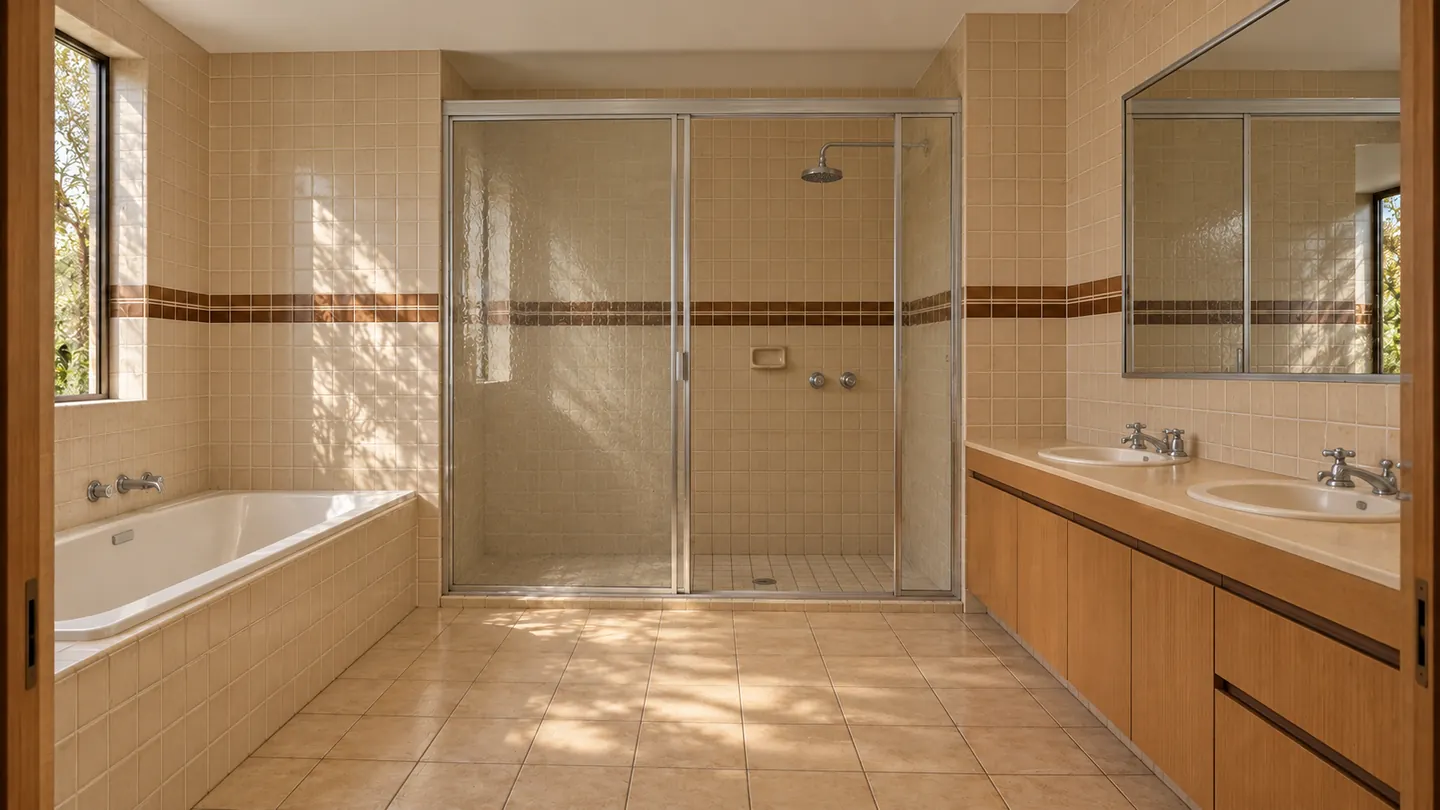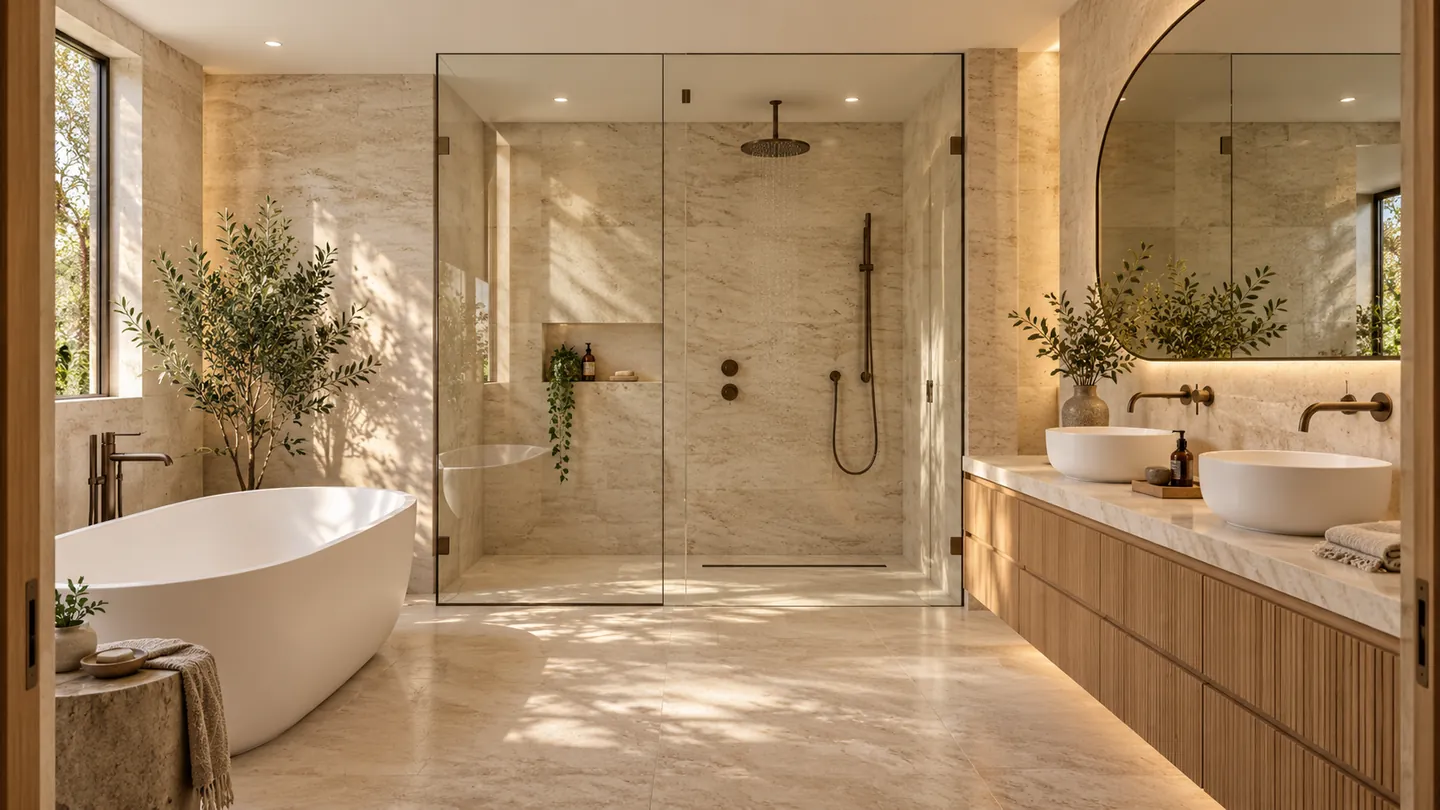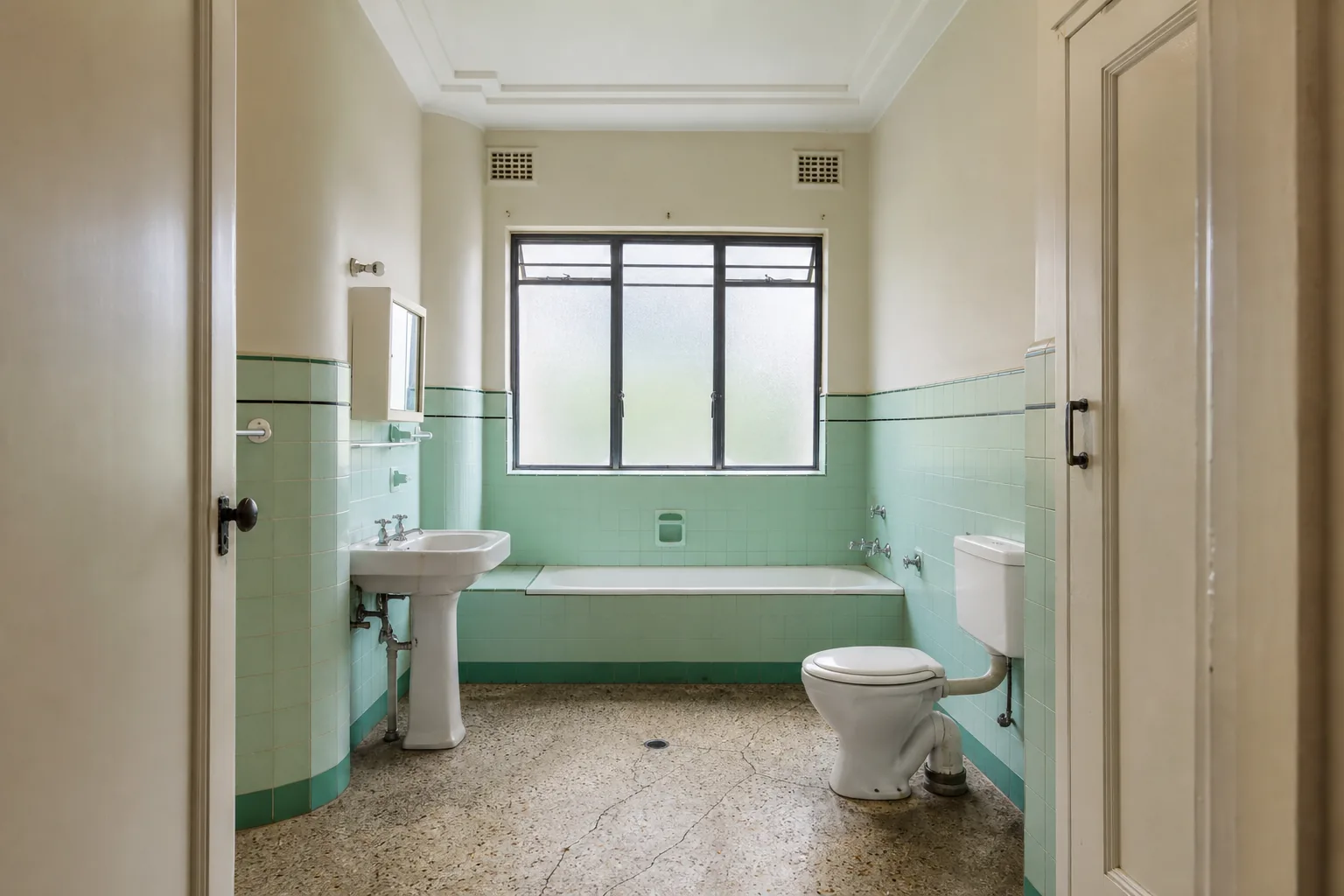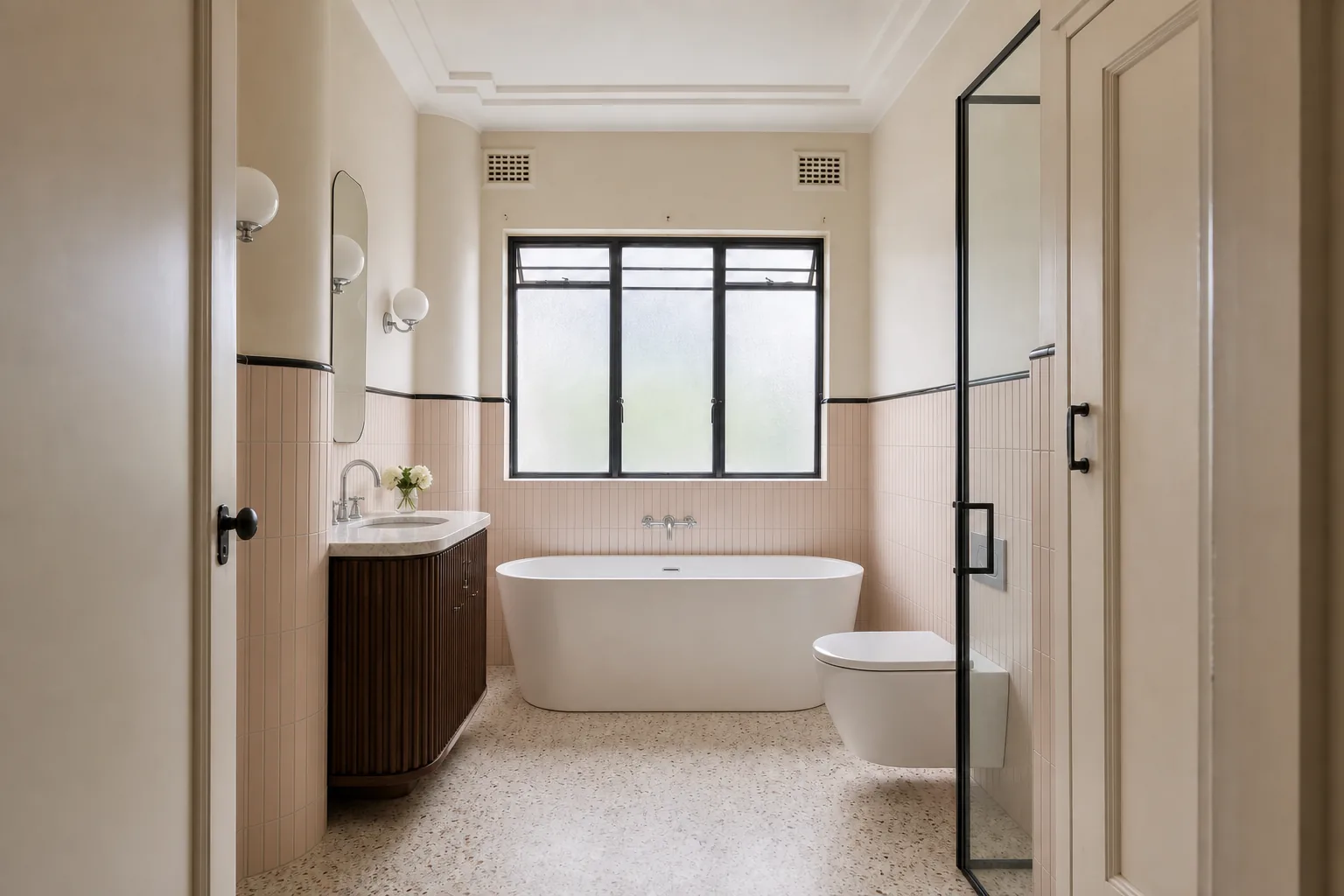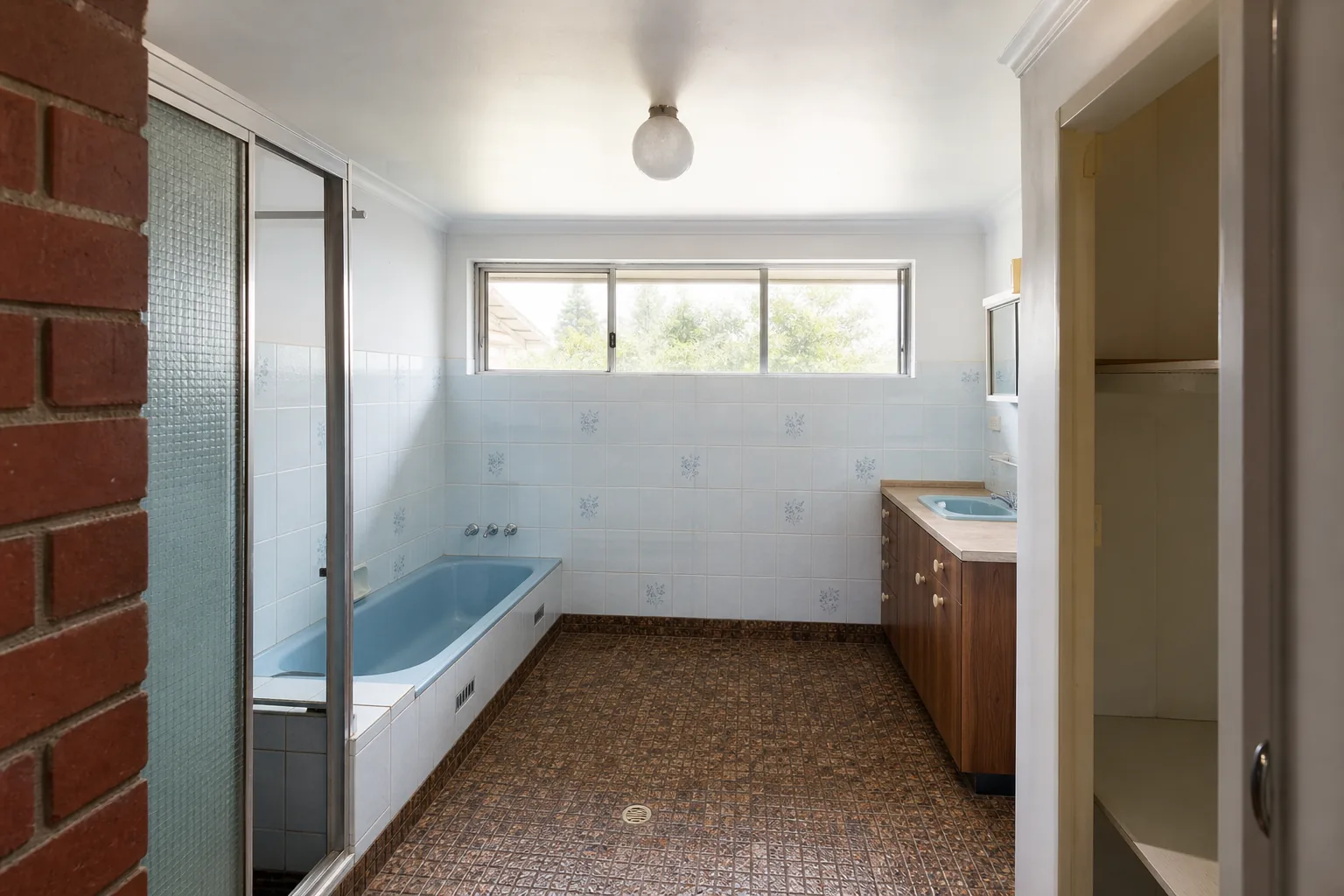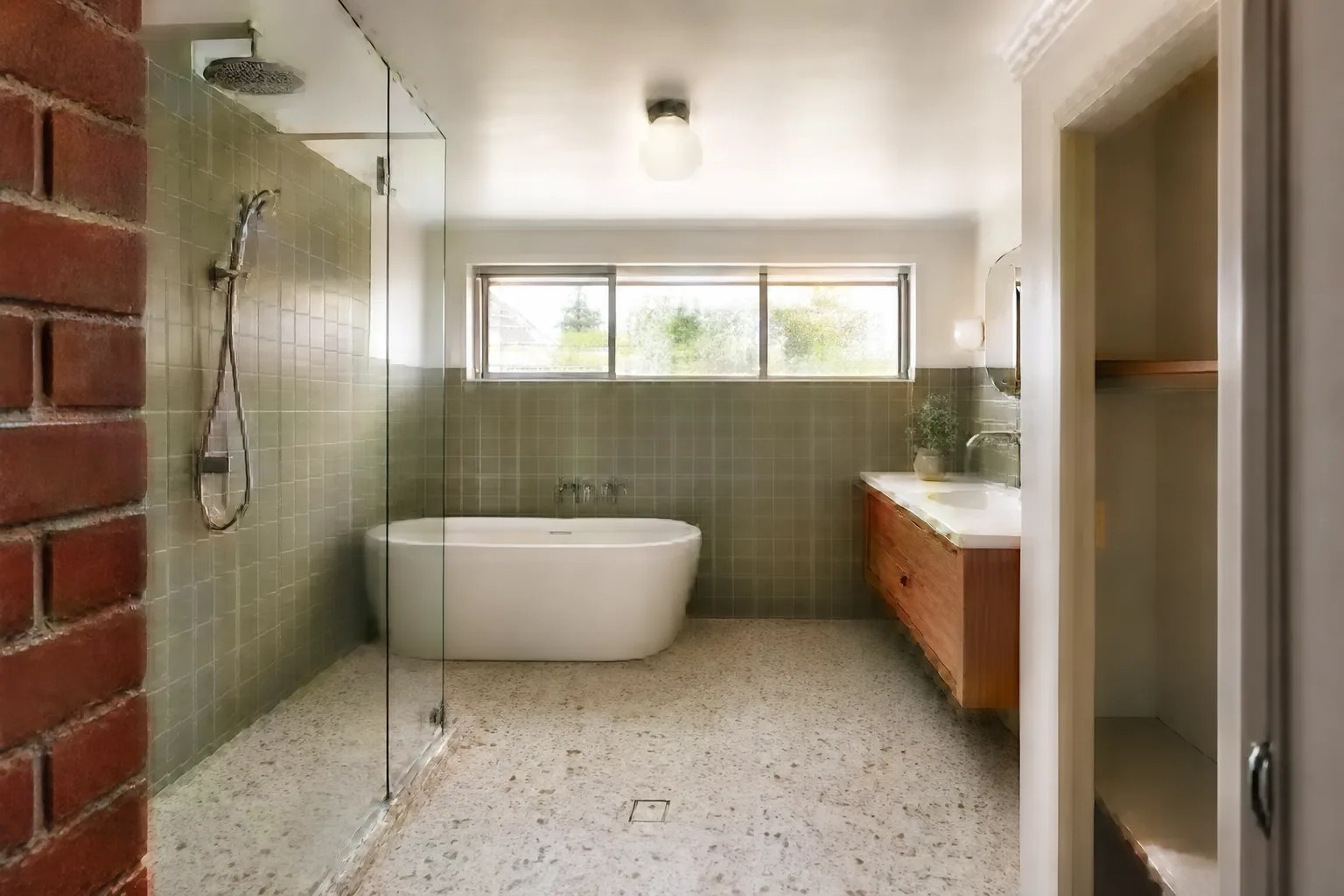
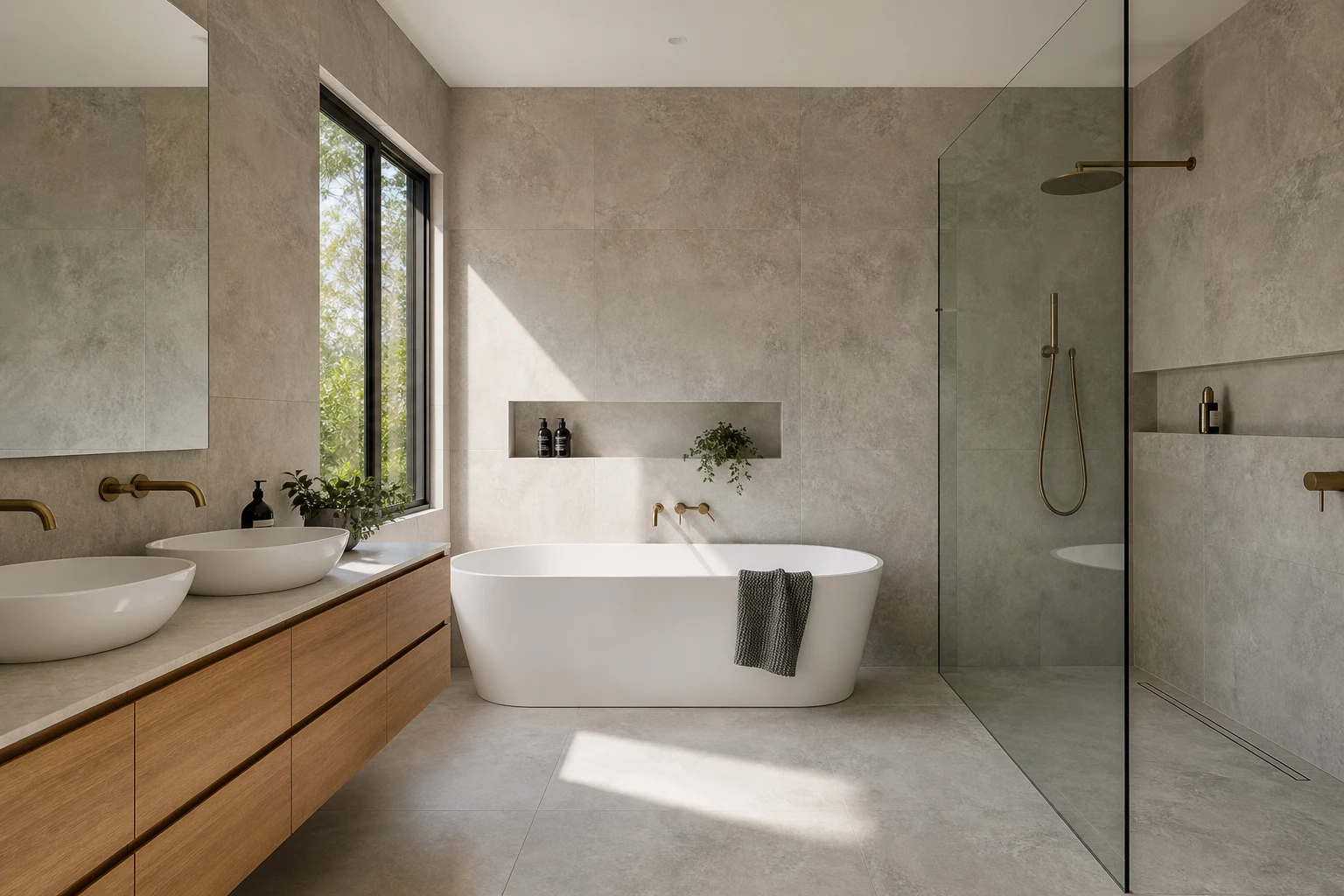
Floor-to-ceiling tiling has moved from luxury signature to near-default in Melbourne bathroom renovations, and for understandable reasons: it looks resolved, it wipes clean, and it removes the painted band above half-height tiles that yellows and flakes in steamy rooms. But full-height tiling is not free, and it is not automatically right. It adds material, labour and detailing cost that can be better spent elsewhere in some rooms, and there are situations where a painted upper wall is genuinely the better design.
This guide quantifies what full-height tiling actually adds to a project, explains where the benefit is real versus cosmetic, and sets out the specific cases where we advise clients to skip it. The goal is a decision made on numbers and use patterns rather than on renovation photography alone.
In this guide
What Full-Height Tiling Involves
The difference between half-height and full-height is more than tile quantity. A typical family bathroom of 3m x 2.4m with 2.4m ceilings has roughly 26 square metres of wall area. Tiling to 1200mm covers about 13 square metres; tiling to the ceiling covers all 26, with the shower zone tiled full-height in both schemes.
- Material increase: Commonly 10-14 additional square metres of wall tile in a standard bathroom, plus trims and wastage.
- Labour increase: Upper-wall tiling is slower per square metre than mid-wall work: scaffolding or platforms, ceiling junction cuts, and precise setout so the top course does not finish as a sliver.
- Detailing: The ceiling junction needs a clean finish, a fine shadow line, a trim, or a perfectly straight silicone junction, and out-of-level ceilings in older homes make that harder than it sounds.
- Substrate: Full-height tiling is heavy; sheeting condition and fixing become more important, particularly on old lath-and-plaster walls that may need re-sheeting anyway.
None of this is exotic work for a competent tiler, but all of it is real cost, which is why the decision deserves numbers.
The Cost Difference in Real Terms
| Scheme | Extra Tile Material | Extra Labour | Typical Added Cost |
|---|---|---|---|
| Half-height (1200mm) with painted upper walls | Baseline | Baseline, plus wet-area paint | Reference scheme |
| Full-height, mid-range porcelain ($45-$65/sqm) | 10-14 sqm, roughly $500-$900 | Roughly $1,000-$1,800 | Commonly $1,500-$2,700 added |
| Full-height, premium or large-format tile ($80-$150/sqm) | 10-14 sqm, roughly $900-$2,100 | Roughly $1,300-$2,400 with format handling | Commonly $2,200-$4,500 added |
| Full-height feature wall only (one wall) | 3-5 sqm | Modest | Commonly $500-$1,200 added |
Set against a $28,000-$40,000 full renovation, the mid-range full-height premium of roughly $1,500-$2,700 is meaningful but not decisive, around 5-8% of project cost. The question is whether that share of the budget works harder on the walls or somewhere else in the room, and the answer depends on the room.
Where Full-Height Earns Its Money
The benefits are real, but they concentrate in particular rooms and households.
- Steamy, hard-used bathrooms: Family bathrooms with multiple daily showers punish painted upper walls. Tiles shrug off condensation that would have paint peeling within a few years, so the lifecycle economics favour tile in high-humidity rooms, especially where ventilation is marginal.
- Small rooms: In compact bathrooms and ensuites, the tiled band ending at 1200mm draws a horizontal line that visually compresses the space. Full-height tiling removes the line and lifts the eye, which is why it is close to standard practice in small ensuites.
- Wet-area-heavy layouts: Walk-in showers and open wet zones splash more of the room; extending tile makes the whole space serviceable.
- Cleaning preference: Households that want every surface wipeable, common where kids or accessibility needs drive the design, get daily value from full-height surfaces.
- Resale presentation: In renovated-home listings across Melbourne, full-height tiling reads as a complete renovation rather than a refresh. Buyers rarely itemise why a bathroom feels premium; this is one of the quiet reasons.
Where several of these apply at once, a small, steamy, family-hammered room, the decision is easy and the money is well spent.
When to Skip It
There are rooms where full-height tiling is the wrong call, and saying so plainly saves clients money.
- Large bathrooms with good ventilation: A generous room with a window and a properly ducted fan does not stress painted walls. The extra 14 square metres of tile buys little function, and a quality wet-area paint in a considered colour can make a big room feel warmer than tile on every surface.
- Heritage character: In period homes across suburbs like Hawthorn, Northcote and Williamstown, a half-height scheme with a timber or tiled border rail suits the architecture. Full-height contemporary porcelain can strip the character the rest of the renovation is trying to honour.
- Tight budgets with bigger gaps elsewhere: If choosing full-height tile means a cheaper tiler, thinner waterproofing scope or deleting the shaving cabinet, the priority order is wrong. Walls above 1800mm never get wet in most bathrooms; ventilation, membrane and storage are used every day.
- Powder rooms: No shower means no humidity load. Powder rooms are the natural home of wallpaper, strong paint colours and a feature basin, tile to the ceiling adds cost and removes personality.
The half-height alternative is not a lesser scheme when it is chosen deliberately: consistent 1200mm datum, a crisp tile trim or bullnose at the top edge, and a proper wet-area acrylic paint above.
Design Decisions That Make Full-Height Work
If you commit to full-height, a few choices determine whether the result looks architectural or overwhelming.
- Setout from the top down: Plan the vertical tile module so the ceiling course is a generous cut, not a 40mm sliver. Good tilers set this out before the first tile goes on; it is worth asking to see the plan.
- Calm large formats: 300mm x 600mm and larger formats in soft-veined or lightly textured finishes keep 26 square metres of wall from feeling busy. Heavily patterned tile on every wall exhausts the eye.
- Grout discipline: Colour-matched grout in a quality flexible product; on this much wall area, grout choice changes the room more than tile choice.
- One texture moment: Full-height schemes carry a single feature wall, fluted, mosaic or stone-look, better than half-height schemes do, because the surrounding surfaces are continuous.
- Ceiling condition:The junction is only as straight as the ceiling. Older homes may need the ceiling straightened or a shadow-line trim specified to absorb the variation.
These details cost little against the scheme but decide its quality. Full-height tiling done without setout planning looks like more tile; done with it, it looks like architecture.
The Middle Paths Worth Considering
The choice is not binary. Several intermediate schemes deliver most of the benefit at less cost.
- Full-height wet walls only: Tile the shower and bath walls to the ceiling, and hold the remaining walls at 1200mm or paint. This targets tile where humidity actually lands and commonly saves $800-$1,500 against a fully tiled room.
- One full-height feature wall: Usually the vanity wall, tiled to the ceiling behind the mirror and lighting, with the rest half-height. Strong presence for $500-$1,200.
- Tall-but-not-full datum: Tiling to door-head height (around 2100mm) reads nearly as resolved as full-height while avoiding the ceiling-junction detailing, useful under raked or uneven ceilings.
These hybrids are legitimate design schemes used in high-end work, not compromises. The discipline they need is a consistent datum line around the room so the scheme reads intentional from every angle.
Making the Call on Your Project
Run the decision through three filters. Function: how humid and hard-used is the room, and how good is the ventilation? Architecture: does the home want a contemporary continuous surface or a period datum line? Budget: does the $1,500-$4,500 premium displace anything on the never-cut list, waterproofing, ventilation, tiling labour quality or storage?
In our experience across Melbourne projects, full-height earns its place in most small ensuites and hard-used family bathrooms, wet-walls-only is the smart middle for budget-conscious full renovations, and generous, well-ventilated rooms and period homes are where painted upper walls still win. Decide on the room you have, not the photograph you saved, and the tiling budget will land where it works hardest.
Take these ideas with you.
- Full-height tiling typically adds $1,500-$2,700 with mid-range porcelain, or $2,200-$4,500 with premium tile
- The benefit concentrates in small, steamy, hard-used rooms; large ventilated bathrooms gain little function
- Tiling only the wet walls to the ceiling captures most of the benefit at a fraction of the cost
- Top-down setout, colour-matched grout and calm large formats decide whether full-height looks architectural
- Never fund full-height tile by cutting waterproofing, ventilation or tiler quality
A few more answers
Questions about your next step.
What matters most in a small bathroom layout?
Clearances, door swing, shower placement and vanity depth matter more than decorative choices. Simplify the layout before adding premium finishes.
Which bathroom materials are easiest to maintain?
Low-porosity surfaces, practical grout, well-detailed shower screens and real ventilation reduce cleaning load and mould risk.
How long does a full bathroom renovation normally take?
Bathrooms are tightly sequenced, but waterproofing cure times, tiling and fixture lead times still make them multi-stage projects.
Put your ideas into a plan
Check feasibility before you lock a quote
Council overlays, access and existing services change the job. Bring the property constraints in before finish selections harden.
We can price your bathroom both ways, full-height and wet-walls-only, so you see exactly what the difference buys before you decide. Start your bathroom renovation quote or call 1300 173 622.