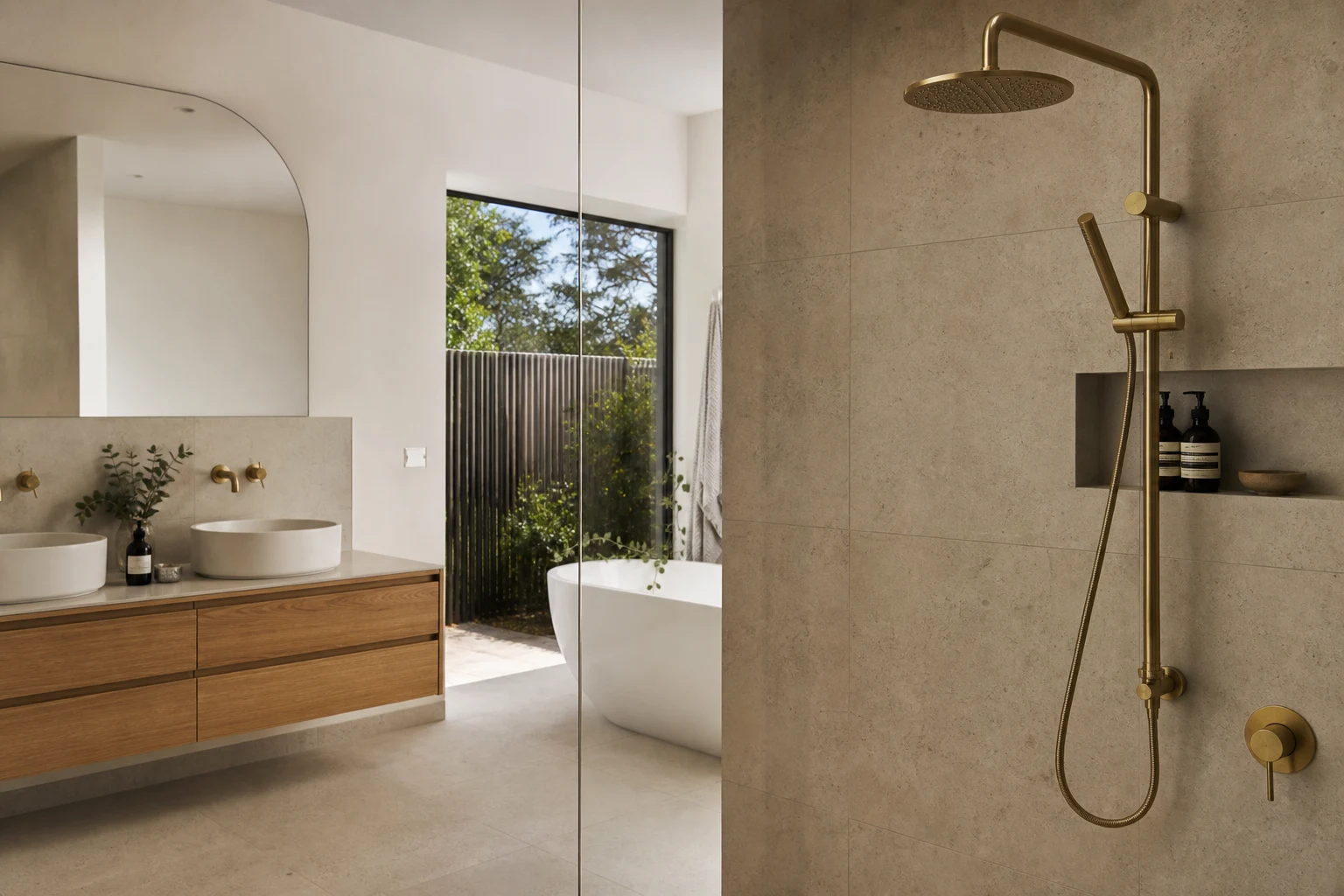
Tapware finish is one of the highest-visibility decisions in a bathroom renovation and one of the least understood. The finish you choose appears on the basin mixer, shower rail, bath filler, towel rails, floor waste and door hardware, so a wrong call repeats itself across a dozen touch points. And unlike tiles, tapware gets handled with wet, soapy, sunscreen-coated hands every single day, which is exactly the abuse that separates durable finishes from fashionable ones.
This guide compares the finishes dominating Melbourne bathroom renovations: chrome, brushed nickel, matte black, brushed brass and gunmetal. It covers how each finish is actually made, which manufacturing methods last, honest cleaning expectations, cost differences and how to avoid the mixed-metal mistakes that make an expensive room look accidental.
In this guide
How Finishes Are Made and Why It Matters
Two products in the same colour can age completely differently depending on how the finish was applied. Understanding the three main methods protects you from buying the wrong version of the right look.
- Electroplating: The traditional method behind chrome and many nickel finishes. A metal layer is bonded to the brass body. Extremely durable when done well, which is why chrome remains the longevity benchmark.
- PVD (physical vapour deposition): A hard, thin coating applied in a vacuum chamber, used for quality brushed brass, gunmetal and some black finishes. PVD resists scratching and fading far better than paint-based coatings and is the method to insist on for coloured finishes.
- Powder coating or electrophoretic lacquer: Common on budget matte black. Softer than PVD, it can chip at edges and wear where hands land daily. Cheap black tapware often means this method.
The practical rule: for any finish other than chrome, ask the supplier whether the finish is PVD. On matte black especially, the answer predicts how the tapware will look in year five.
Finish-by-Finish Comparison
| Finish | Typical Price Premium | Durability | Cleaning Reality |
|---|---|---|---|
| Chrome | Baseline | Excellent; decades-proven | Shows water spots but wipes to new in seconds |
| Brushed nickel | Commonly 10-25% over chrome | Excellent | Hides water spots and fingerprints better than any other finish |
| Matte black | Commonly 15-35% over chrome | Good if PVD; poor if coated | Shows soap scum and mineral marks; needs gentle regular wiping |
| Brushed brass | Commonly 25-50% over chrome | Very good in PVD form | Forgiving of spots; harsh cleaners dull the tone over time |
| Gunmetal | Commonly 20-40% over chrome | Very good in PVD form | Middle ground; hides marks better than black, less than nickel |
Range availability matters as much as price. Chrome and matte black exist in nearly every product category; brushed brass and gunmetal ranges are broad but not universal, so confirm your chosen finish exists across mixers, rails, wastes and accessories before committing.
Matte Black: The Honest Assessment
Matte black has dominated renovation photography for a decade and it still looks sharp against light tiles and timber tones. But it is the finish with the widest quality spread on the market, and it punishes buyers who shop on price alone.
- Water quality interaction: Melbourne water is relatively soft compared with many regions, which works in favour of black finishes; mineral spotting is milder than it would be on hard bore water. Even so, dried splash marks read clearly on black.
- Wear points: Mixer handles and shower slider brackets wear first because hands and abrasive cleaning land there. PVD black holds; coated black can rub through to brass within a few years of heavy use.
- Cleaning rules: Soft cloth, mild detergent, nothing abrasive, no cream cleansers. Households that scrub hard should think twice.
If the household is diligent about a quick wipe-down and the budget allows PVD product, black remains a strong choice. If the bathroom serves young children and cleaning happens fast and rough, brushed nickel or gunmetal deliver a similar contemporary feel with far more forgiveness.
Brushed Brass: Warmth Without the Regret
Brushed brass earned its place in Melbourne renovations by warming up the grey-and-white palettes that dominated the 2010s. Against sage greens, travertine looks and warm whites, it reads premium in a way chrome cannot. Two cautions keep the choice safe.
- Tone matching across brands: Brass tones vary from pale champagne to deep gold. Mixing brands in one room risks visible mismatch, so select the entire fitting schedule, mixers, rails, wastes, grates and accessories, from one range or verified-matching ranges.
- Living finishes vs PVD: Some premium makers offer uncoated brass that patinas deliberately. Beautiful, but it darkens and marks with use. Most homeowners want PVD brushed brass, which holds its day-one tone. Know which one you are buying.
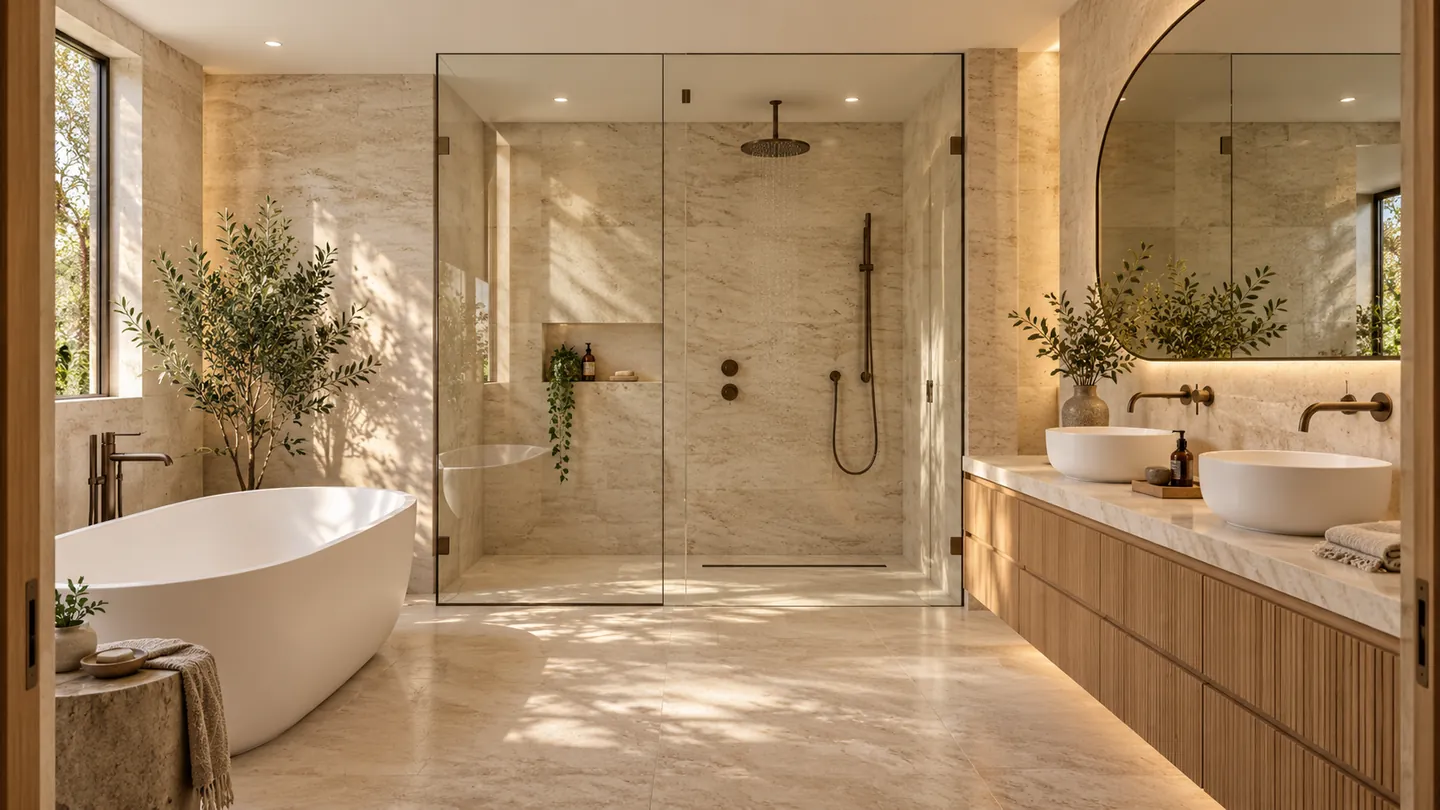
Brass pairs especially well with the natural-material direction current in Victorian bathroom design: tumbled stone looks, fluted vanities and warm timber. It is also the finish most likely to carry a premium at resale presentation right now, though chrome and nickel remain the safest long-horizon choices.
Mixing Metals Without Making a Mess
Mixed-metal bathrooms can look designed or accidental, and the difference is discipline. The workable approach follows a simple hierarchy.
- Pick one dominant finish for all water-delivery points: basin mixer, shower set and bath filler. These read as a family and should match exactly.
- Allow one accent finish for supporting elements: towel rails, robe hooks, mirror frame or vanity handles. Black accents over brass tapware, or brass accents over black, are the proven pairings.
- Keep hidden hardware neutral: Floor wastes and hinges in a tone that recedes rather than fighting the scheme.
What fails is randomness: a chrome shower because it was on sale, black basin taps from the moodboard and a brass towel rail as a gift. Trades will install whatever arrives on site, so the discipline has to happen at ordering time. A written fittings schedule listing every item and finish is the single best tool for keeping a scheme coherent, and it is standard practice on our projects.
Quality Signals Beyond the Finish
Finish gets the attention, but the component quality underneath determines whether the tapware still operates smoothly in ten years.
- WELS ratings: Australian law requires water efficiency labelling. For showers, a quality 3-star head balances efficiency with a shower that still feels generous.
- Watermark certification: Non-negotiable for anything a plumber will legally install in Victoria. Grey-import tapware without certification can void insurance and will be refused by licensed plumbers.
- Ceramic disc cartridges: The internal mechanism that controls flow and mix. Reputable brands stock replacement cartridges for decades; obscure imports often cannot supply parts in three years.
- Brass body weight: Heavier generally signals solid brass rather than thin castings or plastic internals.
A sensible allowance for quality tapware across a full bathroom, mixer, shower, bath set, wastes and accessories, commonly lands between $1,200 and $3,500 depending on finish and brand tier. Spending less than that usually means compromising the components; spending more mostly buys design signature rather than function.
Making the Final Call
Match the finish to the household before matching it to the moodboard. Chrome and brushed nickel are the low-maintenance, long-warranty workhorses that suit rental properties, family bathrooms and owners who never want to think about their taps again. PVD brushed brass and gunmetal suit design-led renovations where the palette is planned and the cleaning routine is realistic. Matte black rewards diligent households and punishes careless ones, and it should always be bought in PVD form.
Whichever direction you take, buy the whole room from a confirmed-matching range, insist on Watermark certification and PVD coatings for coloured finishes, and lock the fittings schedule before rough-in so the plumber installs the system the design intended. Finish trends move roughly in decade cycles; component quality is what decides whether your tapware outlives the trend.
Take these ideas with you.
- PVD coatings are the durability benchmark for coloured finishes; cheap coated black tapware wears through at handles
- Chrome and brushed nickel remain the most forgiving, longest-lived finishes for family bathrooms
- Brushed brass tones vary between brands, so order the entire room from one confirmed-matching range
- Watermark certification is mandatory for legal installation in Victoria; grey imports get refused by plumbers
- Budget $1,200-$3,500 for a full bathroom fitting schedule and lock it in writing before rough-in
A few more answers
Questions about your next step.
What matters most in a small bathroom layout?
Clearances, door swing, shower placement and vanity depth matter more than decorative choices. Simplify the layout before adding premium finishes.
Which bathroom materials are easiest to maintain?
Low-porosity surfaces, practical grout, well-detailed shower screens and real ventilation reduce cleaning load and mould risk.
How long does a full bathroom renovation normally take?
Bathrooms are tightly sequenced, but waterproofing cure times, tiling and fixture lead times still make them multi-stage projects.
Put your ideas into a plan
Turn this cost guide into a real number
A useful quote names layout, services, finish level and exclusions. We measure in the house, then price the room you actually have.
We help clients build a complete fittings schedule, finish, brand and WELS rating for every item, before a single wall is opened. Start your bathroom renovation with us or call 1300 173 622.