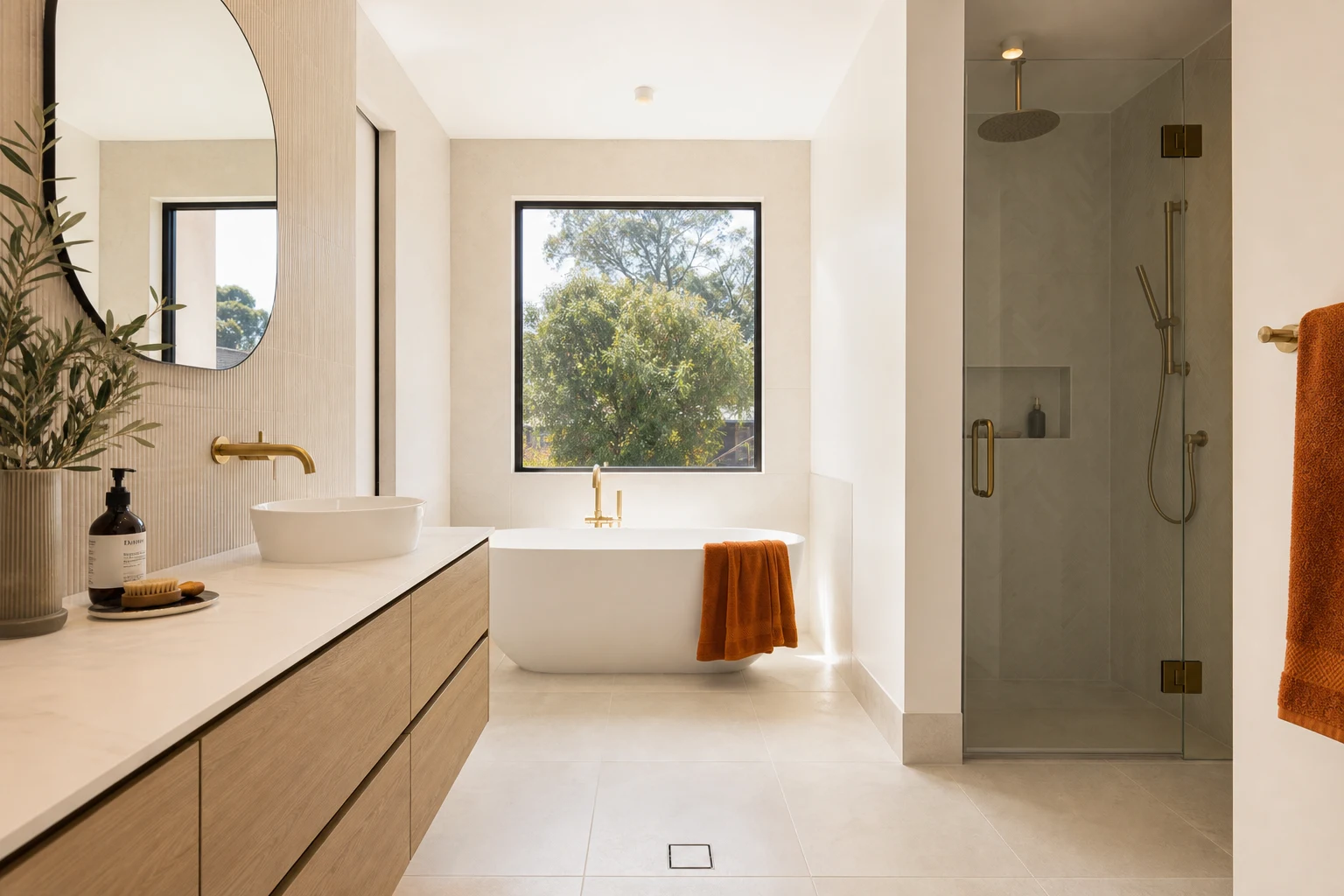
Most bathroom budgets fail in the same way: the owner anchors on a total figure, spends the first weeks of planning on tiles and tapware, and only discovers late that labour, waterproofing and the unglamorous services consume more than half the money. The fix is not a bigger budget. It is allocating the budget line by line before anything is purchased, so every selection decision happens inside a known envelope instead of eroding an imaginary one.
This guide walks through a full bathroom renovation budget the way we build one for Melbourne clients: category by category, with typical percentage shares, the lines owners forget, where cutting hurts and where it does not. The percentages assume a full strip-out renovation in the common $25,000 to $45,000 range; a cosmetic refresh or a luxury build shifts the shares, but the logic holds.
In this guide
The Big Picture: Labour Versus Materials
The first mental adjustment is accepting the labour share. A full bathroom renovation touches at least six trades, demolition, plumbing, electrical, carpentry, waterproofing and tiling, plus glazing, painting and installation work. Across a typical project, labour and trade services commonly absorb 45% to 60% of the total, before a single tile or tap is purchased.
- Why the labour share is high: Bathrooms are the densest trade environment in the house. Every trade returns at least twice, rough-in and fit-off, and each stage must be sequenced and inspected.
- Why this matters for planning: If your total budget is $32,000, the realistic materials-and-fixtures envelope is roughly $13,000-$17,000, not $25,000. Selections made against the wrong envelope guarantee a mid-project crisis.
Owners comparing quotes should also understand that an abnormally low labour component usually signals missing scope, not efficiency. The trades cost what they cost across Melbourne; quotes diverge mainly on what they include.
Line-by-Line Allocation Table
| Category | Typical Share | On a $32k Project | What It Covers |
|---|---|---|---|
| Demolition and disposal | 4-7% | $1,300-$2,200 | Strip-out, skip bins, floor protection, dust control |
| Plumbing (rough-in and fit-off) | 10-15% | $3,200-$4,800 | New water lines, wastes, compliance certificates |
| Electrical and ventilation | 5-8% | $1,600-$2,600 | Lighting, exhaust, heated rails or floors, safety certificate |
| Carpentry and plastering | 6-10% | $1,900-$3,200 | Framing repairs, noggins, sheeting, niches, cavity units |
| Waterproofing | 4-6% | $1,300-$1,900 | Full membrane system, detailing, certificate |
| Tiling labour and prep | 12-18% | $3,800-$5,800 | Screeds, laying, mitres, grouting, silicone |
| Tiles (material) | 6-10% | $1,900-$3,200 | Floor and wall tiles plus trims and wastage |
| Fixtures and tapware | 10-15% | $3,200-$4,800 | Toilet, basin, bath, tapware, accessories |
| Vanity and shaving cabinet | 6-10% | $1,900-$3,200 | Joinery, benchtop, basin, mirror storage |
| Shower screen and glazing | 3-6% | $1,000-$1,900 | Frameless or semi-frameless screens, mirrors |
| Contingency | 8-12% | $2,600-$3,800 | Hidden damage, service surprises, owner changes |
The shares overlap because projects differ, but the discipline is the point: every dollar belongs to a category before it is spent, and moving money between categories is a conscious decision rather than a drift.
The Lines Owners Forget
Blown budgets are rarely caused by the vanity costing more than planned. They are caused by whole categories that never appeared in the plan.
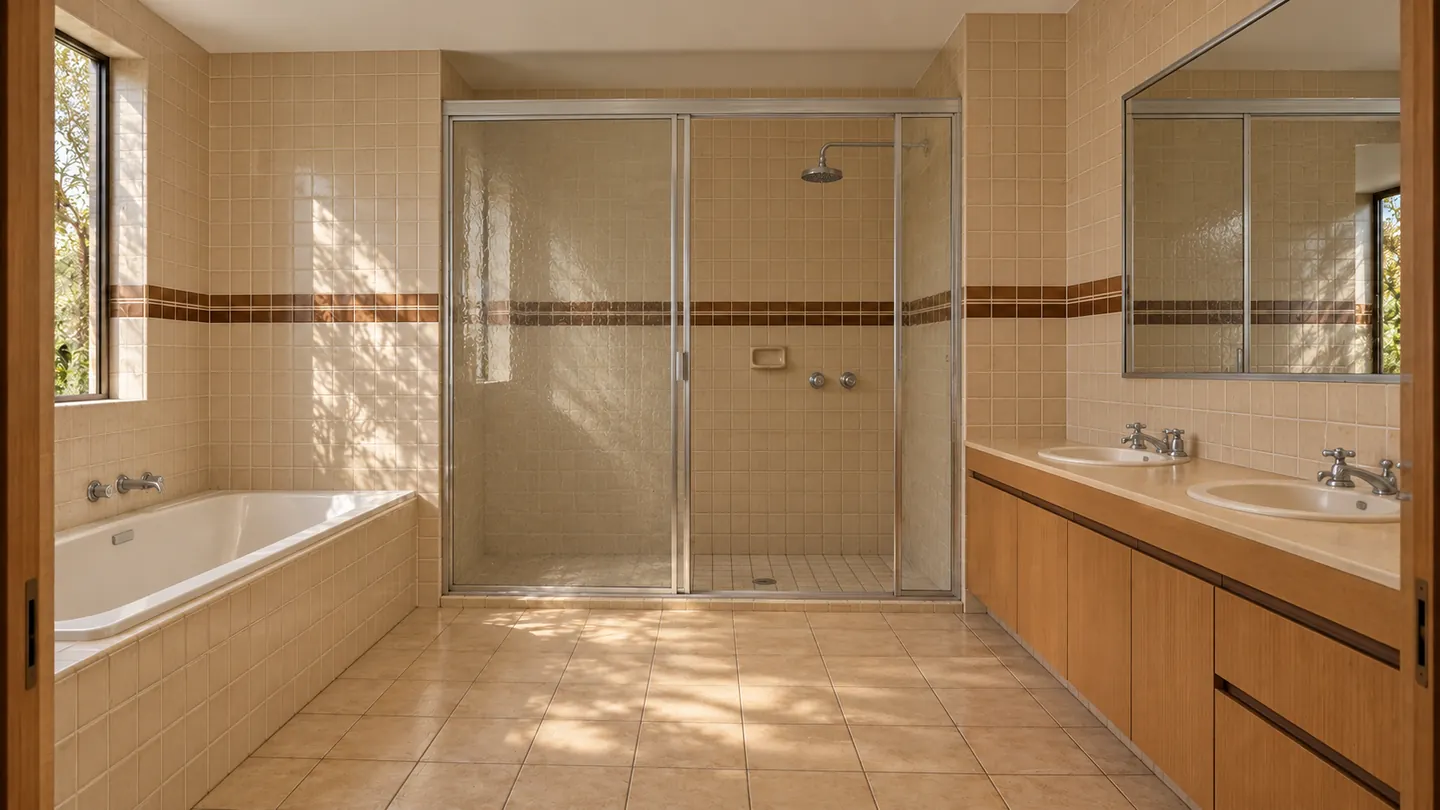
- Old-home rectification: Rotten framing behind a failed shower, non-compliant wiring, corroded galvanised pipework. Common in pre-1980s housing across Melbourne, and the single biggest reason the contingency exists.
- Painting and making good: The ceiling, the door, the architraves and the hallway wall the demolition scuffed.
- Door hardware and accessories: Towel rails, robe hooks, toilet roll holders and door furniture in the matching finish; small items that total $400-$900 in a coherent scheme.
- Delivery, storage and protection: Fixtures arriving weeks before installation need somewhere safe to live.
- Living costs: If it is the only bathroom, gym memberships, temporary arrangements or timing the works around a holiday all have real value.
Add these lines to the budget even if the entry is zero, because a zero written deliberately is a decision, while a line that never existed is a surprise.
Where Cutting Hurts and Where It Does Not
When the numbers need trimming, cut in the right order. Some categories forgive economy; others punish it for a decade.
- Never cut: Waterproofing, ventilation, plumbing quality and screed falls. These are the room. Failures here cost multiples of the saving and usually take finished tiling with them.
- Cut carefully: Tiling labour quality. A cheaper tiler laying large-format porcelain badly is visible from the doorway forever. Economise on tile price before tiler price.
- Cut freely: Tile unit price (quality mid-range porcelain at $40-$70 per square metre performs like tiles at three times the price), fixture brand tiers, feature-tile quantity, and accessories that can be added later.
- Defer, do not delete: Underfloor heating cannot be added later, but heated towel rails, better mirrors and paint refreshes can. Distinguish between now-or-never items and upgrade-later items.
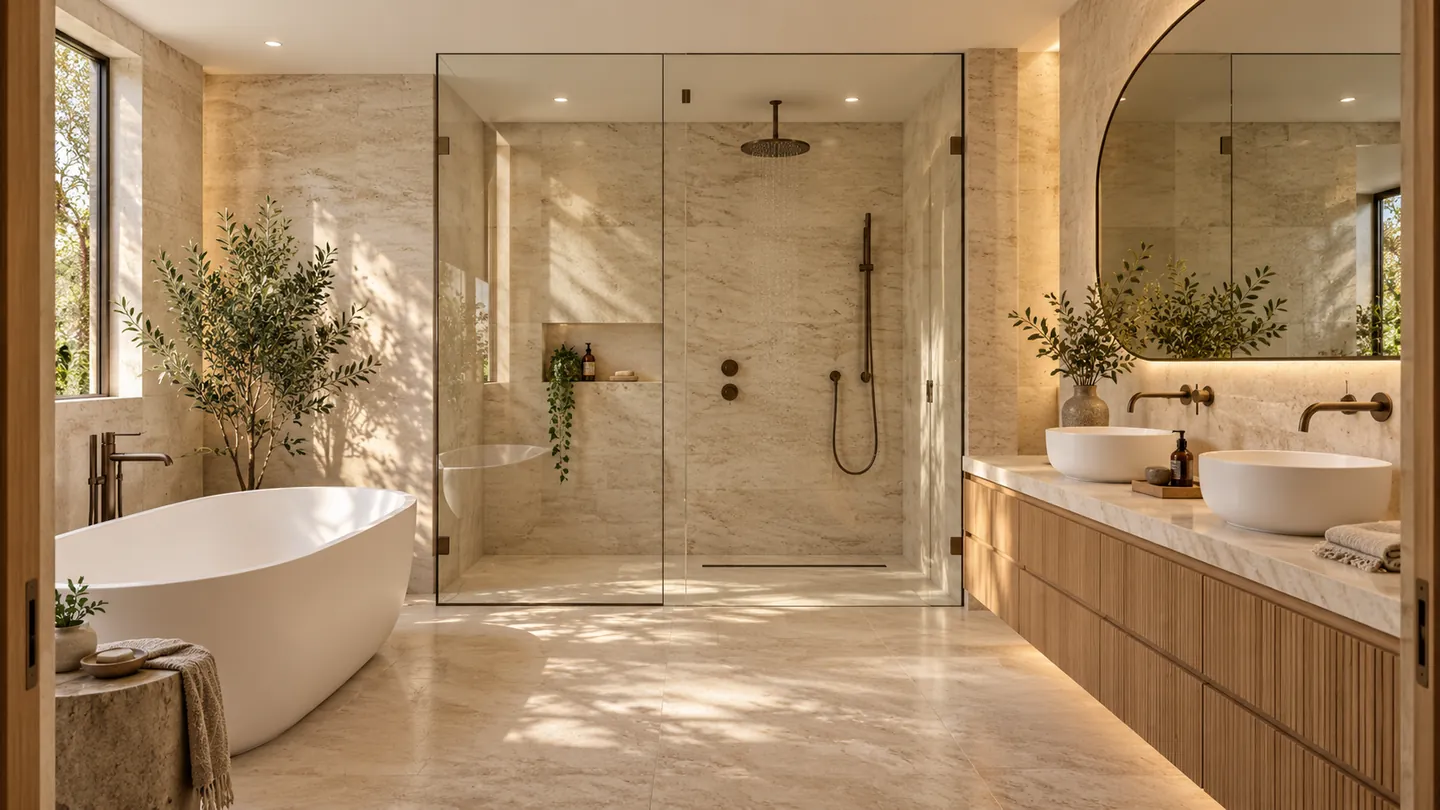
A useful discipline is the one-feature rule: choose the single element that will carry the room, a stone benchtop, a fluted vanity, a feature niche wall, fund it properly, and keep everything else calm and mid-range. Rooms designed this way look more expensive than rooms where the budget was spread thin across ten small upgrades.
Contingency: The Line That Protects All the Others
Contingency is not padding; it is the acknowledgment that no one can see inside a wall before demolition. For post-2000 homes with known plumbing, 8% is usually adequate. For pre-1980s homes, or any bathroom showing water staining, movement cracks or previous amateur work, hold 10-15%.
- Spend it only on discoveries: Hidden damage, non-compliant services, structural surprises. The moment contingency starts funding upgraded tapware, the protection is gone.
- Release it late: If demolition and rough-in pass without surprises, most of the risk has expired. Releasing unspent contingency into finishes at that point is safe; releasing it at selection time is how projects end up unfunded for the real surprises.
- Get variations priced in writing: Victorian domestic building contracts have formal variation processes for good reason. A verbal "we found something, it will be a bit extra" is not a number you can manage a budget against.
Builders read owners quickly. An owner with a managed contingency and a written variation discipline gets treated as a professional client, and the project paperwork tends to rise to match.
Sequencing Purchases to Protect the Plan
When you buy matters nearly as much as what you buy. The allocation survives contact with reality only if selections are locked in the right order.
- Lock before contract: Layout, fixture positions, vanity size and any wall or window changes. These drive the trade scope and therefore the labour half of the budget.
- Lock before rough-in: Every item a pipe or cable serves: tapware (mixers dictate in-wall bodies), toilet type, bath, heated floor decision, lighting plan and shaving cabinet (for recessing and wiring).
- Lock before waterproofing: Niche sizes and positions, screen type and hob decisions.
- Flexible late: Mirrors, accessories, paint colour and hardware, provided finishes were decided as a family early.
Late changes are the silent budget killer because they arrive as variations priced without competition, and they often cascade: a changed mixer needs a different in-wall body, which needs the waterproofed wall reopened, which needs the membrane redone. The allocation table above assumes decisions made once; every reversal taxes it.
Worked Example: A $32,000 Family Bathroom
Pulling the threads together, a typical full renovation of a 3m x 2.4m family bathroom in a 1970s Melbourne brick veneer home might allocate: $1,800 demolition, $4,200 plumbing, $2,000 electrical and ventilation, $2,400 carpentry and plaster, $1,600 waterproofing, $4,800 tiling labour, $2,400 tiles, $4,000 fixtures and tapware, $2,600 vanity and shaving cabinet, $1,400 glazing, and $3,000 contingency held against a fifty-year-old wall cavity nobody has seen. Total: $30,200 committed, with the contingency completing the envelope.
Notice what that allocation buys: a compliant, certificated, properly ventilated room with mid-range finishes and one funded feature, not a showroom fantasy. That is what real budgets do. They convert a single intimidating number into forty small honest ones, and in doing so they turn every later conversation, with builders, with suppliers, with your own preferences, into a decision you can actually make.
Take these ideas with you.
- Labour and trade services typically absorb 45-60% of a full bathroom renovation budget before any materials
- Allocate every dollar to a category before purchasing, and treat transfers between categories as deliberate decisions
- Hold 8-15% contingency depending on the age of the home, and spend it only on genuine discoveries
- Never economise on waterproofing, ventilation or tiling labour; economise freely on tile price and fixture brand tiers
- Lock layout before contract and all plumbed items before rough-in, because late changes cascade into expensive variations
A few more answers
Questions about your next step.
What matters most in a small bathroom layout?
Clearances, door swing, shower placement and vanity depth matter more than decorative choices. Simplify the layout before adding premium finishes.
Which bathroom materials are easiest to maintain?
Low-porosity surfaces, practical grout, well-detailed shower screens and real ventilation reduce cleaning load and mould risk.
How long does a full bathroom renovation normally take?
Bathrooms are tightly sequenced, but waterproofing cure times, tiling and fixture lead times still make them multi-stage projects.
Put your ideas into a plan
Turn this cost guide into a real number
A useful quote names layout, services, finish level and exclusions. We measure in the house, then price the room you actually have.
We quote bathrooms line by line, so you see where every dollar sits before you sign anything. Request an itemised bathroom renovation quote or call 1300 173 622.